
April 6th 2025
Author: Vincent Chang
Subject: Gameplay Engineering
Institution: Amsterdam University of Applied Sciences
The aspects in a relaxing game
Table of Contents
- 1. Abstract
- 2. Introduction
- 3. Problem Formulation
- 4. Methods
- 5. Research
- 6. Conclusion
- 7. Sources
1. Abstract
In this research a relaxing state is described and how to design this in a video game. In this it is explored what a relaxing state is and how to attain it in video games. The aspects which make the game relaxing are analysed and compared with other relaxing games. At last a prototype is made and tested to see if you could make a relaxing game using this knowledge. At last a conclusion is formulated after the results of the test.
2. Introduction
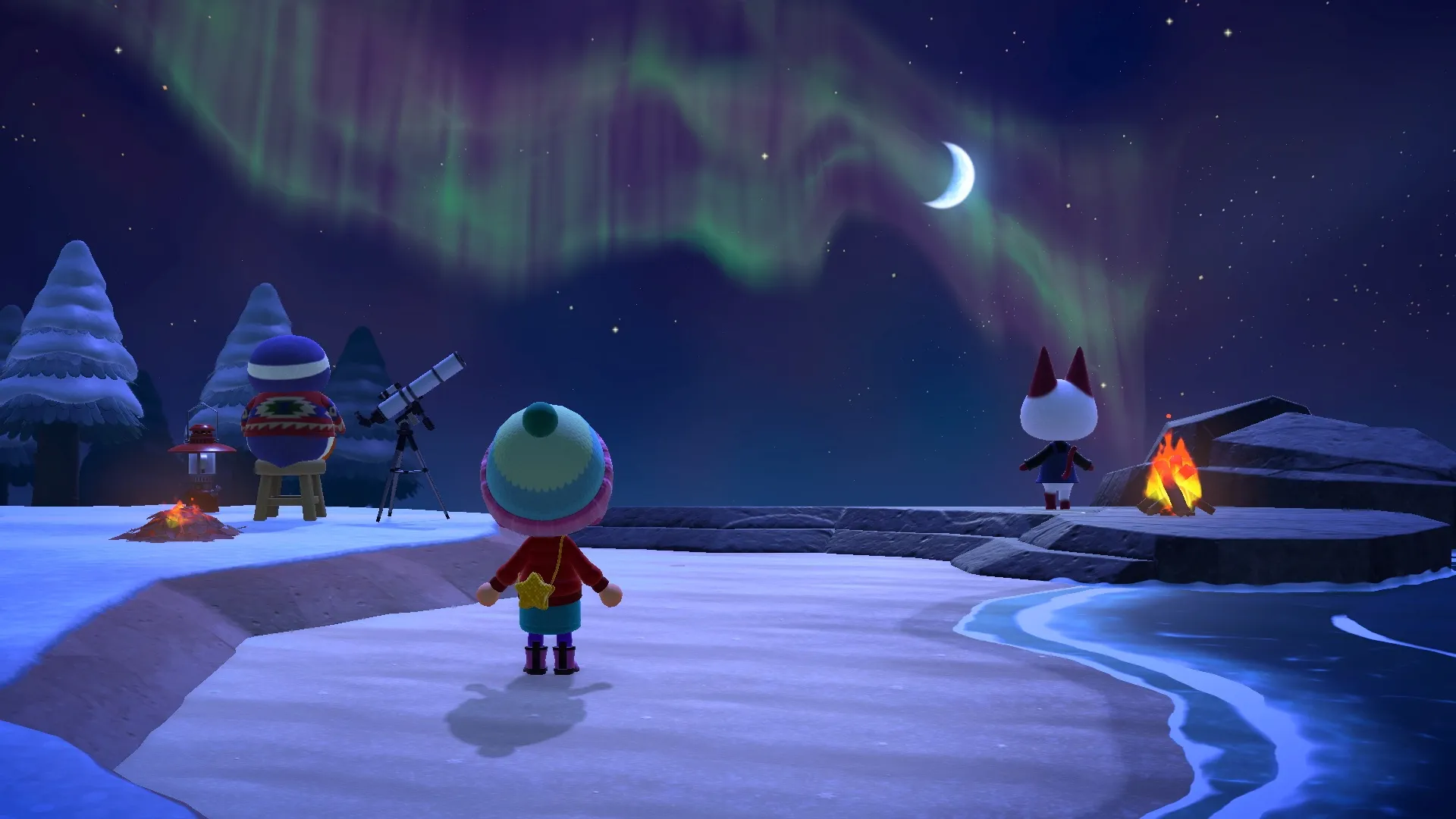
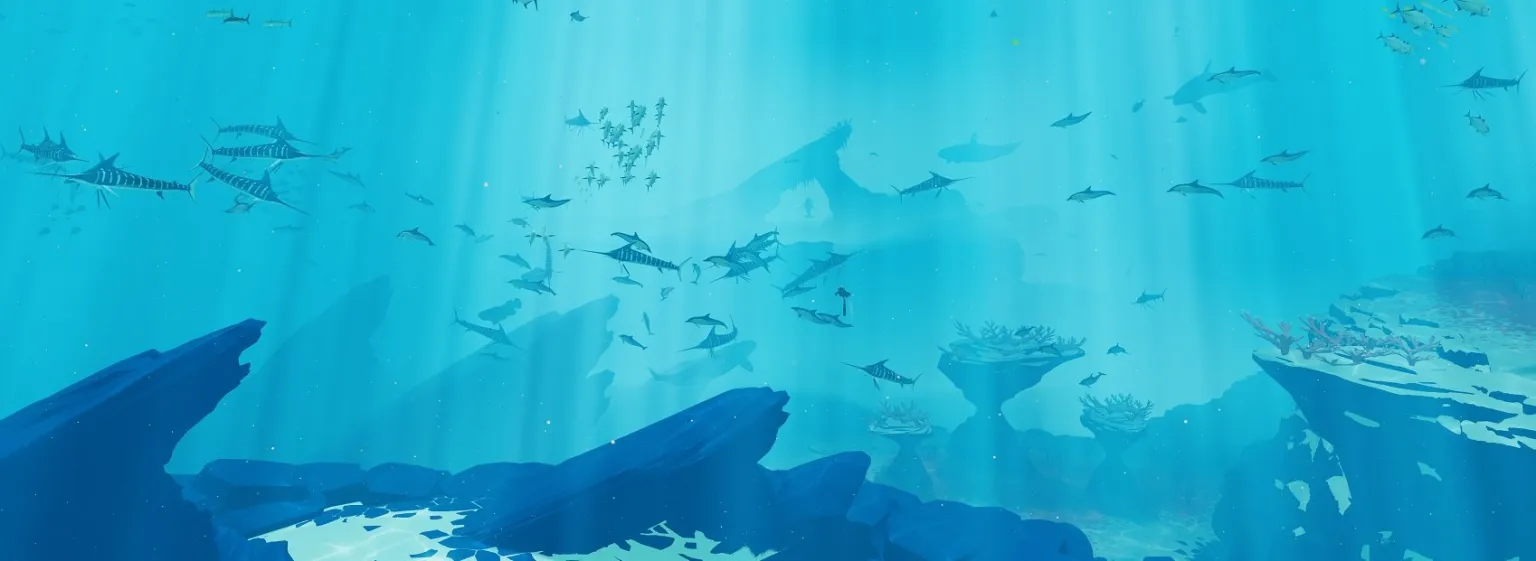
In the last few years it has become more and more relaxing. Unlike other games that focus on competition, fast-paced action, or solving puzzles, relaxing games are meant to create a peaceful and calm experience.
Even though relaxing games are becoming more popular, as a game developer who likes relaxing games it is clear how to make a game, but not how to make a relaxing one.
This research looks at what makes a game truly relaxing. To find this out it is first looked at what a relaxing feeling is and what aspects a video game contains which makes the game relaxing. Then it is compared with existing games. A prototype is made and tested if these aspects make a relaxing game.
3. Problem Formulation
As mentioned earlier, the goal of this research is to find the key elements that make a game relaxing and, based on these findings, create a relaxing game. However, the concept of a “relaxing game” is still vague and difficult to define. Without a clear understanding of what makes a game relaxing, designers might find it difficult to understand which aspects are important to create a relaxing experience.
To address this, I will focus on the following main question:
- How would I design a relaxing game?
To answer this question, I have broken it down into several sub-questions:
What is a relaxing feeling?
How can a relaxing feeling be attained in a game?
What aspects of a game contribute to relaxation?
How do other relaxing games incorporate these aspects?
How would I apply these findings to design a relaxing game?
Through testing, is the game truly relaxing?
4. Methods
This research was made by doing desk research, game analysis and testing a prototype. First I carried out a desk research where information was gathered about a relaxing state, how to attain it and what aspects make a game relaxing. After I analysed existing relaxing games and analysed how they applied the aspects. At last a prototype is made and tested to see if it is relaxing.
The sources used are all high-quality. AI, like ChatGPT, was only used to collect sources.
5. Research
This is the part where the results of the research are.
5.1 Relaxing State
A relaxing state is a state a person can be in, but what is this state?
When you feel peaceful and calm, physically and mentally, you are in a relaxed state and feel relaxed. [2] This state is good for your overall well being and makes you happy. Being in this state is very important for anyone due to the benefits of being relaxed. [1]
The benefits are: physical and emotional stress is reduced, blood pressure lowers, slower heart rate, stronger concentration, positive thinking, better memory and reduced muscle tension. There can be more benefits depending on what way you achieve a relaxed state. [1] [2] [3]
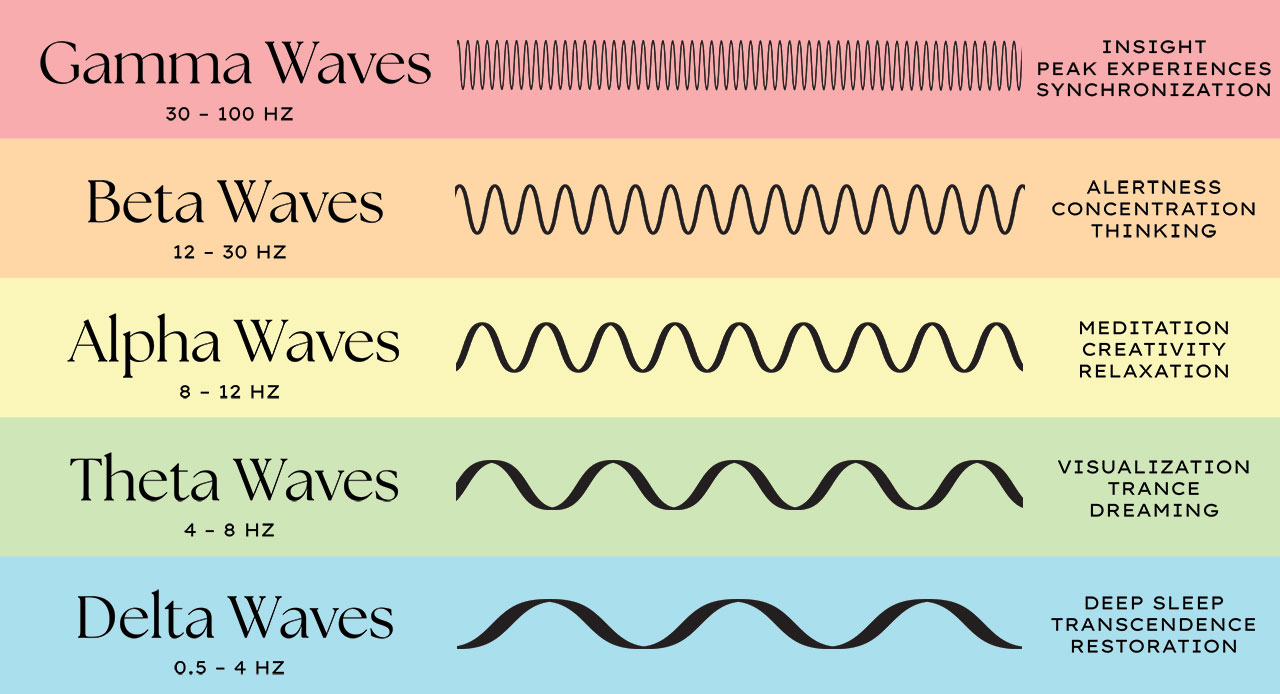
Neurologically when in a relaxed state your body puts a break on high-frequency, overactive brain waves, which slows down overall brain activity. [4] [5] When slowing brain activity, the brain reduces the amount of beta waves and increases the amount of alpha waves. Alpha waves are a type of brain wave which occurs when a person feels relaxed and the brain is in an idle state. Beta waves occur in a conscious and awake state. This state signals alertness and attentiveness. [6] [7] Beta waves are important for optimal mental function, however too many waves can cause poor concentration, inability to relax and anxiety. [8]
5.2 Techniques and activities
How can a person achieve a relaxing state? There are many relaxation techniques and activities which can help to attain this. [2] [3]
5.2.1 Breathing Exercises
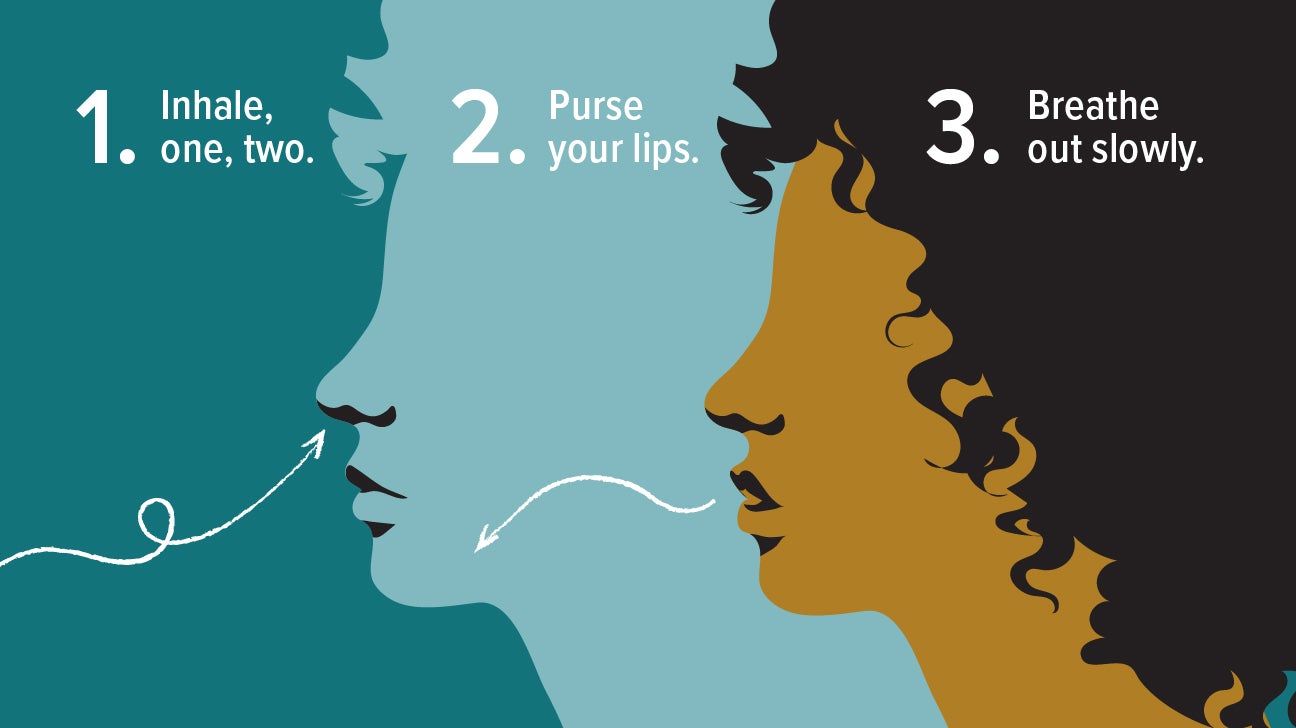
One of the ways is by doing breathing exercises. Under stress people change their breathing patterns. A stressed person takes erratic, rapid and shallow breaths which disturb the balance of gases in the body. Shallow over-breathing or hyperventilation makes the physical symptoms of stress worse which prolongs the feelings of anxiety. When controlling your breath you can be in a relaxing state.[11] When in a relaxed state your breath is slow, deep and regular. This can be imitated to gain a relaxing state. This is easy to learn and can be done at any time and any place.[9]
5.2.2 Exercise
Exercise is another way to relax. When engaging in aerobic exercise, like jogging, cycling or swimming, your body reduces the amount of stress hormones and stimulates the production of endorphins. Endorphins are natural painkillers and mood elevators that are responsible for the feeling of relaxation and optimism. Any kind of exercise keeps your body busy which keeps your mind clear and free from worries. [9]
Another effect from exercise is your self-image. Becoming stronger or gaining more stamina makes you earn more pride and self-confidence [9]. A lack of self-image can increase stress and anxiety by persistent worry and avoidant behaviors.[10]

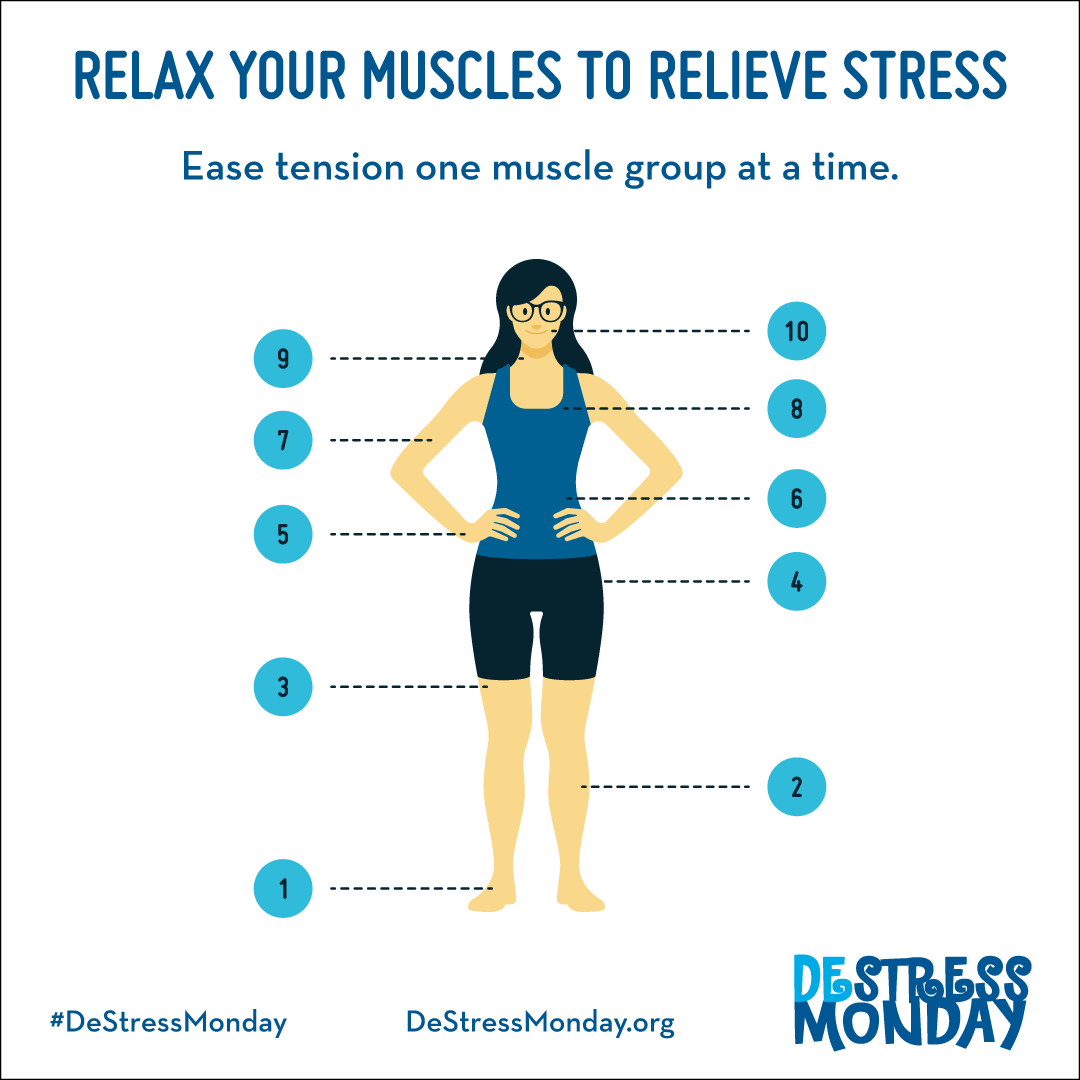
5.2.3 Progressive muscle relaxation
Progressive muscle relaxation is used to relax your muscles one to one to ease physical tension. This then reduces stress and anxiety. [11] Using muscles in everyday life causes your muscles to tighten or contract. When stressed or using the muscles for an extended period, muscle rigidity can happen. Muscle rigidity is the most common cause for muscle pain, which causes more stress. [13] [14]
In progressive muscle relaxation you focus sequentially on the major muscle groups, tighten each muscle, maintaining the contraction for 20 seconds and then releasing it. You start with your facial muscles and work down the body. This technique is very hard to master. To master it you will need to practise this twice daily and in about 2 weeks you master the technique and feel more relaxed. Practice is performed best in a quiet and secluded place where you can sit comfortably or stretch out. [9]
These are only a few techniques and activities that can be applied to achieve a relaxed state, however these can differ per person.[2] [3] To attain a relaxing state you should practise these techniques in a calm state so that you can get a feel for it. Testing out multiple of these and finding out what works best is an important step to being relaxed. [1] [9]
5.3 Relaxing Aspects in Video Games
What aspects does a video game have which can make the player go into a relaxing state? There are many aspects in a video game which can be adjusted to create a relaxing game. In this part I mention common aspects of games and then also explain how they can impact the state of the player.
5.3.1 Flow
The concept of “flow” comes from Mihaly Csikszentmihalyi’s book “Flow: The Psychology of Optimal Experience”. “Flow” is a state in which one is in complete focus on a task or activity, while being relaxed as well. There are 8 key elements of “Flow”. [17] These are:
- High level of concentration on a limited field
- Clear defined goal and immediate feedback
- Balance between skill and challenge
- A feeling of control
- Effortlessness
- Time dilation
- No awareness of the self
- Tasks feel rewarding
[15] [16]
The benefits of being in this state is that you are relaxed while focused at the same time. You quiet your mind by being fully immersed in the activity, you are relaxed and generate dopamine. [18]
These aspects can be applied to games as well. Game Flow can be experienced when players are deeply engaged, they are enjoying themselves, they don’t hesitate or second-guess their decisions and they are challenged, but not to the point of frustration. What Game Flow wants to accomplish is keeping the players attention through their gameplay. [17]
To create good “flow” game mechanics is important. These should be very solid so that for players it is easy to pick up but hard to master. When the main mechanics are too hard for players to pick up or not implemented properly, they most likely get people out of the “flow”. [17]
Difficulty can also have a huge impact on Game Flow. Games shouldn’t be too hard to be boring but also not too easy to be boring. Finding the right balance between hard and easy is very important in keeping the “flow”. [17]
To stay in flow there can be multiple things which can improve this. When losing in a game players shouldn’t lose much progress in one go. For example in Super Mario Bros players get sent back to the start of the level. This makes it hard to get out of the flow due to the amount of loss the player experiences. [17]
Gameplay is also important to stay in flow. Gameplay should be clear, so that players can be autonomous when playing. To do so, the game should give hints to the player through visual and audio cues so players find the correct way. For example in Metroid there are rooms and many hidden ways to connect these. Through mechanics the player learns and visual cues the player knows that they have to shoot a different looking block to find a way to another room. [17]

In Mihaly Csikszentmihalyi’s model of flow, you can see that relaxation is when you have low challenges and high skills. When looking at a flow chart, it mostly is in the boredom part, but there is some which is still in the flow and still in the relaxing part. This makes it hard to find the right balance between boring and exciting to make a good relaxing game where people are in a state of “flow”. [19] [20]

5.3.2 Environment
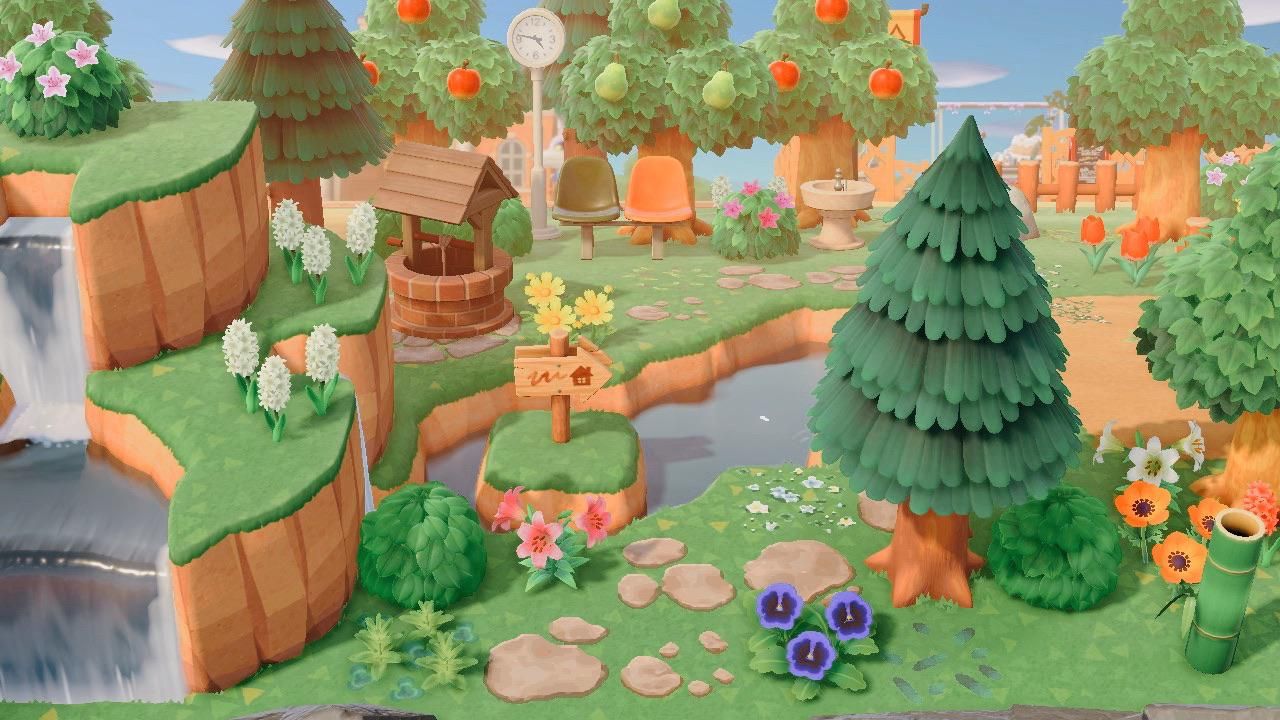
Another important aspect to make a relaxing environment. Through a study of 20.000 people found out that people who spent two hours a week in nature, like parks or forests, are more likely to have good health and psychological well-being than those who don’t. 120 minutes per week of nature exposure can reduce high levels of stress and create a relaxing state. This however can differ per biodiverse setting and the quality of the natural environment. [21]
The reason why these natural environments calm us is due to phytoncides. Phytoncides are micro substances that plants and trees expel to protect themselves from bugs and diseases. This lowers our stress, because these decrease the stress hormones in our bodies. [22] [23]
Another reason why nature calms us is because of colors. The color of blue is a common association of calmness. [38] The color green is a common association for nature and safety. [39]
5.3.3 Art Style
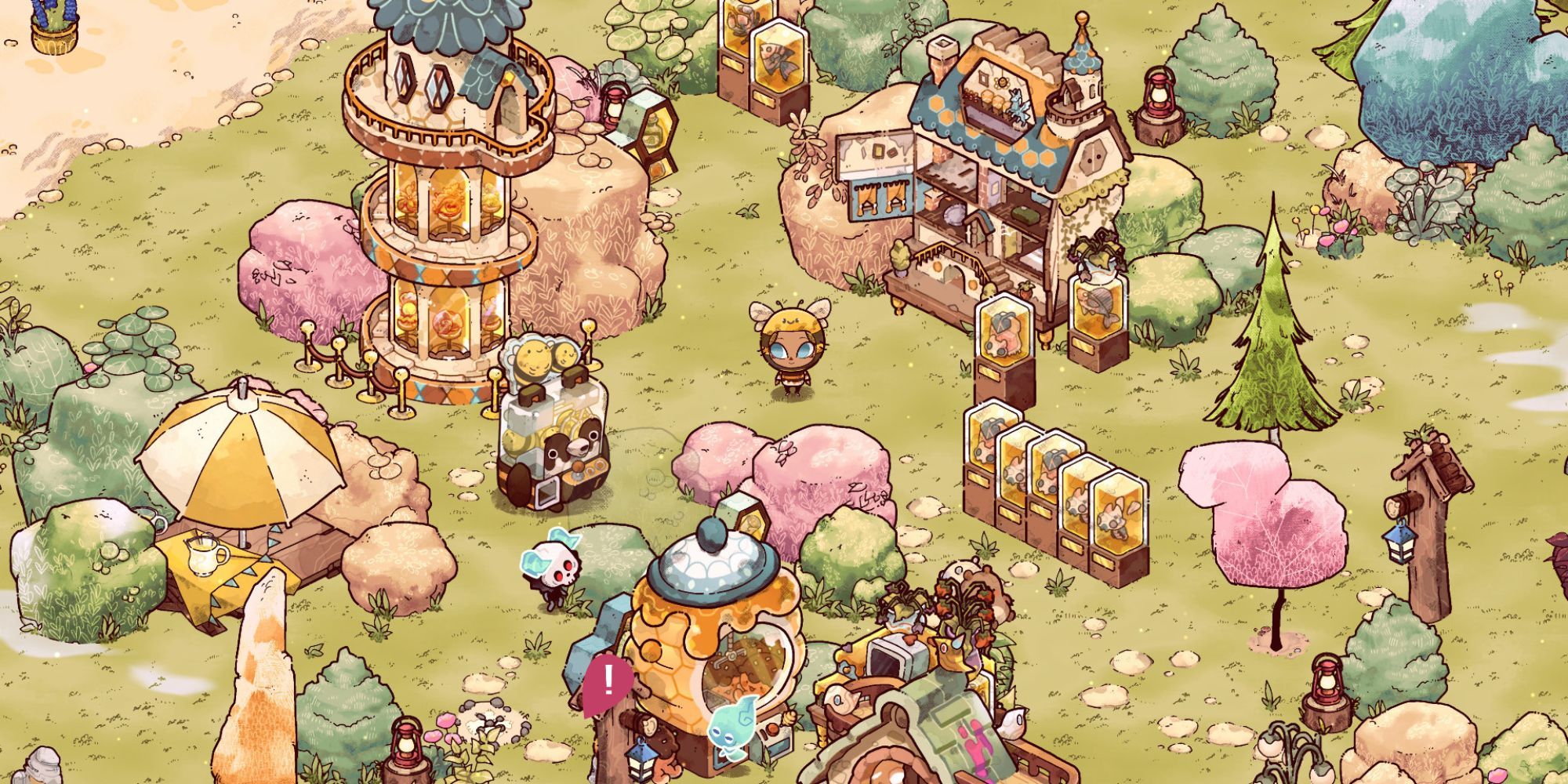
Art style has an impact on the mood of the player. One way they do it is shapes. A game like Animal Crossing uses lots of circles in its design. Circles make an image more gentle, it is easy for the eyes and invokes a sense of safety, due to its symmetry and completeness. The triangle on the other hand is often associated with force and action. [34] [35]
Art styles with less color and more realism creates a more serious tone. A style with unrealistic proportions, lighthearted and cartoonish art style can create a very casual or silly tone. Games like the Sims 4 take a really cartoonish and lighthearted style, which complements the game’s tone. [34] [36]
5.3.4 Colors
When designing a relaxing game, color is important. Some colors are more relaxing due to their softness, coolness and non-confrontational characteristics. [24]
High levels of contrast create more distraction, which puts more stress on the eyes and creates more energy. Softer colors blend better to the surroundings which create less contrast. Lower saturation levels create a sense of subtlety, which produces a more peaceful ambience.[24]
Cooler colors, like shades of blue, green and purple, are more associated with peace, quietness and being clear-minded. Warm colors, like yellow, red and orange, on the other hand are often recognised with excitement and energy.[24] These colors can impact our moods, emotions and states.[25]
Non-confrontational colors don’t contrast with other colors in their color palettes. This is important to avoid contrast. The colors should flow seamlessly from one to another. This doesn’t mean that everything should be monotone but the difference between colors should be minimal to keep the presentation relaxing. [24]
5.3.5 Music
Audio is also something which impacts our state. Relaxing music is often low tempo, around 60 BPM, which can quiet our minds and relax our muscles. When listening to this kind of music, our brains synchronize with the music and emit alpha waves. Alpha waves, like mentioned earlier, are brain waves which are the result of being in a relaxed state. Music is subjective, which can cause different outcomes of emotions per person. [26]
5.3.6 Ambience
Ambience is a powerful tool, which helps define game environments and shape the player’s perception of the world. This ambience can cause more immersion for the player, making them believe that they are in a calming environment. [27] This also helps the player get into a “flow” state. [17]
5.3.7 Sound Effects
Sound effects are used in video games to heighten the sense of engagement. These are short, distinct and tied to a special event or action in a game. Sound effects just like ambience create better immersion. Poorly implemented sound effects can disrupt immersion. In relaxing games this can be used to create environmental interactions, which makes the game more realistic and immersive.
5.3.8 Freedom
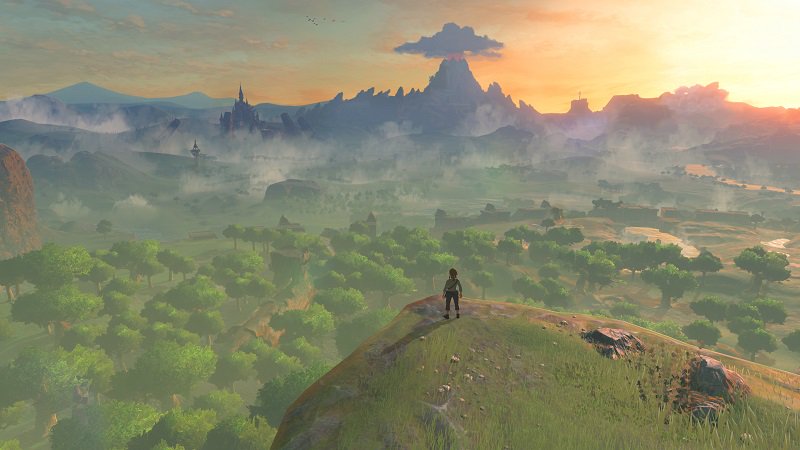
Games which give players lots of freedom and autonomy, cause the players to be more relaxed. Through a study it is revealed that cognitive escapism through immersive game worlds allowed players to disconnect from the real-world. This caused a better mood and psychological well-being. This was tested in open-world games, where players can play however they want and have freedom to explore the world. [28]
5.3.9 Creativity
Freedom in solving a problem can also be relaxing. Creativity has physiological effects that reduce stress and improve well-being. It creates an outlet of self-expression, which can help getting into a flow state. [29]
5.3.10 Goal
Relaxing games usually don’t have a goal. Games like Animal Crossing, Stardew Valley and the Sims 4 are open-ended and can be played until the player decides where the game ends. These games encourage creativity and repetition. This helps with getting into the “flow”. [29] [30] Having no real ending also means that there is no time limit. The player can play the game as long as they want and collect everything in the game while they don’t get stressed by time. [31]
5.3.11 UI and HUD

Bad UI can throw people off the “flow”. Bad UI is when the game doesn’t communicate to the players where they have to go to access a certain something. Good UI would cause the players to know where everything is without questioning their decision. [32] [33]
5.4. Analyzing Relaxing Games
How do other games achieve to get players into a relaxing state? To know how this game should be designed, other games will be analysed and compared to find an optimal way to design my game. The games which will be analysed must be under the tags “relaxing” on Steam. Otherwise games with reviews from people which say that it is relaxing.
The game I want to design, due to time limitations, is a fishing game. The game should be a fishing game with relaxing as a main pillar.
The games which will be analyzed are:
- Cat Goes Fishing
- Dave The Diver
- WEBFISHING
In these games every aspect is covered however each aspect has a different impact on players’ relaxing state.
5.4.1 Cat Goes Fishing

Cat Goes Fishing is a single player fishing game, where you play as a cat. In this game you start by fishing smaller fish to earn money and experience. With the money the player can buy upgrades with which they can fish bigger fish and with the experience you can level up. With the levels you get access to more upgrades. There are two modes: Realism and classic. The difference in these is that in realism mode the fish struggle after being hooked. In this part I will only look at the classic mode. [42]
The main mechanics of the game are very simple. Click the mouse button to charge a throw and then release it. When they hook it in the water the player can reel it back to the beginning. This makes it very easy for new players to get into the “flow”. The game is not really difficult and there is no real losing condition. The only losing condition there is, is that you don’t get any fish, but the player can reel back and try again after. This makes it very easy for players to be in the flow state.
The game keeps players engaged due to the progression the player can make by selling fish and upgrading their equipment. With the equipment the player can explore more of the world in this game. There are also challenges which are easily completed and tied to progression.
The environment of the game is in nature. The player is near a body of water with lots of green in the multilayered background. Some other environments later in the game are underwater with lots of darker blue tones.

The artstyle this game uses is very lighthearted and uses lots of circles and almost no sharp edges. This makes the player feel very safe and creates a bit of a silly tone to the game.
The colors used are mostly shades of green and blue. The colours are very cool which creates a feeling of calm and quietness. The colors don’t contrast that strongly which creates even more peacefulness.
The music in the game is a slow tune with only instrumentals and no vocals. The only tune in the game is “Easy Lemon” by Kevin MacLeod. [40] The BPM of this tune is at 82 BPM, which can help relax you. [41]
The ambience and sound effects cause more immersion in the game. The ambience only appears when the player reaches deeper water. This ambience is the sound of water. This sound effect in the game is the hook getting reeled in or fish eating the fish on the hook. These two aren’t really distracting and help the player get into the “flow”
Later in the game the player gets a boat with which they can freely explore the area and can go fish wherever they want.
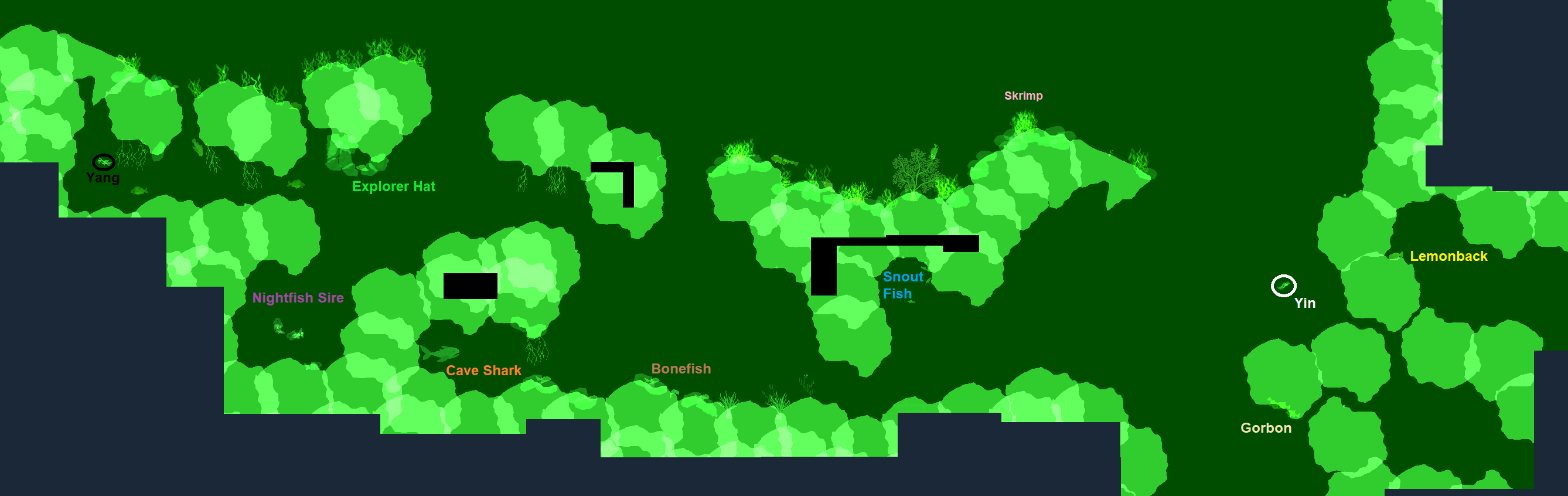
Also there is lots of freedom in how to solve problems. In the game you can only fish bigger fish with a bait. This bait is obtained by fishing a fish and throwing it in the water. That fish turns into bait to collect a bigger fish. This is very handy because when a big fish takes a bite from a smaller fish you can use that fish as bait. With this players can find ways to maximize their money gained by fishing cheap smaller fish to fish valuable bigger fish.
There are some goals in the game but they aren’t mandatory to complete the game. There are upgrades which can be purchased and a completion list of all fishes. Apart from that the player can play forever.
The UI is quite simple and straightforward. There is an icon for the rod, items, catalog, money, upgrades and more. The rod is for the type of rod you have and which one you want to select. The items one you can choose which items you want to equip. The catalog shows all fish. This communicates quite well to the player what each icon means.
5.4.2 Dave the Diver

Dave the Diver is a single player adventure, RPG, management hybrid, in which the player has to explore the depths of the Blue Hole by day and run a successful sushi restaurant at night. In the game you play as Dave and explore the wildlife in the ever-changing Blue Hole. At night Dave manages the restaurant. Creating the menu based on the wildlift caught and serving customers are part of Dave’s job. The player can upgrade and forge equipment with collected resources and the income from the sushi restaurant. [43]
The mechanics of the game are very simple, which makes it easy to pick up. When fishing the player can swim around the Blue Hole. Dave has weapons with which he can shoot fish. He has to select the weapon and then shoot the animal. Based on the weapon he knocks them out and can collect them by swimming towards the fish or by engaging in a fishing mini game. Lots of the other things in the game icons appear to communicate to the player what they have to do.

The game isn’t the easiest game. The combat is very tricky which makes avoiding fights mandatory. The cost of losing when diving is that you return and salvage one item. Many players find this too harsh of a punishment, which can cause players to get out of the “flow”
The game keeps the player engaged through its small minigames and progression. There are lots of minigames in the game which keep the players engaged. Pouring a drink, pulling a fish with a hook cand shooting with a pistol can make the game less monotone and keep players excited. Also when playing you can find chests with special rewards. Through progression the player can explore more parts of the Blue Hole and make more profit in the sushi restaurant. With more profit the player can explore more.
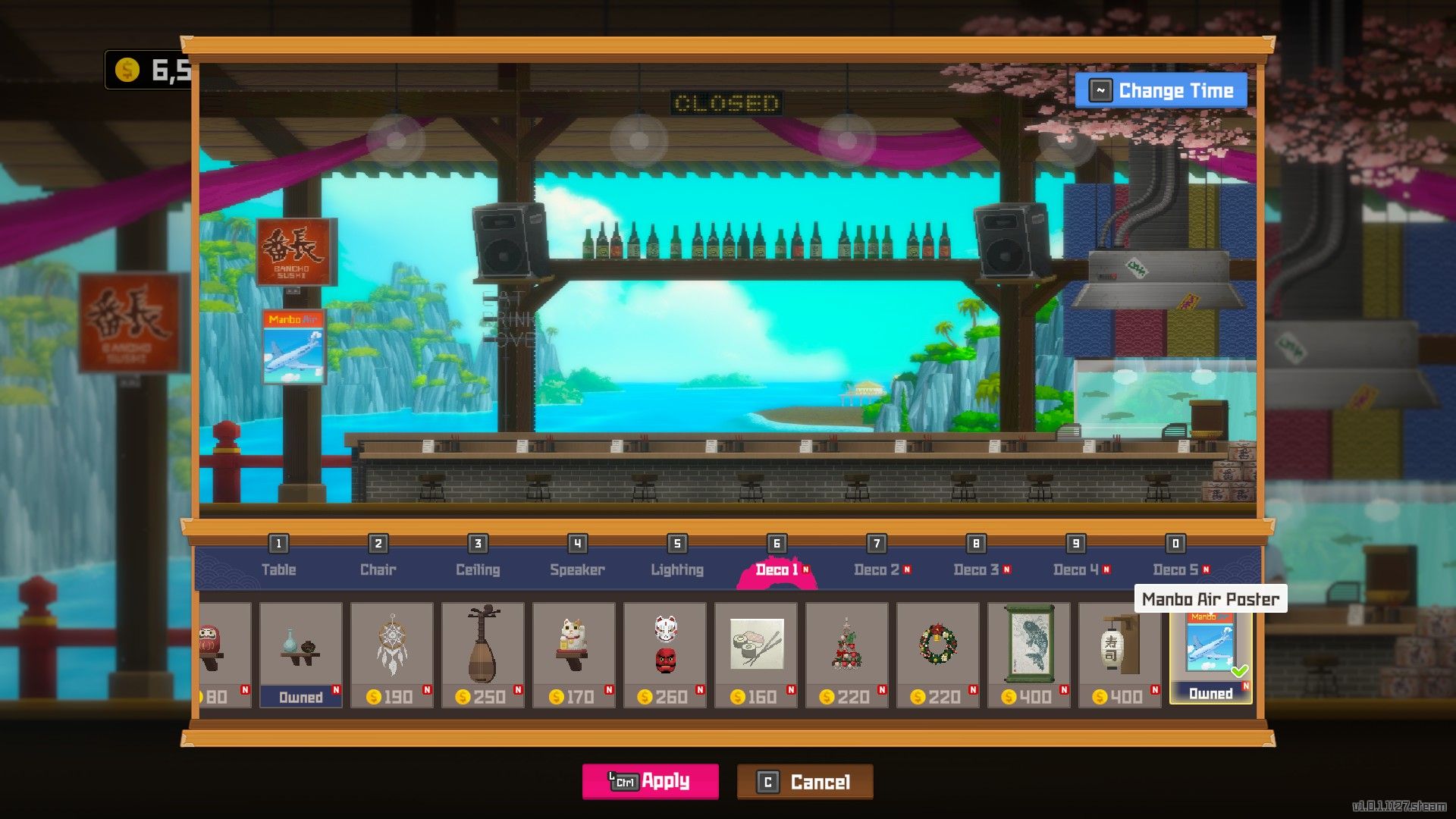
The environment is mainly underwater and sometimes in the sushi restaurant. Underwater you can see lots of colorful coral reefs and fish.
The artstyle in Dave the Diver is pixel art, which can give the player a feeling of nostalgia, if the player has fond memories with this art style.[45] The pixel art also doesn’t create much seriousness, due to it being unrealistic. The main character consists of two circles, which can make players feel safe.
The colors that are used in Dave the Diver are mainly blue, which can create a feeling of calmness. There are also some bright colors, however they don’t contrast that strongly.
There are many tracks in Dave the Diver, which all differ in style. The theme when diving, Diver by Jukio Kallio, is around 100 BPM, which is a bit too fast for getting into a relaxing state. [46] However when above water, this theme is very calm and slow and is around 80 BPM. [47]
There is water ambience when in subareas, like shipwreck interiors, under the water. Above water there are water sounds, seagulls and wind. There are lots of sound effects in the game like picking up kelp, selling items and pouring a drink which together with the ambience sells the idea of being outside at the sea quite well.
The player has some freedom in exploring, however this is limited by Dave’s oxygen. The layout of the Blue Hole changes everytime Dave goes exploring which gives the player lots of places to explore. This however doesn’t happen when the game wants you to progress in a certain way, for example working on a main mission. This limitation can cause the player to be frustrated due to them not being able to explore more, however this is fixed by starting a new day.
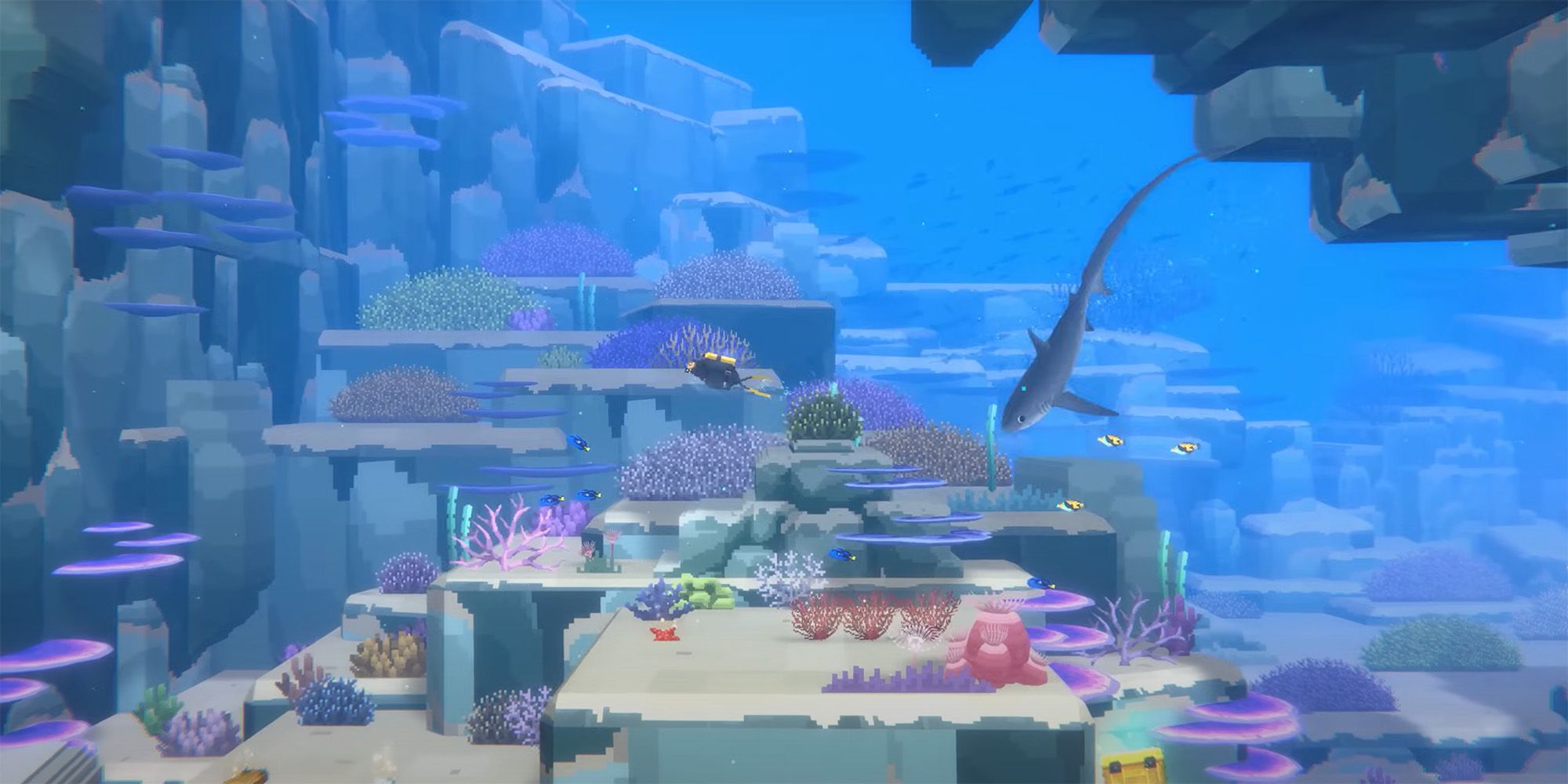
There are lots of options players can have to explore. There are lots of guns the player can use to neutralize a fish. Some weapons have different effects which can make players think about which weapons they want to bring with them. They can take Hush Dart which can put smaller fish to sleep and use a normal weapon to do damage to bigger ones. This can make real creative combinations of weapons the player can use to optimize the amount of fish caught or to make exploration easier. The game Dave the Diver has a story line but no real goal. The player can go through the story, but after the story the gameplay is still available and the main gameplay loop is still there and the main part of the game is still playable.
The UI has many options however it is very straightforward what each option should go to. In the game you have a phone with which you can see and manage most things. You can see all the fish, music, missions, the weapon shop and much more. These all have icons to communicate what each option should be.
5.4.3 WEBFISHING
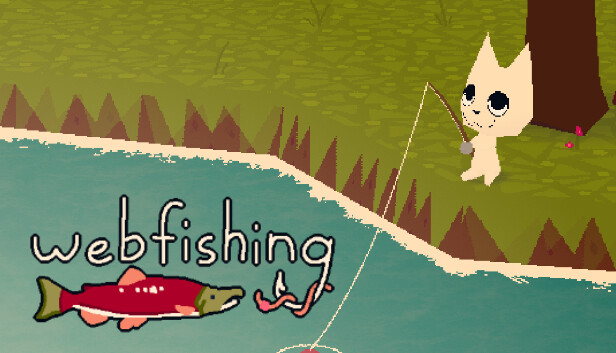
WEBFISHING is a multiplayer online casual fishing game where you can relax and catch fish with others. In the game you fish to make money. With this money you can purchase upgrades, like baits, lures, and rods, and buy cosmetics. While playing you can enjoy the game with friends and strangers in the camp. There are 100 different creatures to catch to complete your journal and get tons of rewards. [48]
The gameplay is quite easy to pick up. When fishing the player throws their rod in the water and when a fish bites the player has to click the left mouse button. If the player clicks a minigame will start. This minigame has a bar which fills up when the player clicks the mouse button. There are some white bars between the start and end where the player has to click the button for a certain amount of times. These white bars are always random and the amount the player has to click as well. If the player is fast enough, they get a fish.
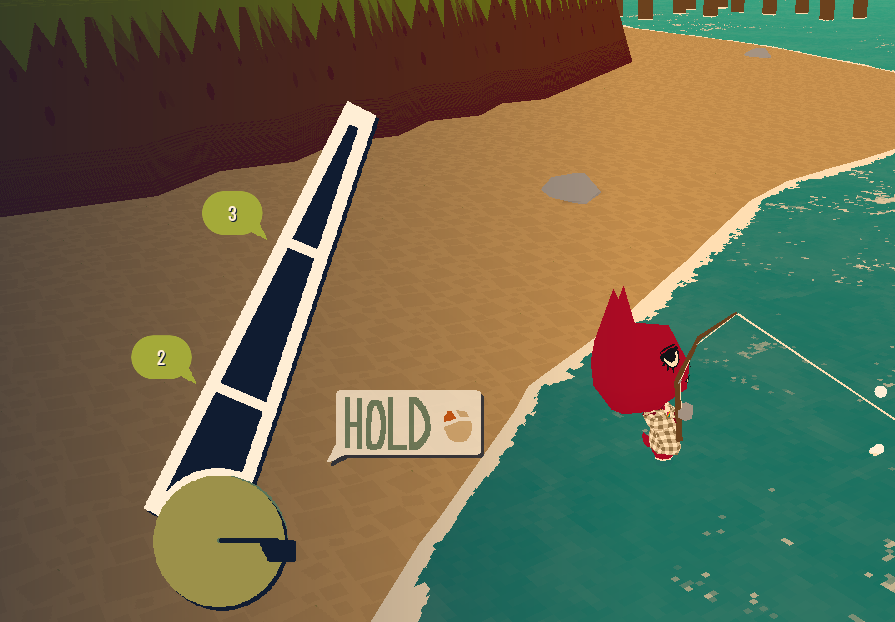
The game is very easy and the cost of losing is very small. When you don’t catch a fish, you can just continue fishing. This can helps players to not get out of the “flow”
The way it keeps it engaging is the minigame and customization. The bar when fishing can change randomly. The amount of white bars, which you have to click away, can change and the amount of clicks needed to remove them can change which can make the game less monotone. With money you can customize your outfits and the animals you want to play with. Another thing is that you can interact with others, which can alter the experience. You can draw, talk and play guitar with each other.
The environment is on an island with lots of green and blue. The environment on the island is quite big with some man-made structures like a pier, bridges and some buildings.
The artstyle is very animal crossing like, but slightly pixelated. This give is a little bit of a silly tone. The character design is also a lot like animal crossing. The characters have a big round face with small torso and legs and round arms and legs. This roundness makes the game feel very safe. Also the player you play is an animal which makes the game less serious but more casual and relaxing.
The main colors of the game don’t have big contrast and aren’t confrontational. This can make the player at ease due to the simplicity of the visuals.
This game does have soundtracks but consists mainly of sound effects and ambience. The soundtracks played in this game are often very quiet. The player can hear them but they are just as loud as the sound of water splashing against the shore. The tunes are very calm and only use one instrument. This can cause for more simplicity in the piece which can be calming for the player
The ambience of the game is just like in Dave the Diver the sounds of water and wind. In the middle of the island this sound is replaced with the sound of leaves in the wind. The sound effects are very immersive. The sounds the fishing rod creates when it hits the water or when you reel the hook back is very realistic. Both of these can improve the “flow” of the game
There is lots of freedom in the game. The way you want to approach it can be one of them. You can just play with friends and draw on the ground or play guitar instead of fishing. The place where you fish can also be chosen. You can fish in the river in the center of the island, at the pier and many more places. You can also find a way to maximize money output by buying certain upgrades that can make you earn money passively or buy better baits to get a chance to make more money.
Creativity is a big part of WEBFISHING. There are many ways you can express yourself. Through cosmetics, drawing and music. There are many cosmetic options. You can buy faces, hats, tshirts, tank tops, pants, flannels, hoodies and much more, with each category having multiple options.

The UI is very minimalist. You have a backpack in which you can see your rank and money. In the backpack there are 5 tabs. Inventory, journal, outfit, messages and friend list. The inventory shows all the items you have and the items which you put in your hotbar. These are also labeled as 1,2,3,4 and 5. The journal shows each fish collected. The images used to label these can make it very easy for the player to understand what each icon means.
5.4.4 Result Analysis
Through analysis I noticed that “flow” is the most important thing in a relaxing game. Being able to make a simple and repetitive game engaging so that it becomes a relaxing game, can really shape the player’s experience. The other aspects often are tied to the “flow”. For example ambience and sound effects are good for immersion and things like good UI can keep immersion. Other things like art create a certain tone to the game.
5.5 The Relaxing Game
How would I make a game with this knowledge acquired? Using the knowledge from the analysis of what aspects make a relaxing game and the way other games implement them, I will make a game. Not every aspect analysed are in the game, only the ones I find the most important are.
5.5.1 Environment
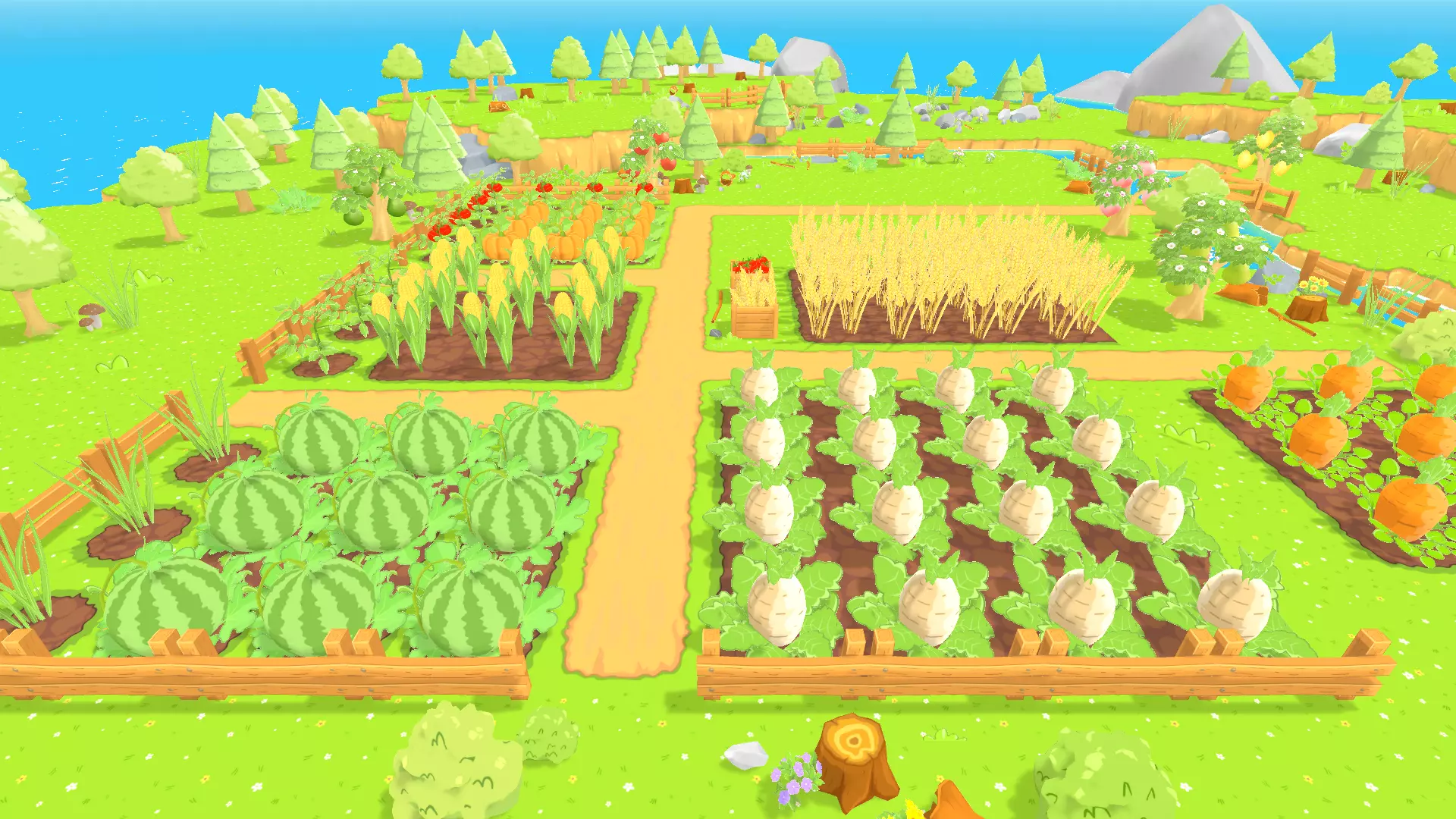 Before starting on the mechanics or anything else, I searched for resources like music, environment and characters. The environment and characters are Kawaii Slimes and Kawaii Land from Awaii Studios and the music was the Easy Lemon by Kevin MacLeod. Other miscellaneous items like the fish, fishing rod and pier were from Low-Poly Medieval Market by Vanilla Art. These were chosen due to them fulfilling some of the aspects mentioned prior and them being free for use. The assets from Awaii Studios are all round and very cartoony like. The song Easy Lemon is the same song as the one used in Cat Goes Fishing. In the scene I also added some extras to the scene like background props, to make the game more appealing for the player while fishing.
5.5.2 Mechanics
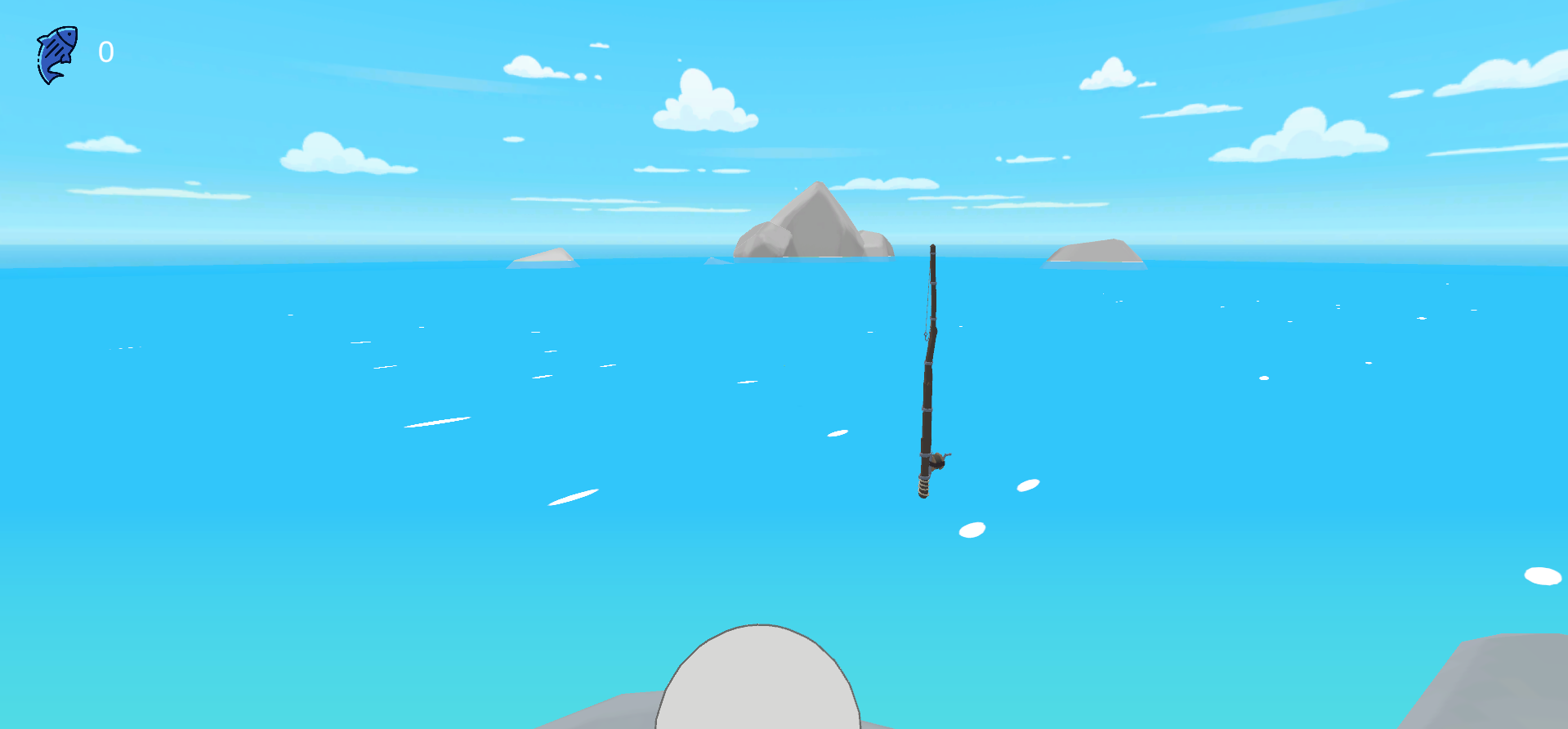
After setting up the environment and player, the mechanics needed to be added. In this game I really wanted to focus on the flow due to it being important to make people forget about their worries. First throwing was implemented. Real life fishing was used as an inspiration to make this. First the player has to hold the left mouse button to lock their movement. While holding it the player can use their mouse movement to throw the lure. When the left mouse button is released the game will look at the mouse movement and translate this into the throwing direction and throwing strength. The camera looks at the bait from the player’s perspective to make it feel as if you, the player, looks at the bait.
5.5.3 Minigame
Then I made a minigame. In this, games like Dave the Diver and WEBFISHING, were used as inspiration due to the engagement they create with their minigames or options. WEBFISHING has minigames which are repetitive but they also have a randomness factor to it which changes the gameplay slightly. Dave the Diver has different weapons which can change the way the player approaches the game.
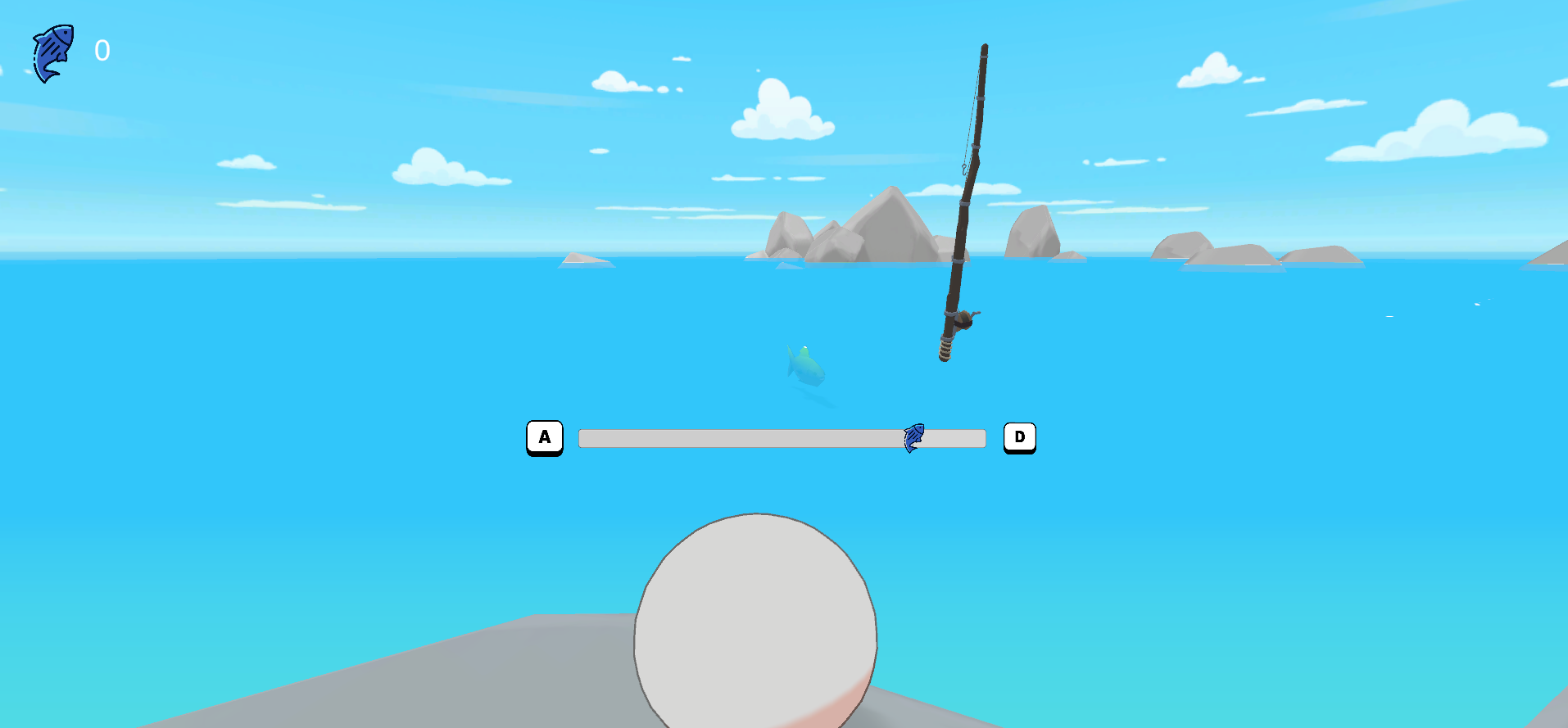
To recreate this in here the player has to fight against the fish. When the player throws the lure into the water, he has to wait until the fish bites. Then has to fight and reel him towards the player to obtain it. While fighting fish can go left and right to flee. There is a bar to help the player visualize where the most left and right place is. When the fish reaches that place in the bar the fish is gone and the players have to wait for a new one. This makes the cost of losing low, which isn’t too frustrating. To prevent that the fish flees, the player has to click A or D to keep the fish in the middle. While the fish is in the middle he can swap directions so the player has to switch the button clicked. While the player fights the fish, he has to reel him in using the left mouse button. The balance between waiting and engaging gameplay makes it so that the game is engaging enough that the gameplay doesn’t feel boring.
5.5.4 Sound Design
Sound effects and ambience were also added to make the game more immersive and help players get into the flow. When in fishing mode the music gets quieter and the ambience louder to make it feel more immersive. The ambience is the sounds of waves crashing against the shore with some seagulls. As sound effects reeling is added when players are reeling. These sound effects aren’t too loud, because too loud sounds can break immersion.
5.6 Game Test
The game is made, but the question is: How is this game relaxing? To answer this 6 test subjects played the game and were observed. The things which were observed are body language and their comments to see if they are relaxed
5.6.1 Controls
All of the players had problems with learning the controls. The controls are very hard to learn for them but once they understood how it works they could pull it off almost every time. The moment they learned it they became fully engaged and were fishing multiple fish.
5.6.2 Engagement & Player Reactions
For most the fishing minigame was really hard, but also engaging. I noticed that some players, while waiting for the fish to bite, were leaning back in the chair and somewhere completely focused on the lure. When the fishing minigame began the player tried as hard as possible to get the fish. If they failed they would be slightly frustrated but then would throw the lure back into the water. They often continued fishing even after failing multiple times in a row. This made some peoples sessions 3 to 10 minutes long.
After fishing a bit, some players were exploring the island to find a fishing spot. While playing some players were really surprised and liked the game’s environment and sound design.
5.6.3 Result
Through the test the game does what it is supposed to achieve. The player is in a state of flow due to the gameplay and immersion. The kind of flow is slow, because of the wait time, but engaging enough, due to the minigame, so that players don’t feel too bored while not too engaged.
6. Conclusion
In this research, I explored what a relaxing state is and how it can be attained, particularly through video games. Video games can serve as a medium for relaxation by using various aspects such as flow, art, sound design, player freedom, and UI. To understand how these aspects contribute to relaxation, I analyzed other games labeled as relaxing and looked which aspects really shape a relaxing experience.
Using these findings, I designed a game with relaxation as its main design pillar. To test if it is relaxing, I tested 6 subjects. The results showed that they entered a state of flow, due to the mechanics, controls, art style, environment, and sound design. This shows that relaxation in games comes from how these elements work together to create a relaxing experience.
This research highlights how important it is to look at every aspect of a game which can shape a certain kind of experience the players have. Future studies could explore more aspects which can improve relaxation or look at relaxation in another medium, like XR. By understanding which aspects contribute to this experience, designers are able to learn and understand the true essence of a relaxing game.
7. Sources
[1] HSE Ireland, “Do you ever get that feeling when… you are relaxed?,” YouTube, [Online]. Available: https://www.youtube.com/watch?v=GIB8gITHZ5A. [Accessed: Mar. 9, 2025].
[2] GoodTherapy, “Relaxation,” GoodTherapy, [Online]. Available: https://www.goodtherapy.org/blog/psychpedia/relaxation. [Accessed: Mar. 9, 2025].
[3] E. Scott, “How to relax your body and mind,” Verywell Mind, Jan. 3, 2024. [Online]. Available: https://www.verywellmind.com/how-to-relax-physically-and-emotionally-3144472. [Accessed: Mar. 9, 2025].
[4] B. Brogaard, “How deep relaxation affects brain chemistry,” Psychology Today, Mar. 31, 2015. [Online]. Available: https://www.psychologytoday.com/us/blog/the-mysteries-love/201503/how-deep-relaxation-affects-brain-chemistry. [Accessed: Mar. 12, 2025].
[5] Avail Hospitals, “Health and balance: What happens to your body when you relax,” Avail Hospitals, Jul. 13, 2022. [Online]. Available: https://www.availhospitals.com/health-and-balance-what-happens-to-your-body-when-you-relax. [Accessed: Mar. 12, 2025].
[6] K. Cherry, “What are alpha brain waves?,” Verywell Mind, Sep. 12, 2023. [Online]. Available: https://www.verywellmind.com/what-are-alpha-brain-waves-5113721. [Accessed: Mar. 12, 2025].
[7] K. Meda, “How to manipulate brain waves for a better mental state,” Jefferson Health, Jul. 16, 2020. [Online]. Available: https://www.jeffersonhealth.org/your-health/living-well/how-to-manipulate-brain-waves-for-a-better-mental-state. [Accessed: Mar. 12, 2025].
[8] S. Hill, “A deep dive into beta brainwaves & how to balance them,” Healium, Oct. 4, 2022. [Online]. Available: https://tryhealium.com/blog/deep-dive-into-beta-brainwaves. [Accessed: Mar. 12, 2025].
[9] Harvard Health Publishing, “Exercising to relax,” Harvard Health Publishing, Jul. 7, 2020. [Online]. Available: https://www.health.harvard.edu/staying-healthy/exercising-to-relax. [Accessed: Mar. 14, 2025].
[10] Improving Lives Counseling Services, “The Impact of Self-Image on Mental Health: Overcoming Low Self-Esteem,” Improving Lives Counseling Services, Mar. 14, 2025. [Online]. Available: https://improvinglivescounseling.com/the-impact-of-self-image-on-mental-health-overcoming-low-self-esteem/. [Accessed: Mar. 15, 2025].
[11] Better Health Channel, “Breathing to reduce stress,” Better Health Channel, [Online]. Available: https://www.betterhealth.vic.gov.au/health/healthyliving/breathing-to-reduce-stress. [Accessed: Mar. 15, 2025].
[12] K. Nunez, “The benefits of progressive muscle relaxation and how to do it,” Healthline, Aug. 10, 2020. [Online]. Available: https://www.healthline.com/health/progressive-muscle-relaxation. [Accessed: Mar. 16, 2025].
[13] E. Cirino, “What causes muscle rigidity?,” Healthline, Jul. 6, 2019.[Online]. Available: https://www.healthline.com/health/muscle-rigidity. [Accessed: Mar. 16, 2025].
[14] I. Timmers, C. W. E. M. Quaedflieg, C. Hsu, L. C. Heathcote, C. R. Rovnaghi, and L. E. Simons, “The interaction between stress and chronic pain through the lens of threat learning,” Neurosci. Biobehav. Rev., vol. 107, pp. 641–655, Dec. 2019. [Online]. Available: https://www.ncbi.nlm.nih.gov/pmc/articles/PMC6914269/. [Accessed: Mar. 16, 2025].
[15] Flowskills, “The 8 elements of flow,” Flowskills, [Online]. Available: https://www.flowskills.com/the-8-elements-of-flow.html. [Accessed: Mar. 20, 2025].
[16] Z. Berend, “The 8 elements of flow - Robert Csikszentmihalyi,” Sooner Safer Happier, May 21, 2024. [Online]. Available: https://www.soonersaferhappier.com/post/the-8-elements-of-flow-robert-csikszentmihalyi. [Accessed: Mar. 20, 2025].
[17] A. Brazie, “Designing a game’s flow,” Game Design Skills, [Online]. Available: https://gamedesignskills.com/game-design/game-flow/. [Accessed: Mar. 20, 2025]
[18] Flowly, “Relaxing in flow state: how flow can regulate your nervous system,” Flowly, [Online]. Available: https://www.flowly.world/post/relaxing-in-flow-state-how-flow-can-regulate-your-nervous-system. [Accessed: Mar. 20, 2025].
[19] H. Anderson, “Game Theory – Flow (Mihaly Csikszentmihalyi),” Henry Anderson’s Blog, Sep. 29, 2016. [Online]. Available: https://henryganderson.wordpress.com/2016/09/29/game-theory-flow-mihaly-csikszentmihalyi/. [Accessed: Mar. 20, 2025].
[20] J. Martin, “On flow and flow control: How to design games for player growth, replay value, and great gaming experiences,” Mediadesign Hochschule, Jan. 17, 2017. [Online]. Available: https://www.mediadesign.de/de/news/2017/flow-and-flow-control-how-design-games-player-growth-replay-value-and-great-gaming. [Accessed: Mar. 20, 2025].
[21] M. P. White, I. Alcock, J. Grellier, B. W. W. Wheeler, T. Hartig, S. L. Warber, A. Bone, M. H. Depledge, and L. E. Fleming, “Spending at least 120 minutes a week in nature is associated with good health and wellbeing,” Scientific Reports, vol. 9, no. 1, p. 7730, Jun. 2019. [Online]. Available: https://www.nature.com/articles/s41598-019-44097-3. [Accessed: Mar. 21, 2025].
[22] W. Schippers, “Why being in nature is relaxing,” NiceDay, Apr. 15, 2019. [Online]. Available: https://niceday.app/en/why-nature-is-relaxing/. [Accessed: Mar. 21, 2025].
[23] New York State Department of Environmental Conservation, “Immerse yourself in a forest for better health,” NYS Dept. of Environmental Conservation, [Online]. Available: https://dec.ny.gov/nature/forests-trees/immerse-yourself-for-better-health. [Accessed: Mar. 21, 2025].
[24] Amy Wax, “Relaxing colors: they’re not the same for everyone,” Amy Wax Color Expert, Sep. 29, 2016. [Online]. Available: https://amywax.com/relaxing-colors-theyre-not-the-same-for-everyone/. [Accessed: Mar. 21, 2025].
[25] C. Vetter, “The effects of colors on behavior,” Neurofied, Dec. 5, 2019. [Online]. Available: https://neurofied.com/effects-of-color-on-behavior/. [Accessed: Mar. 21, 2025].
[26] University of Nevada, Reno, “Releasing stress through the power of music,” University of Nevada, Reno, [Online]. Available: https://www.unr.edu/counseling/virtual-relaxation-room/releasing-stress-through-the-power-of-music. [Accessed: Mar. 21, 2025].
[27] S. Y., “How ambient noise and music enhance game world immersion,” Indigo Music, Jan. 7, 2025. [Online]. Available: https://indigomusic.com/feature/how-ambient-noise-and-music-enhance-game-world-immersion. [Accessed: Mar. 21, 2025].
[28] “Open-world video games boost relaxation and mental well-being,” Neuroscience News, Dec. 18, 2024. [Online]. Available: https://neurosciencenews.com/open-world-gaming-mental-health-28274/. [Accessed: Mar. 22, 2025].
[29] J. Burton, “The art of destressing: How creativity creates less stress,” MQ Mental Health Research, Apr. 15, 2024. [Online]. Available: https://www.mqmentalhealth.org/the-art-of-destressing-how-creativity-creates-less-stress/. [Accessed: Mar. 22, 2025].
[30] E. R. Morelli, R. Walde, B. Hoffman, and D. G. Cooper, “Flow of control: Repetition structures,” in Java, Java, Java: Object-Oriented Problem Solving, 2024. [Online]. Available: https://runestone.academy/ns/books/published/javajavajava/repetition.html. [Accessed: Mar. 22, 2025].
[31] Workfeed, “Time anxiety: What is it and how can you deal with it?,” Workfeed, Jul. 16, 2022. [Online]. Available: https://workfeed.io/blog/time-anxiety/. [Accessed: Mar. 22, 2025].
[32] R. Fransz, “The game breaker: How poor UX can ruin your video game experience,” Medium, Nov. 12, 2023. [Online]. Available: https://medium.com/@rubenfransz/the-game-breaker-how-poor-ux-can-ruin-your-video-game-experience-bafd8ca25691. [Accessed: Mar. 22, 2025].
[33] J. Bycer, “Why UI design is a challenge for video games,” Medium, Jan. 4, 2018. [Online]. Available: https://medium.com/@GWBycer/why-ui-design-is-a-challenge-for-video-games-67b2fc7ecd51. [Accessed: Mar. 22, 2025].
[34] Pixune, “Game art design: 12 principles that you should know,” Pixune, Aug. 15, 2024. [Online]. Available: https://pixune.com/blog/principles-of-game-art-design/. [Accessed: Mar. 22, 2025].
[35] K. Marsden, “The Endless Embrace: Symbolism of the Circle in Abstract Art,” Bleating on About Art, Nov. 16, 2023. [Online]. Available: https://bleatingonaboutart.substack.com/p/the-endless-embrace-symbolism-of. [Accessed: Mar. 22, 2025].
[36] Pixune, “2D/3D Game Art Styles | Trends & Tips for Choosing,” Pixune, Sep. 23, 2024. [Online]. Available: https://pixune.com/blog/game-art-styles/. [Accessed: Mar. 22, 2025].
[37] Y. Denisyuk, “The role of sound design in immersive gaming experiences,” Pingle Studio, Sep. 20, 2024. [Online]. Available: https://pinglestudio.com/blog/the-role-of-sound-design-in-immersive-gaming-experiences. [Accessed: Mar. 22, 2025].
[38] Strathmore Artist Papers, “Color Psychology - Blue,” Strathmore Artist Papers, Aug. 13, 2019. [Online]. Available: https://www.strathmoreartist.com/blog-reader/color-psychology-blue. [Accessed: Mar. 23, 2025].
[39] K. Cherry, “What Does the Color Green Mean?,” Verywell Mind, Nov. 20, 2023. [Online]. Available: https://www.verywellmind.com/color-psychology-green-2795817. [Accessed: Mar. 23, 2025].
[40] Audio Library — Music for content creators, “Easy Lemon – Kevin MacLeod (No Copyright Music),” YouTube, Sep. 23, 2015. [Online]. Available: https://www.youtube.com/watch?v=pfcVJbKXkO4. [Accessed: Mar. 23, 2025].
[41] K. MacLeod, “Easy Lemon,” Tunebat, [Online]. Available: https://tunebat.com/Info/Easy-Lemon-Kevin-MacLeod/0bg53A3vvputdFv9HuFzfv. [Accessed: Mar. 23, 2025].
[42] Valve Corporation, “Cat Goes Fishing,” Steam, [Online]. Available: https://store.steampowered.com/app/343780/Cat_Goes_Fishing/. [Accessed: Mar. 23, 2025].
[43] Valve Corporation, “DAVE THE DIVER,” Steam, [Online]. Available: https://store.steampowered.com/app/1868140/DAVE_THE_DIVER/. [Accessed: Mar. 23, 2025].
[44] Steam Community, “Discussion on DAVE THE DIVER,” Steam, [Online]. Available: https://steamcommunity.com/app/1868140/discussions/0/3805027864675328620/. [Accessed: Mar. 23, 2025].
[45] Ask.com, “The Psychology of Pixel Art: How Colors and Composition Impact Viewer Engagement,” Ask, [Online]. Available: https://www.ask.com/news/psychology-pixel-art-colors-composition-impact-viewer-engagement. [Accessed: Mar. 23, 2025].
[46] SMK Media, “Dave the Diver Soundtrack #1. Deep,” YouTube, Apr. 14, 2023. [Online]. Available: https://www.youtube.com/watch?v=88vyUVPMhL4. [Accessed: Mar. 23, 2025].
[47] Narcasung, “Dave the Diver OST - On the Boat,” YouTube, [Online]. Available: https://www.youtube.com/watch?v=4xEd05SVYTQ. [Accessed: Mar. 22, 2025].
[48] Valve Corporation, “WEBFISHING,” Steam, [Online]. Available: https://store.steampowered.com/app/3146520/WEBFISHING/. [Accessed: Mar. 22, 2025].