
Abstract
Boss fights are a staple in gaming and yet I run into the problem of losing engagement after multiple runs. our proposed solution is a boss that adapts to the player after each fight to see if this can retain player engagement. After doing our research we can to the conclusion that repetitiveness decreases engagement and we concluded how we can measure what engagement is and how we can measure it, and why other solutions failed. lastly we tested our made prototype and from these tests we concluded that the difference between the two boss fights is statistically significant. with that we concluded that an adaptive boss fight does in fact retain player engagement more than a normal boss.
Table of contents
- Introduction
- problem statement and research question
- Research
- What is engagement?
- does repetitiveness decrease engagement?
- What has already been done?
- Development
- finding a game
- building onto the game
- adding melee
- adding a menu
- making the boss adapt
- last polish
- testing
- quantitative test
- Conclusion
- Sources
- appendix
1. Introduction
At this point boss fights have become a staple in video games, almost every game you play has a boss fight. These serve as a milestone that pushes the player to apply all the skills they learned up until that point. And yet personally for me they always missed something, they missed the ability to stay engaging over multiple completed fights. Which caused repetitiveness and thus a decrease in my engagement. My goal is to solve this issue by implementing a boss that adapts to the player after each defeat (of the boss).
2. problem statement and research question
As I already mentioned in the introduction, the problem I am facing is that a lot of boss fights in games get less engaging the more times I beat it. I plan to resolve this issue by implementing a boss that adapts to the tactics of the player each time it is defeated (the boss). Which will answer the main question of this paper “will an adaptive boss fight retain player engagement”. My hypothesis is that an adaptive boss will retain engagement, to prove this we need to divide our main question into three which are as follows:
1. What is engagement and how do we measure it?
2. If and Why repetitiveness decreases engagement?
3. have people already tried to solve this problem and how?
3. Research
3.1 What is engagement?
In this paper the term engagement will be used a lot, many people have a vague understanding of the word but don’t completely understand it and its importance. To get a clear understanding of what engagement is and why it is important we need to have a peek into the world of psychology, since that is the scientific study of mind and behaviour, and looks into the conscious and unconscious mental processes such as engagement [1].
Engagement has a lot of different descriptions in psychology but the one I found to be best understanding and applicable was Psychological Engagement Theory. Which describes engagement as a state where individuals are emotionally and cognitively connected to a task, activity, or relationship[2]. To put this theory simply high engagement means that the person pays full attention is enthusiastic and dedicated to what they are doing[2]. By definition if high engagement entails being dedicated and enthusiastic than low engagement means not being interested and being bored.
Another source describes engagement as being so invested that time flies by, they also call it the state of flow[3]. This flow term is used a lot of people that game to describe the aforementioned qualities.
To measure engagement we need to have the definition of engagement which we describe as a measure to see how dedicated an enthusiastic a person is during a task and how much attention they are paying. By dividing engagement into 3 categories we can measure them separately and then taking the sum average of all three we have the measure of engagement, these categories are called enthusiasm, dedication and attention. Enthusiasm we can measure by how many enthusiastic words or sentences have been said, dedication by how many times the task has been done, and attention by how many minutes they look at the given task. The basic concept is a higher number means more engagement and a lower number means less engagement. I will explain this more later in the paper.
To conclude engagement is the measurement of how dedicated and enthusiastic a person is during a task and how much attention they pay to the given task. High engagement has a positive effect on this and low engagement a negative effect. To measure this, we divide it in three categories and take the sum average of the categories
3.2 does repetitiveness decrease engagement?
The quick and simple answer is yes repetitiveness does decrease engagement. This is because of a phenomenon called habituation which is caused by repeated presentation of a stimuli [4]. Habituation means that someone grows accustomed to a task or stimulus which diminishes its effectiveness[4], which also decreases neural activity[5].
an example of this would be an alarm clock, a lot of people sleep trough their alarm clock while they didn’t have this problem when the alarm clock was new. This is because people get accustomed to the sound of the alarm clock, what first grabbed their attention and had a great response (waking up) now doesn’t grab their attention and thus they also don’t wake up[4]. This works the same with a boss fight, the first time you beat the boss its interesting but after beating it multiple times you already know how the boss works and you get accustomed to it, causing you to be less interested in it.
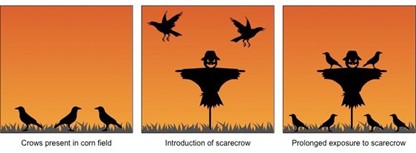
to conclude repetition decreases engagement because of habituation, this causes the brain to grow accustomed to stimuli which in turn causes you to pay less attention and decreases your neural activity meaning you feel less enthusiastic and dedicated.
3.3 What has already been done?
I found three ways that the problem has been tried to be solved I will be listing them by how popular they are by developers:
1. NewGame+ (NG+)
2. Player choice affecting the boss.
3. Online player controlling the boss.
lets start out with NG+, this method means restarting the game after you beat it, but with adjusted difficulty most of the times this means an increase in difficulty[6]. This also applies for the bosses this can entail more hp or even changed attakcs an example of this is Dark souls 2, where the lost sinner will spawn two dark spirit pyromancers when reduced to 60% health[7]. The problem with this method is that it only works after the fact that you beat the game, during your first playthrough you can still lose engagement.
the second method entails that the choices the player makes before the boss fights can have affect on the boss fight itself. for example if you kill everyone you see in Undertale the end bossfight will be extremely more difficult[8], or in baldurs gate 3 where if you save the nightsong the last boss of act 2 will change[9]. The problem with this method is that just as NG+ you only notice the change if you already have a point of reference to the boss and if you change what you do the second time you play it, besides that its not always clear without prior knowledge what you need to do to change the boss.
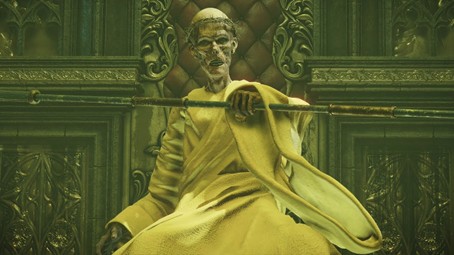
And lastly an online player controlling the boss, this is a very niche implementation that I have only seen once and that was with the old monk fight in demon souls. So depending on the skill level of the person you are up against the boss fight can become really difficult or really easy.[9] This method is in my opinion the best out of the three since the boss will change every time you play it, but you will never know how the boss will fight and you need to have an internet connection for it to work properly.
Our proposed solution wont have any of these problems since the boss fight adapts every time you fight it causing a quicker noticeable change instead of playing the whole game over again, besides that the boss wont change too suddenly from difficulty which was the case with an online player and you wont need an internet connection.
4. Development
This section of the paper will be divided into 2 chapters they are as follows:
1. Finding a game.
2. Building onto the game.
To prove answer our question we not only need the theory but also practical work. This will be done by creating a boss fight where the boss can adapt to how the player fights, which will be used to test on players to find out the difference in engagement score(chapter 3.1). in the first chapter we will try to find an already existing boss fight to reduce the workload here I will try to explain why I chose for a certain game and why I didn’t choose for others. And the second chapter will be about what has been added to the game and why.
4.1 finding a game
To start out we will need a base to work upon, since there is not enough time to create a well-polished boss fight while also doing research and testing. Our first option is a pre existing project that I have made, one of these was solely focused on a boss fight.
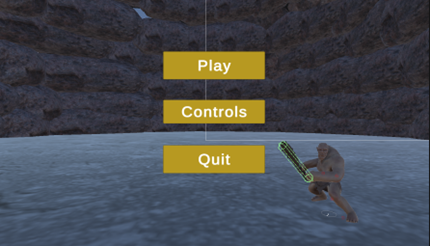
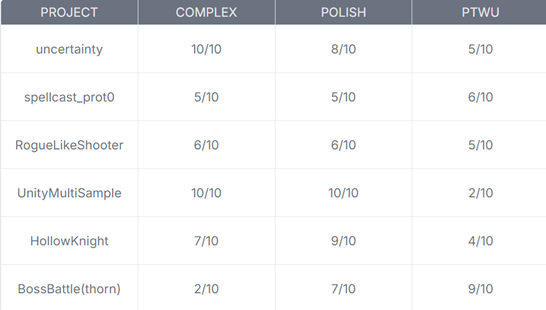
After importing this project and working on it for a week I discovered that this would not work since it had too many bugs and it would take too long to create a polished boss fight. And so the search continues. Our next option is an open source unity project below is a list of open source projects. I have determined some data points to help me choose a project to work upon, which will also be provided below. The data points will be measured out of ten. These data points are:
complexity: how complex is the project, for example logic, code, etc.
polish: how polished is the project, sounds, sprites/models, animations, etc.
possibility to work upon(ptwu): how confident am I to add my own additions to the game and does it fit with the game.
below a spreadsheet with the projects and datapoints.
[10,11,12,13,14,15]
I have chosen for the boss fight of Blackthornprod since this was the most simple in complexity, good amount of polish and I felt the most confident in adding onto it. Of course I also experimented with the other projects but most of them were either too complex to work upon which would take too much time and or they had some bugs which couldn’t be worked around. For example the Roguelike had a lot of potential but I was not able to create a room with the boss in it, the boss behaviour would break for some reason except for if it generated the whole dungeon. This caused me to abandon it since it would take too much time to fix that problem.
4.2 building onto the game
Our next step is to build onto this existing project, first we need to analyse to project to see what we already have and what we need. We already have a boss with a health bar, animations, attacks and a second phase. Next is our player, our player has hp but no health bar or a way to die, he has a gun which can shoot unlimitedly and he can move around. The area surrounding us has a grass plane which a piece of it is missing and the background. And the game has some screen shaking effects that’s it. This may sound like a unfinished game but the basis of it very strong and easy to work upon.
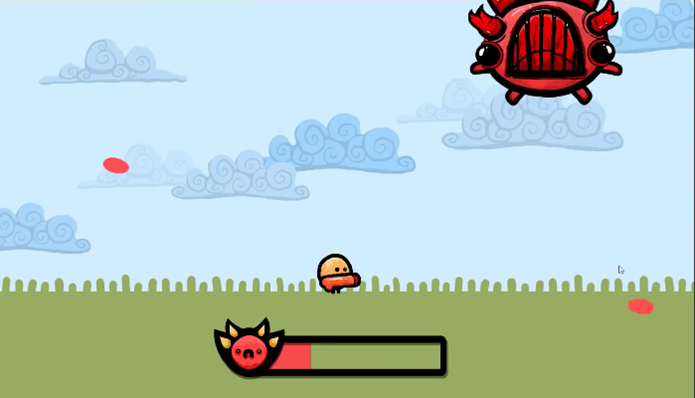
we now need to make a list of what we want and need to create based on what we are missing, to create a adapting boss fight we need two ways of attacking a melee attack and a ranged attack this will help stimulate the player to choose between two tactics either long range combat or close range combat, this way the boss has an opportunity to adapt. Besides that we need to limit the amount of shooting the player can do otherwise there won’t be a challenge and the player wont be stimulated enough to choose for close range combat. We also need to give the boss a long range attack so that the player gets incentivised to stay long range. Besides that we need a menu screen where we can start the fight so that the player is not thrown in the fight instantly. This also means the player needs to be able to die. Another feature we need to add is the boss adapting to the player his tactic and lastly we need to do some last polishing by adding sounds a fixing some minor visual issues. Here is the list of what we need to do:
1. Add melee attack
2. Limit long range attack
3. Adding a long range boss attack
3. Create a menu (player death or boss death means transition to menu)
4. Create adapting logic
5. Last polish.
4.2.1 adding melee
lets start out with the melee attack to create this I used the already existing from of attacking which was the long range attack. By copying the long range bullet logic we are able to shoot another bullet now its just a matter of changing the sprite to something appropriate, setting the bullet speed to zero and changing the hitbox to fit the sprite. What we have now is a stationary bullet that stay in its spot till it hits the boss, but that’s not what we want. Our last addition is lifetime, by implementing lifetime we are able to set the time the projectile stay on screen till its destroyed if we set this to 0.05 it will stay on screen for a fraction of a second and then disappear and thus creating a melee attack.
4.2.2 limiting long range
To prevent the player to shoot indefinitely without consequences we need to add a limit to how may times they can shoot. For now this will be an random number which I will decide for example 4 bullets. Every time the player shoots the use one bullet but every second they recover a bullet this prevents them from shooting without any tactic behind it. Lets start out with adjusting the weapon script to add a max amount of bullets which will be an int of 4 and we will have a int to represent our current ammo throughout the game we will look if current ammo decreased and if its smaller than max ammo if max ammo is more we will start a timer and compare that to our cooldowntime if its bigger than our cooldowntime than we add one to our currentammo and reset the timer. Now the logic behind our ammo system is done but the player cant see how much ammo they have which will become annoying to fix this we will add a slider like our hp and link that to our current ammo so that the player has a visual representation of the amount of ammo. Lastly we add an icon to the slider to represent bullets and we are done.
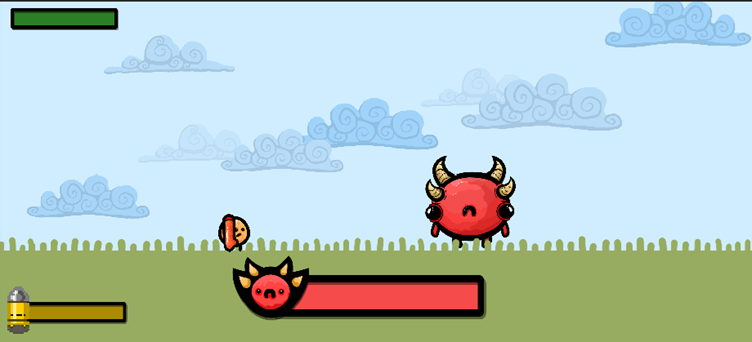
4.2.3 Adding a long range boss attack
by implementing a long range attack for the boss we will stimulate the player to not get close since now the long range behaviour just tries to stay away from the player more instead of quickly approaching the player. To do this we use the same bullet from the player to the boss. In the boss jumping behaviour we add some code that will instantiate the bullet towards the player his position. Lastly we need to give the player a chance to deflect the bullet since its too difficult to dodge now. Our solution is to go into the bullet script of the player and if there is collision with the boss bullet we destroy both of the bullets this also works with melee attacks. This ensures the player stays away from the boss instead of getting close.
4.2.4 adding a menu
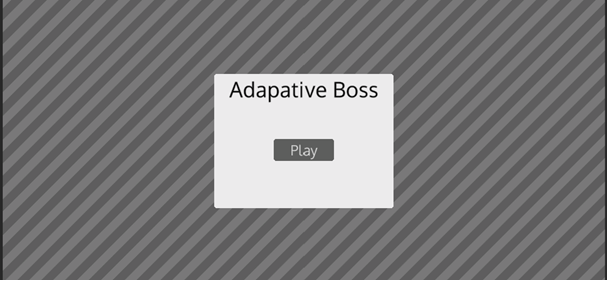
creating a menu is simple we just need to add a new scene to our project, in this scene we will add a canvas with with an image and texture on it and some text that says our game name and a button with play on it, to create the button logic we write script with a function that switches scene and connect this to the button and that’s it. Our next step is to add our death logic for the player and boss this too is very simple for the player if the health variable reaches zero we switch scene, and for the boss we add a exiting state after the boss death animation so that the boss animation can play before switching scene, and if our death state exists to the next empty state we switch scene.
4.2.5 making the boss adapt
our next step is making the boss adapt to what the player does I want to keep this simple yet engaging, if we change too much at once the player can feel overwhelmed so we won’t be adding new attacks for example. The best way to do this is adjusting already set values. I want the boss to have 3 tactics one long range where the boss keeps its distance one close range where the boss goes to the player at a fast pace and a balanced one where it balances between long range and close range.
But how do we decide when the boss chooses which tactic to implement? Very simply we will keep track of how many times the player has done a melee attack and how many times the player has done a ranged attack, if the melee attack is more than the ranged attack the boss will choose the long-range tactic so that the player needs to do more long range attack. If the players does more long range attacks the boss will switch to the close range tactic forcing the player to use more melee attacks. This way there are subtle changes in the environment preventing habituation(chapter 3.2) but also not overwhelming the player with change.
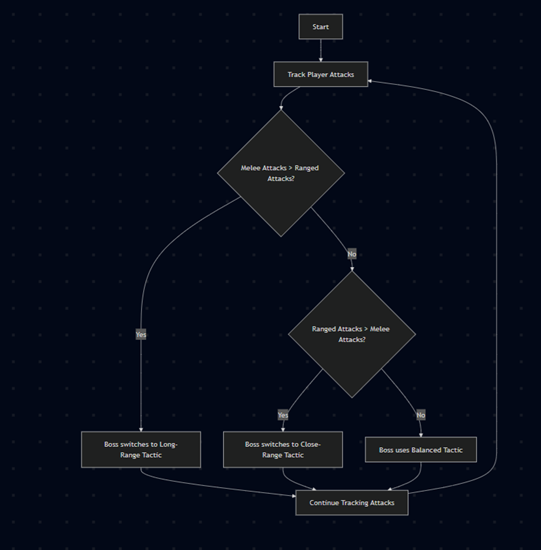
To keep track of the melee attack and long range attacks we will simply add a counter to the if statement of both attacks and save these in playerprefs[16]. Now in the boss script we get the prefs and save them in a variable and compare these in an if statement to later add the logic of changing the tactic, this is done in the awake because, in the start which is performed later than awake we set the prefs back to zero so that the measuring of the attacks can start on a clean slate instead of adding onto the previous numbers.
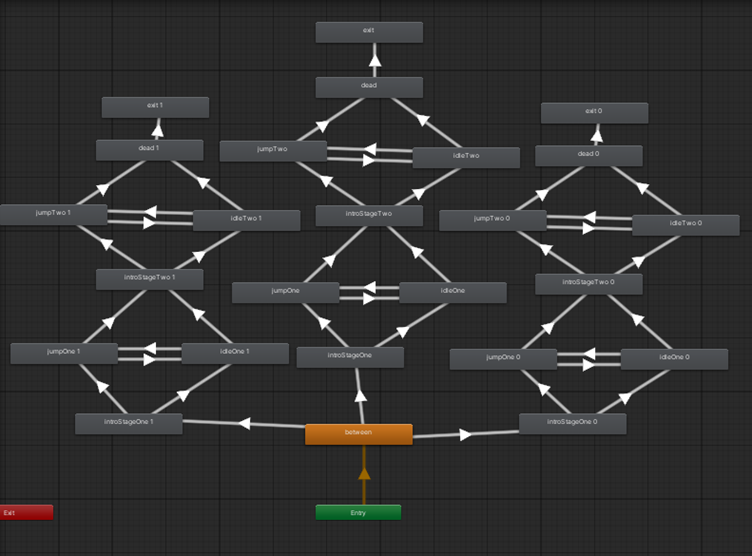
Now we will add the tactic change logic. This is done in the animator we have one main state which we will call the balance state all the logic of how the boss attacks an all its animations are in here. To create two new tactics we will simply duplicate the whole main state and its script so that we can adjust these accordingly by duplicating it two times we now have three main states. Now we create an empty animation state and put a transition from entry to that empty state and from the empty state to all three the main state their intro animations. All these transitions have a condition of a bool if the bool is true it will go to that entry animation and thus stay in that main state a.k.a tactic. We can now add this to our boss script where the prefs logic was and assign each bool to the appropriate comparison of 0prefs.
Our last step is adjusting the attack behaviour, we already have set variables for this these are how fast the boss jumps towards the player the chance of the boss switching to its idle state and the chance the boss changes back to the jumping state. By increasing the speed of the boss, decreasing the chance of switching to the idle state and increasing the chance it switches back to the jumping state we can create a close range tactic for the boss. If we do the opposite it becomes a long range tactic. And that’s it our adaptive boss is done
4.2.6 last polish
our last step before testing our product is adding the last bit of polish to make the fight feel good. I start with giving the player a health bar since you cant see the health right now this is done by linking the slider to the health variable, and making the slider green. Our next step is extending the grass since it suddenly cuts of a bit on the left side on the screen this is done by duplicating the grass and dragging it to the left side, after that we add some borders since you can still walk out of bounds, this is done by adding empty game objects with colliders. And last but not least we add some sound effects and background music, this is done by adding a audio listener to the scene and audio source for the background music we will add a script to the audio source which call dontdestroyonload so that the music stays in between scenes. For the sounds effects we add two effect one for the shooting and one for the melee attack we call these when either one of them have been activated in the script. And that’s it the boss fight is now ready for testing.
5. testing
Before we can answer our research question and draw a conclusion we need to test our product that we made. Our goal for this test is to measure the engagement score of the player while playing the normal boss fight and the adaptive boss fight. In our previous chapter we concluded how we can measure engagement this is done by measuring enthusiasm dedication and attention retention, this will be done by analysing how many excited/enthusiastic words or sentences they say, counting how many times the player attempts the boss fight (minimum of 4). And timing how long the player looks at the screen while pausing if they look away. We take the sum average of these measurements and that will be our engagement score, a bigger engagement score means more engagement less means less engagement. We will compare these units to see if the difference is statistically significant or not by calculating the p.value thus helping us answer the research question.
5.1 qualitive test
but before even that we have to polish and ground our measurements for our quantitive test by doing a qualitative. To do this we have to come up with some questions for our test that will help with polishing the quantitve test. Before thinking about the questions lets note down who our target group is, our target group are experienced gamers this is because they will already know how a boss fight will work and it will eliminate the discrepancy of a tester not knowing how a boss fight work and thus not being engaged. And we will perform this test on 3 testers they will play both bosses with the same question one day apart, so that the chance of one boss influencing the other is decreased. Which gives us 6 answers to each question total. Below the questions we will ask and how this will help polishing our quantitive test.
for enthusiasm:
did you ever feel excited or frustrated during the boss fight?
if so how did you express this?
did it have any effect on how engaged you were?
This helps verify if counting verbal expressions is enough or if physical reactions (leaning forward, clenching fists) should be included in our quantitative test. And it will also verify if enthusiasm has an effect on the overall engagement of the boss fight.
for dedication:
what made you go for the amount of times you fought the boss?(Curiosity? Determination? Frustration?)
Did you ever feel like giving up? What influenced that decision?
Did you change your strategy between attempts? If so, what prompted you to do so?
this will help determine if our metric of seeing how many times they play is influenced by dedication to the fight or another metric. Besides that it will help us refine if their determination is broken by the game being too difficult or any other discrepancy. Our last question will help to confirm if there is a difference in adaptation to the boss between the two boss fights.
attention retention:
Did you ever look away from the screen during the boss fights? If so why?
Did you ever feel the need to take a break? What triggered that?
Were you thinking about anything else while playing?
Helps confirm if tracking “looking away” is an accurate measure of attention retention or if other factors need to be considered. Helps refine whether long pauses should count as a sign of disengagement or just fatigue. Helps determine if mental distraction (not just looking away) should be measured somehow.
from our test results we can draw the conclusion that enthusiasm did have a positive impact on the engagement, but just counting verbal confirmation is not enough and looking at body language would be too vague. So my proposed solution is to tell the testers to think aloud hereby hopefully making counting verbal enthusiasm more reliable. Our metric of counting how many times they play is valid since most of the players were repeating the boss fight because they were dedicated to figuring out how the boss works and on the normal version played less because they were not dedicated and got bored. Besides that their determination wasn’t broken by the game being too difficult or another discrepancy. Besides that there was indeed a difference in player adaptation between the boss fights since most testers changed their strategy for the adaptive boss but didn’t do that a lot for the normal boss. Lastly the metric for our attention retention is the weakest out of the three, since testers did look away but not that often while sometimes they were distracted but didn’t show it since it was mental distraction. I could sadly not come up with a realistic solution for this so we need to keep using the metric of looking away, but instead of making it a timer we just count how many times they looked away since I noticed during the test that the time difference is negligible between the different times they look away. And lastly no player needed a break since the boss fight was too short for that.
5.2 quantitative test
Our changes to our quantitive test is that we need to tell the tester to think aloud so that our metric of counting verbally becomes more accurate and reliable. The metric of counting how many tries they play does not change since it proved to be valid during our test. And lastly instead of timing how much they look at the screen changes to counting how many times they looked away and subtracting that from the sum instead of adding it since it’s a negative metric. The best solution would to be also measure mental distractions but this seems to be impossible in my current situation. Having made these changes we can start testing on 10 testers with both fights giving us 20 engagement scores which we can work with.
now we can start on our quantitative test, below are the engagement scores for both the adaptive boss and normal boss:
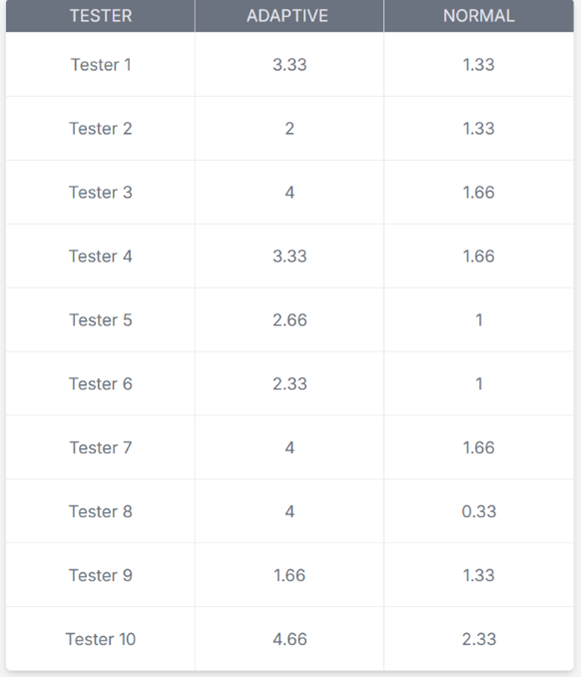
With these values we can use a python script to calculate the t and p value[17] to see if our result are statistically significant which is shown below:

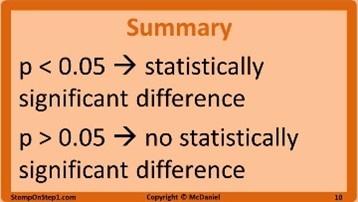
The result of of the t value is 6.11913 and for the p value is 0.00018. this means our p value is statistically significant since its below 0.05[18]. In simple terms statistically significance means that the results of the test are not the result of chance but instead can be attributed to a specific cause[18]. In our case this means that our adaptive boss has a positive impact on the engagement score.
6. Conclusion
To conclude our research we will refer back to our main question which was:
“will an adaptive boss fight retain player engagement”.
our research phase showed that repetition decreases engagement because of habituation, this causes the brain to grow accustomed to stimuli which in turn causes you to pay less attention and decreases your neural activity meaning you feel less enthusiastic and dedicated. Besides that we analysed what other games have tried to tackle this problem and showed how our proposed solution can negate the negative points of the already existing solution. We also found out that engagement is the measurement of how dedicated and enthusiastic a person is during a task and how much attention they pay to the given task. High engagement has a positive effect on this and low engagement a negative effect. To measure this, we divide it in three categories and take the sum average of the categories to get an engagement score. To further polish down these metrics we did a qualitive test, the results of this helped us hone down our metrics. Sadly the metric for attention retention was still too vague in my opinion. And lastly we did a quantitative test to calculate the p value to see if the difference between engagement score in the normal boss against the adaptive boss was statistically significant which showed that the difference was indeed statistically significant. This shows that an adapative boss has a positive impact on the engagment score thus proving our hypothesis “My hypothesis is that an adaptive boss will retain engagement”.
This research can be expanded upon by testing a boss fight that is a bit more complex since the current boss fight is simple which could have influenced our test. Another point that could be expanded upon is the adaptive behaviour, this could be more complex and could show different results in testing. Besides that, how we measured how much attention a tester shows is still not trustable enough since it does not account for mental distractions, further research should delve deeper on how the three metrics are measured with proper equipment, for example a DRT device[19]
7. Sources
[1] Wikipedia contributors, “Psychology,” Wikipedia, Mar. 19, 2025. https://en.wikipedia.org/wiki/Psychology
[2]Y. E. Rachmad, “Psychological Engagement Theory,” OSF, Oct. 2024, doi: 10.17605/OSF.IO/UBVJH.
[3] “Engagement and positive psychology,” Student Wellbeing | ReachOut Schools. https://schools.au.reachout.com/student-wellbeing/engagement-and-positive-psychology
[4] K. C. MSEd, “How habituation in psychology works and affects relationships,” Verywell Mind, Dec. 20, 2023. https://www.verywellmind.com/what-is-habituation-2795233
[5] A. Merchie and M. Gomot, “Habituation, adaptation and Prediction Processes in Neurodevelopmental Disorders: A Comprehensive review,” Brain Sciences, vol. 13, no. 7, p. 1110, Jul. 2023, doi: 10.3390/brainsci13071110.
[6] Wikipedia contributors, “New Game Plus,” Wikipedia, Mar. 21, 2025. https://en.wikipedia.org/wiki/New_Game_Plus
[7] Darksouls 2 contributors, ”new game plus” darksouls2.wiki, ND.
https://darksouls2.wiki.fextralife.com/New+Game+Plus
[8]
C. to U. Wiki, “Sans/In Battle,” Undertale Wiki. https://undertale.fandom.com/wiki/Sans/In_Battle
[9]
J. Wojnar, “RPG boss fights that change based on the player choice,” Game Rant, May 12, 2024. https://gamerant.com/boss-fights-that-change-depending-on-player-choice/
[10] Blackthornprod, “HOW TO MAKE a BOSS BATTLE WITH UNITY & C# - TUTORIAL,” YouTube. Aug. 23, 2018. [Online]. Available: https://www.youtube.com/watch?v=cXefXSD2SM0
[11] Null-References, “GitHub - Null-References/Uncertainty: Uncertainty is an action-adventure space-shooter game.,” GitHub. https://github.com/Null-References/Uncertainty
[12] Unity-Technologies, “GitHub - Unity-Technologies/com.unity.multiplayer.samples.coop: A small-scale cooperative game sample built on the new, Unity networking framework to teach developers about creating a similar multiplayer game.,” GitHub. https://github.com/Unity-Technologies/com.unity.multiplayer.samples.coop
[13] Yrtna, “GitHub - Yrtna/spellcast_unity: Mage Arena, a small game about clearing Minions and fighting Bosses,” GitHub. [https://github.com/Yrtna/spellcast_unity?tab=readme-ov-file\](https://github.com/Yrtna/spellcast_unity?tab=readme-ov-file)
[14] “Unity2D RogueLike Shooter by BRUS1NATOR,” itch.io. https://brus1nator.itch.io/dungeouncrawler2d
[15] Dominik Hackl, “Recreating the FALSE KNIGHT Boss Fight in UNITY using Behavior Trees,” YouTube. Apr. 18, 2021. [Online]. Available: https://www.youtube.com/watch?v=X7VwAGvAOIw
[16] U. Technologies, “Unity - Scripting API: PlayerPrefs.” https://docs.unity3d.com/6000.0/Documentation/ScriptReference/PlayerPrefs.html
[17] “ttest_rel — SciPy v1.15.2 Manual.” https://docs.scipy.org/doc/scipy/reference/generated/scipy.stats.ttest_rel.html
[18] I. Team, “Statistical significance: definition, types, and how it’s calculated,” Investopedia, Jun. 19, 2024. https://www.investopedia.com/terms/s/statistical-significance.asp
[19] Francesco Biondi “The DRT device used in the current research”, ResearchGate. Jun. 2013.
https://www.researchgate.net/figure/The-DRT-device-used-in-the-current-research_fig1_237100596
8. appendix
Tester 1
Adaptive Boss
Enthusiasm:
“I think there were moments where I got really into it, especially when it felt like the boss was changing to me. So yes I got a little bit excited”
“I noticed myself getting closer to the screen.”
“yes it felt like I was more engaged everytime it changed, although this did stop after a while.”
Dedication
“I retried a few times because I felt like I could approach it differently, but then It changed and I had to adapt during the fight instead of knowing how to adjust before the fight.”
" not really I only stopped because I had beaten the boss a couple times already."
“Yeah, I adjusted how I played a bit, because doing the samething didn’t work since the boss changes a lot.”
Attention Retention:
“I don’t think I looked away much, but maybe once or twice when I was thinking about how to beat the boss.”
“it did not feel like I needed a break since the boss fight was not too long.”
“not that I have noticed.”
Normal Boss
Enthusiasm:
“it was neither excited or frustrated, at first it was fun but after the third play it just got boring.”
“not applicable.”
“yes I felt like I was less engaged because I got bored pretty quick.”
Dedication:
“I just wanted to beat the boss and this was done pretty easily at the third attempt.”
“not really since I only played it for the minimum required time which was 3 times.”
“I only changed my strategy when the boss got into its second phase.”
Attention Retention:
“Yes I got a message on my phone so I looked at that.”
“I did not feel like taking a break since I played it for a short amount.”
“I was honestly thinking about dinner the whole time.”
Tester 2
Adaptive Boss
Enthusiasm:
“There were moments where it felt really dynamic, which was cool.”
“I mumbled to myself a few times when things got intense.”
“Some parts kept me really engaged, but other parts felt like trial and error.”
Dedication:
“I retried because I felt like I could figure something out.
“I thought about stopping after a while, but I kept going out of curiosity.”
“I had to rethink my approach a little, but I wasn’t always sure if it was helping.”
Attention Retention:
“Didn’t look away much, though I did check the time once.”
“I did not think about taking a break.”
“Mostly focused, but my mind wandered off sometimes.”
Normal Boss
Enthusiasm:
“Started off interesting, but I could predict how it would go after a few tries.”
“Didn’t react much, just reset after dying.”
“It was engaging, just not in a way that made me feel on edge.”
Dedication:
“I retried a few times out of habit.”
“I considered stopping but pushed through since I was already playing.”
“Didn’t feel like I had to change much, so I just stuck with what worked.”
Attention Retention:
“I looked away once or twice during the animations.”
“I didn’t need a break.”
“Started thinking about other stuff while fighting.”
Tester 3
Adaptive Boss
Enthusiasm:
“I liked that it wasn’t predictable, which made me curious on what it would do next.”
“I don’t think I said much out loud, but I definitely tensed up a few times.”
“It kept my attention more than usual, though sometimes I just wanted to get through it.”
Dedication:
“I retried because I wasn’t sure if I was missing something.
“I didn’t feel like giving up honestly.”
“I tried changing tactics a couple of times because the boss fight kept changing.”
Attention Retention:
“I did not notice myself looking away.”
“I didn’t need a break.”
“Mostly focused, though I did space out at times.”
Normal Boss
Enthusiasm:
“not really either I got bored pretty quick.”
“Didn’t really react much, just played through it.”
“Engaged enough to play it 3 times, but not deeply focused.”
Dedication:
“I just played the minimum amount I needed to.”
“not really because I only played for a short time.”
“I adjusted what I did after the first play but after that there was no need.”
Attention Retention:
“I checked my phone once between attempts.”
“I did not need a break since I only played 3 times.”
“I was just thinking about how I should learn my new skate trick.”