
Players guilt in horror games
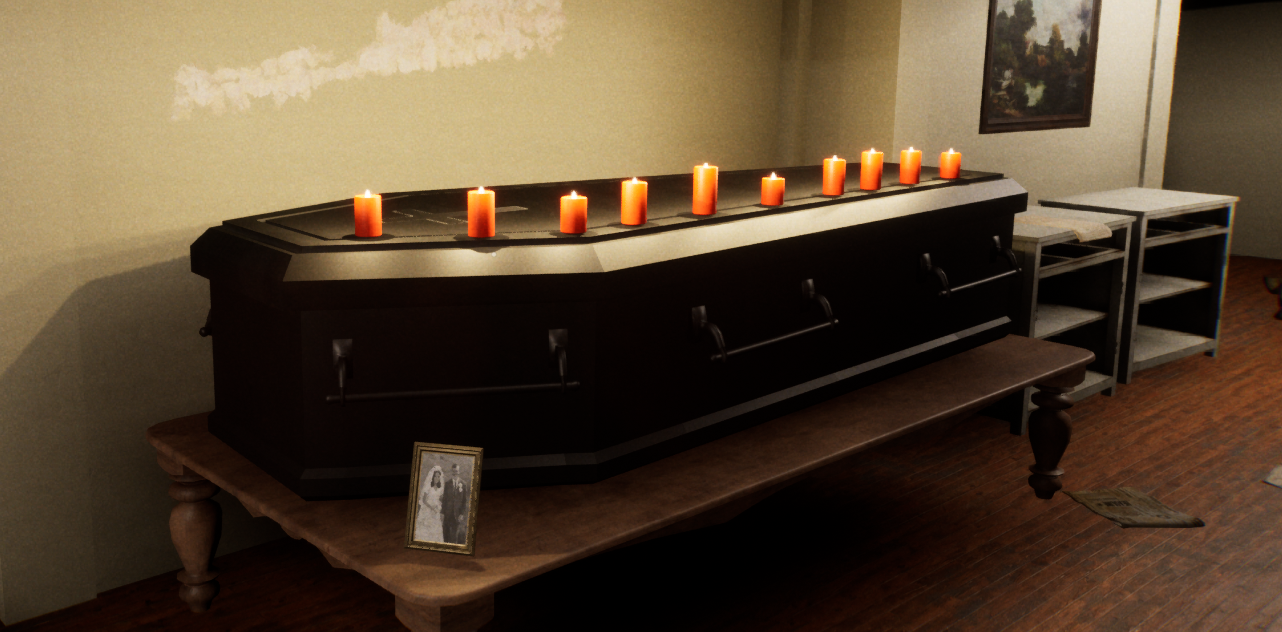
Table of contents:
- Players guilt in horror games
Abstract
This article shows how guilt is placed on the player by applying different techniques that have been proven to work from studies. This research is specifically focused on horror games. The techniques can also occur in other types of genre games, but I apply them to my own horror game. In this article, it is researched which techniques other similar games use to give a feeling of guilt to the player, and after that, research of general techniques that exist to give a feeling of guilt to the player in games
The most important thing to make the player of the game feel guilt is to make him do immoral actions, something the player himself wouldn’t do in real life. There are several techniques to make the player take immoral actions. You can give them a dilemma where both choices are not good, but you have to choose. Like the choice of Until Dawn. This way you always give the player the idea he made the wrong decision, giving him a guilty feeling. Secondly, you can show the consequences of the player, like in Spec Ops: The Line. To show what the player has done. It creates a deeper guilt feeling to see the consequences of what you have done to someone or something, then just doing it and never looking back at it. And the third technique is to make the player feel in control. If the player can make the choice himself and makes the wrong one, it gives a greater feeling of guilt than if you had no other choice. These 3 techniques are the best way to make the player feel guilty in (horror) games.
Introduction
In this article, I’m going to do research about how to make the player feel guilty in horror games. I’m going to do research about this because I want to know more about it so that I can use it in my games myself. I often find horror games with a sad plot twist and ending where the player feels guilty very interesting. That is why I will go into this in more detail. To test if the research works, I’m going to implement the different techniques in my end product to make the player feel guilty.
In this research, I’m first going to look at similar games to those I want to make. These will give me a better idea of what techniques they use for it. After that, I’m going to do research on what techniques there are and which I can use for my game. With these techniques and knowledge, I’m going to make a small demo in Unreal Engine 5 with blueprints and a first-person horror game kit named “Horror Engine”. The reason I’m using Unreal Engine 5 is that I already knew about the Horror Engine kit, and this is going to help me a lot, because I don’t have to make most things myself anymore. Of course, I have to make the story and everything I’m going to do research for myself.
Research Question
With the things I explained above, I came to the following research question:
How do you make a player of a video game feel guilty?
I think this question is very clear and gives a good idea of what exactly I want to research.
Hypothesis
There are a lot of games that want to make the player feel guilty in different ways. I think the most common ways are to give the player choices where there is no right or wrong choice, or to show the consequences to be after a bad deed. I know games like PT: Silent Hill make the player feel guilty by telling a story about what the “player” did. So, showing the consequences of their actions.
Research
Simmilar games of my end product
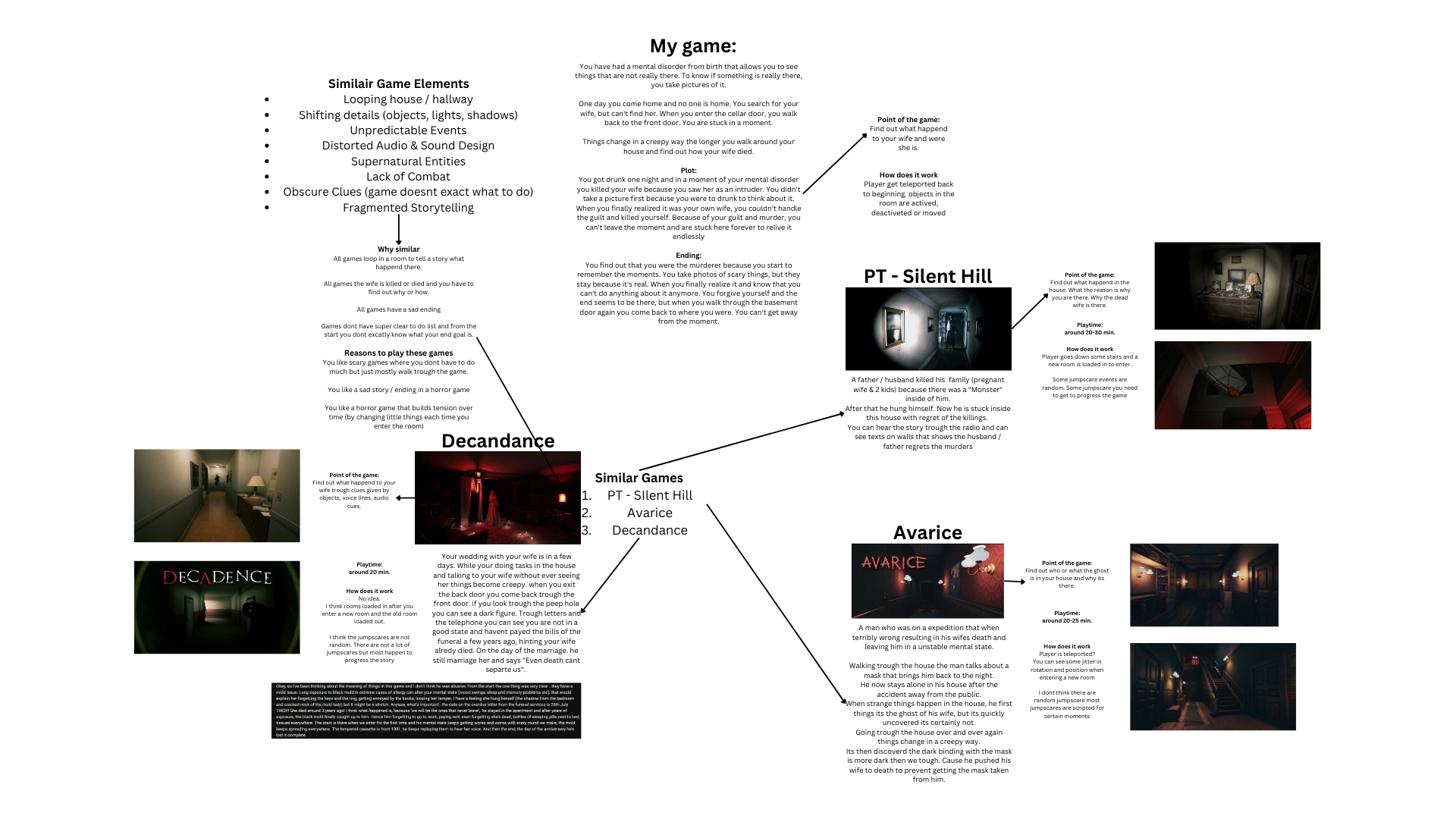
PT: Silent Hill
A father / husband killed his family (pregnant wife & 2 kids) because there was a “monster” inside of him. After that, he hung himself. Now he is stuck inside this house with regret for the killings. You can hear the story through the radio and can see texts on walls that shows the husband or father regrets the murders. 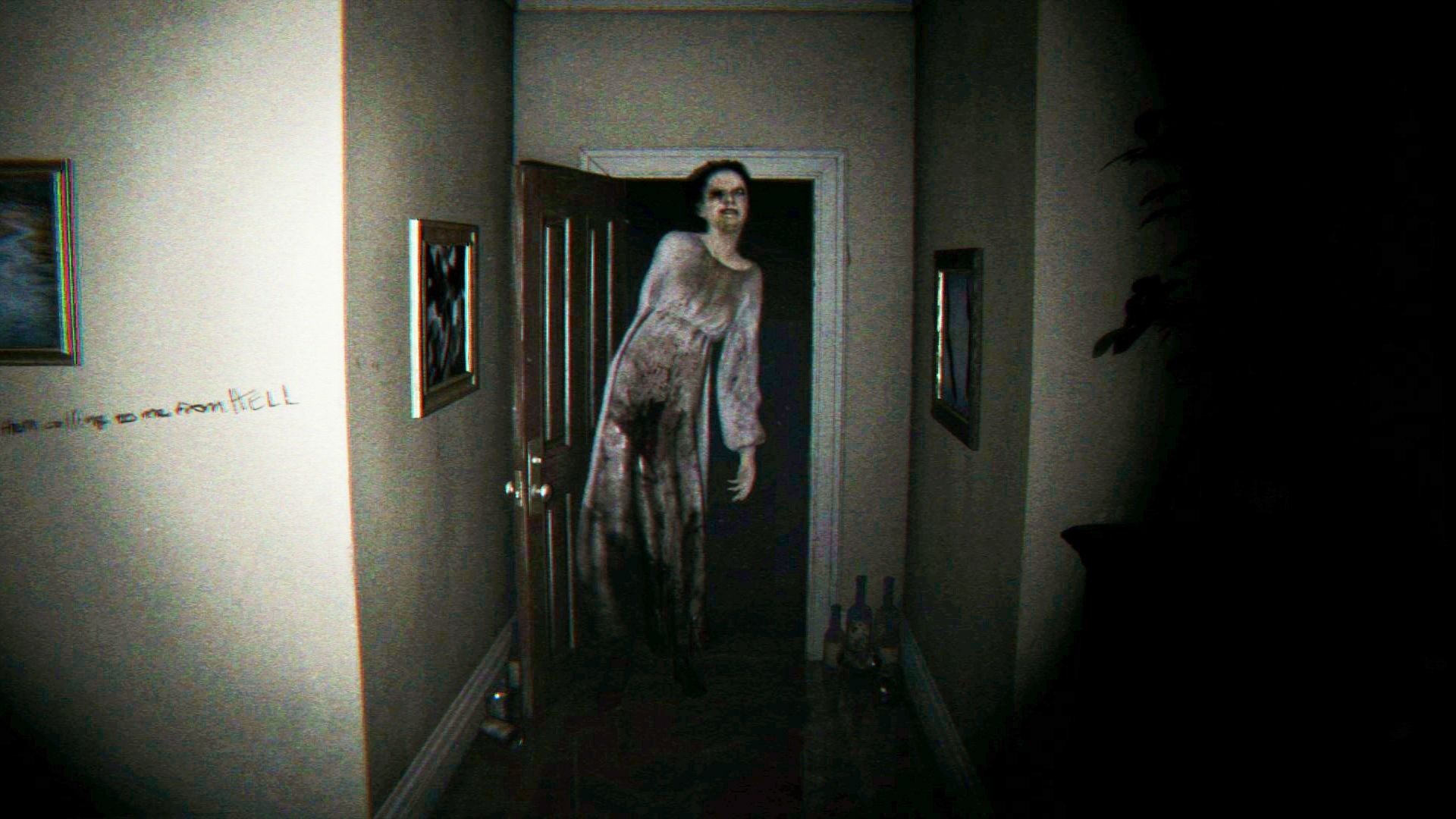 I watched the gameplay from Shirrako(2022).
Point of the game
Find out what happened in the house. What the reason is why you are there. Why the dead wife is there.
Decadence
Your wedding with your wife is in a few days. While you’re doing tasks in the house and talking to your wife without ever seeing her, things become creepy. When you exit the back door, you come back through the front door. If you look through the peephole, you can see a dark figure. Through letters and the telephone, you can see you are not in a good state and haven’t paid the bills of the funeral a few years ago, hinting your wife already died. On the day of the marriage. He still marries her and says, “Even death can’t separate us.”. 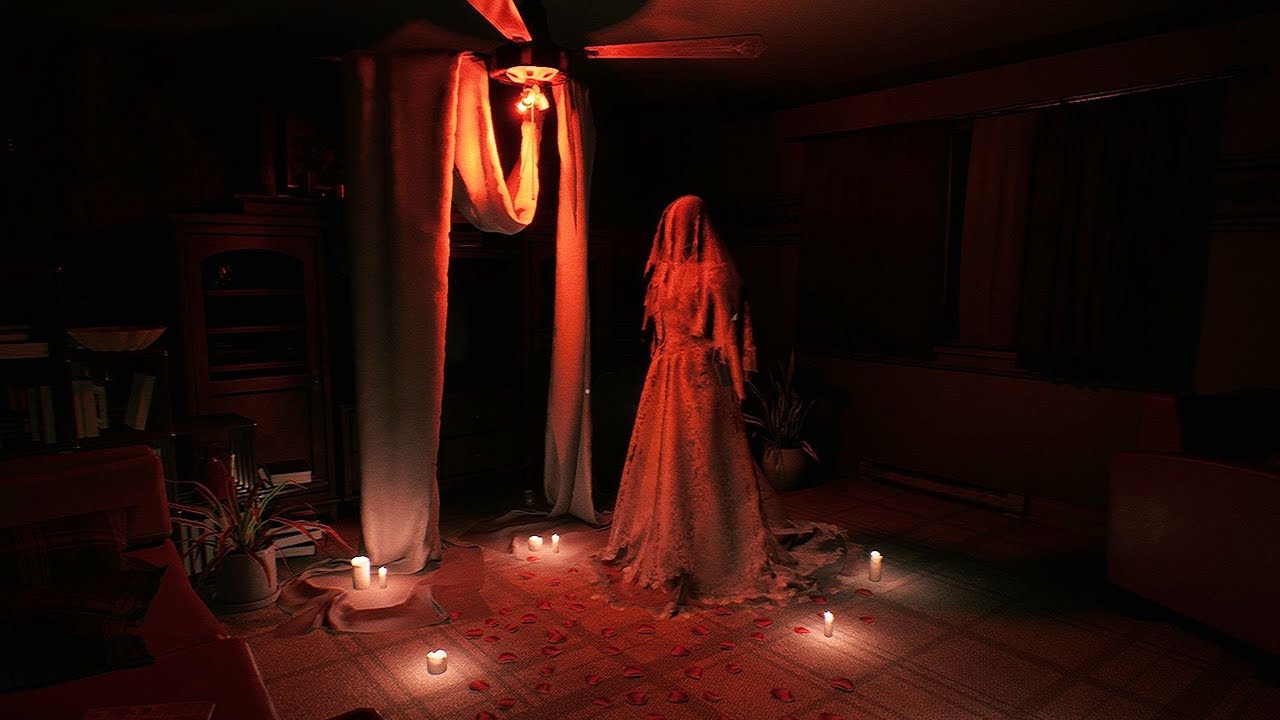 I watched the gameplay from Hollow(2023).
Point of the game
Find out what happened to your wife through clues given by objects, voice lines, and audio cues.
Avarice
A man who was on an expedition that went terribly wrong, resulting in his wife’s death and leaving him in an unstable mental state. Walking through the house, the man talks about a mask that brings him back to the night. He now stays alone in his house after the accident, away from the public. When strange things happen in the house, he first thinks it’s the ghost of his wife, but it’s quickly uncovered. It’s certainly not. Going through the house over and over again, things change in a creepy way. It’s then discovered the dark binding with the mask is darker than we thought. Because he pushed his wife to death to prevent getting the mask taken from him. 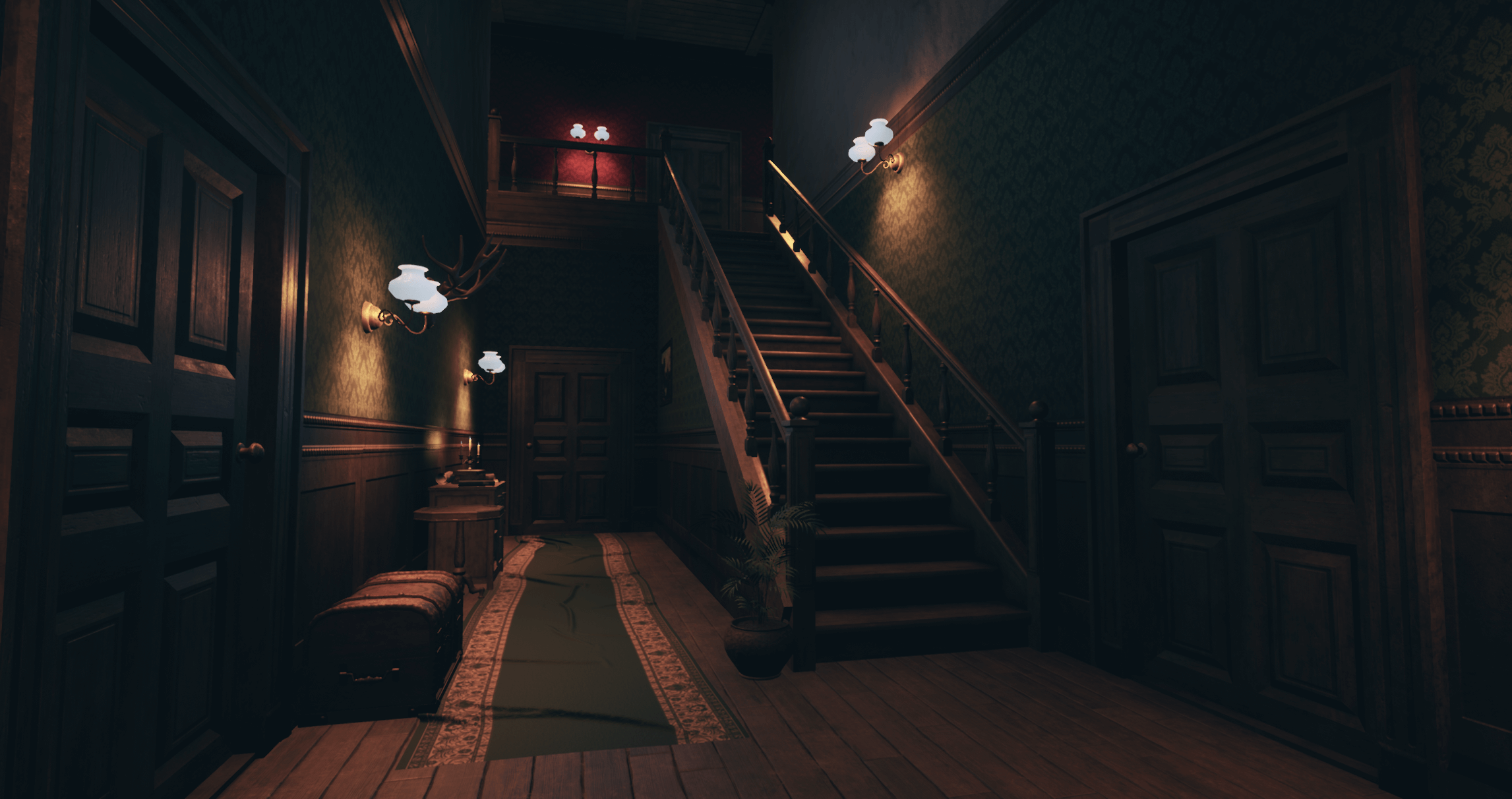 I watched the gameplay from Adrionic(2019).
Point of the game
Find out who or what the ghost is in your house and why it’s there.
My first game idea based on the simmilar games
You have had a mental disorder from birth that allows you to see things that are not really there. To know if something is really there, you take pictures of it.
One day you come home and no one is home. You search for your wife but can’t find her. When you enter the cellar door, you walk back to the front door. You are stuck in a moment.
Things change in a creepy way the longer you walk around your house and find out how your wife died.
Plot
You got drunk one night, and in a moment of your mental disorder, you killed your wife because you saw her as an intruder. You didn’t take a picture first because you were too drunk to think about it. When you finally realized it was your own wife, you couldn’t handle the guilt and killed yourself. Because of your guilt and murder, you can’t leave the moment and are stuck here forever to relive it endlessly.
Ending
You find out that you were the murderer because you start to remember the moments. You take photos of scary things, but they stay because it’s real. When you finally realize it and know that you can’t do anything about it anymore. You forgive yourself, and the end seems to be there, but when you walk through the basement door again, you come back to where you were. You can’t get away from the moment.
Point of the game
Find out what happened to your wife and where she is.
Similair Game Elements
Looping house / hallway Shifting details (objects, lights, shadows) Unpredictable Events Distorted Audio & Sound Design Supernatural Entities Lack of Combat Obscure Clues (the game doesn’t exactly tell you what to do) Fragmented Storytelling
Why similar
- All games loop in a room to tell a story about what happened there.
- All games, the wife is killed or died, and you have to find out why or how.
- All games have a sad ending
- Games don’t have a super clear to-do list, and from the start you don’t exactly know what your end goal is.
Moodboard I made for the similar games
How to make the player feel guilty?
In this part I’m going to do the actual research on how to make the player feel guilty. To start this, I’m going to look at some similar games to find some techniques for those games. After that, I’m going to do research on other techniques.
Examples from the simmilar horror games
PT: Silent Hill
PT: Silent Hill makes the player feel guilty in a few different ways. Although P.T. has a mysterious story, it slowly becomes clear that it is about a family drama, murder and suicide. The player is forced to wander through a haunted house full of memories of this tragedy without being able to change anything. This creates a feeling of guilt. As if you are doomed to relive these horrors without ever finding redemption. Also, throughout the game, you can hear Lisa crying and see her physical suffering, but there’s nothing you can do to help her. This induces a strong sense of helplessness, which can indirectly make players feel guilty about her fate.
Decadence
As in P.T., Decadence manipulates the player’s perception through subtle changes in the environment. This creates doubt, like, Is this my fault? Did I miss something? Could I have done something differently? This kind of psychological pressure can evoke guilt even if the player does nothing wrong.
Avarice
In Avarice, you don’t relive the moment of the plot, but you can hear the protagonist talking about it. The guilt is brought to the player in small steps. As the story goes on, you feel more and more guilt about what happened. The beauty of it is also that you find out more the further you play it. It’s not a very big game, so the story may get delivered a little bit fast, but it still works very well.
Research
In an article from Ahn et al. (2021) are many techniques named that I can use in my end product to make the player feel guilty. I have picked some of these techniques from the article to explain how they work and how I’m going to implement them into my end product. In this research, tests were made to see how guilty the people felt after the actions. The main thing was that the more immoral the player character was perceived to be, the more guilt the player felt following game play.
1. Presenting Immoral Dilemmas
If you give the player an immoral choice or dilemma, the player can feel a lot of guilt by not making the right choice or even giving the player not a right choice. “Engaging in immoral actions in virtual settings, such as video games, can lead players to feel guilt” (Hartmann et al., 2010). A good example is the dilemma from Until Dawn, where you’re either saving Ashley or Josh from the saw blade trap. So one of them 100% dies. As a player, you hope that you can still save both of them, but to eventually kill one of them makes the player feel a lot of guilt for killing their own friend. The dilemma doesn’t have a good choice, but still it gives the player the idea they made the wrong decision. Another example is the mission No Russian from Call of Duty MW 2. You’re an undercover Agent that walks among other Russians. In this mission, you have to shoot innocent Russian people in an airport to blame the Americans. You also have the choice to shoot or just watch everybody die. Both options are terrible, and you’re in an uncomfortable position where you can’t and don’t help the innocent people. 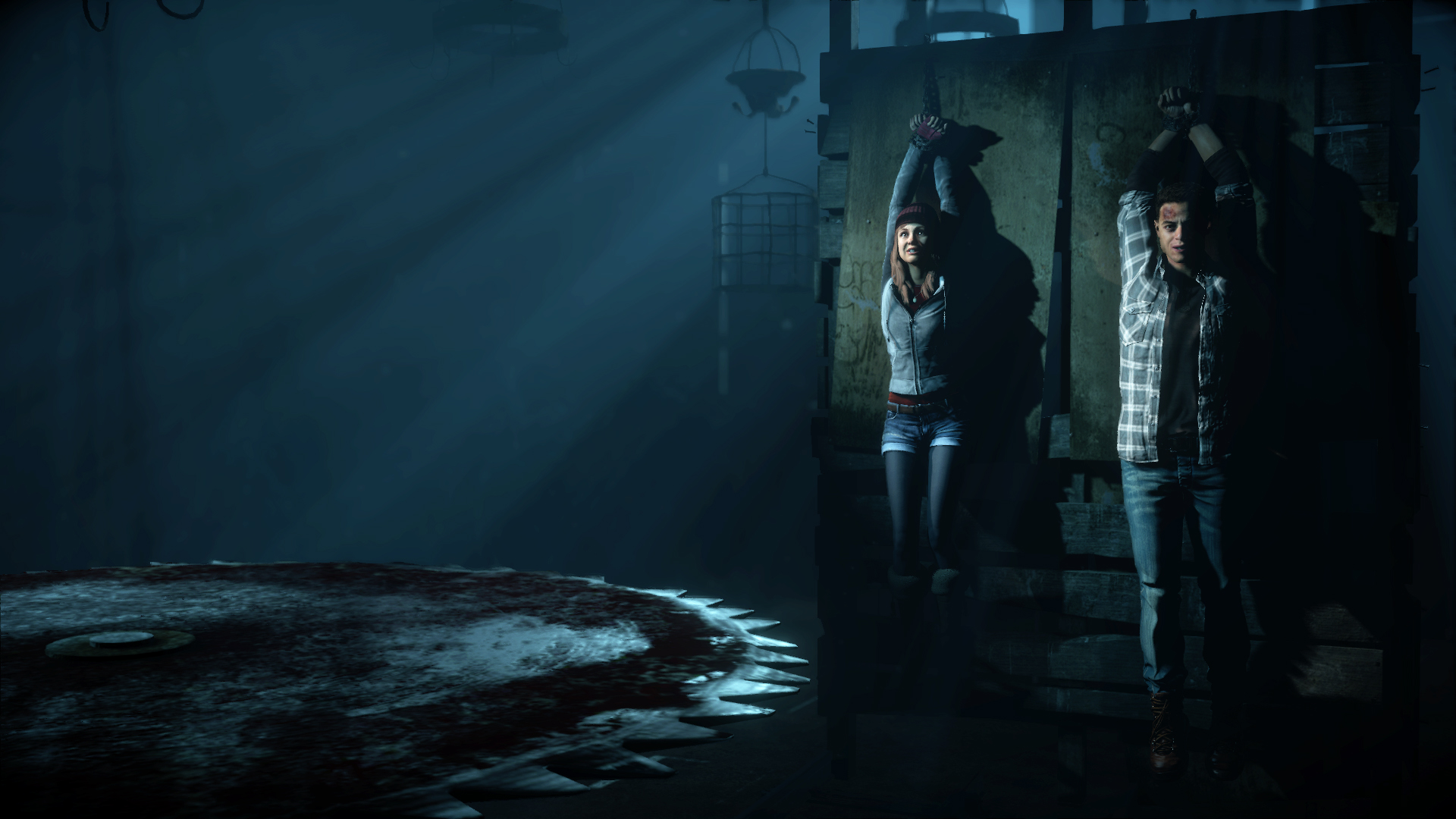
Both games have no good options and put you in a terrible place to make a choice. The only difference is that in Until Dawn you can choose between who you kill, and in the mission No Russian you can’t choose to kill; you can only choose to do it yourself or watch.
2. Showing Consequences of Player Actions
Showing the consequences of the actions of the player can cause for a lot of guilt. For example, committing aggression against humanized NPCs results in greater guilt than committing aggression against dehumanized NPCs (Lin, 2011). You feel worse when you kill a person in a game and see them taking their last breath, then kill a robot machine that has no human-like characteristics. A great Example of this is the part in Spec Ops: The Line where you drop White Phosphorus bombs as you think the enemies, but you have just killed a lot of innocent civilians. The game makes you look at what you did, and you see the remaining corpses of the civilians. It’s a very sad scene and gives the player a lot of guilt and makes them think, “What have I done?”. 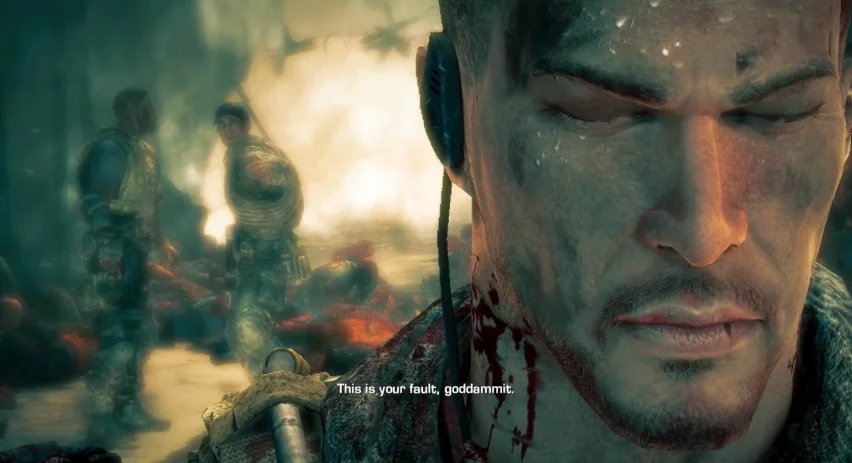
3. Make the player feel in control
By making the player feel in control of all his actions, you make sure that he can’t blame the game for the actions. “I felt in control of Scott Shelby’s actions, and I felt personally responsible for the virtual actions that I committed in the game.” (Ahn et al., 2021) was said about the character of the game Heavy Rain. When you commit a crime that the game told you to do, it gives less of a guilty feeling than if you commit it yourself without the game ever telling you. It’s the same thing again for No Russian. You don’t have to kill innocent people, but if you do, you have committed a murder by your own choice. 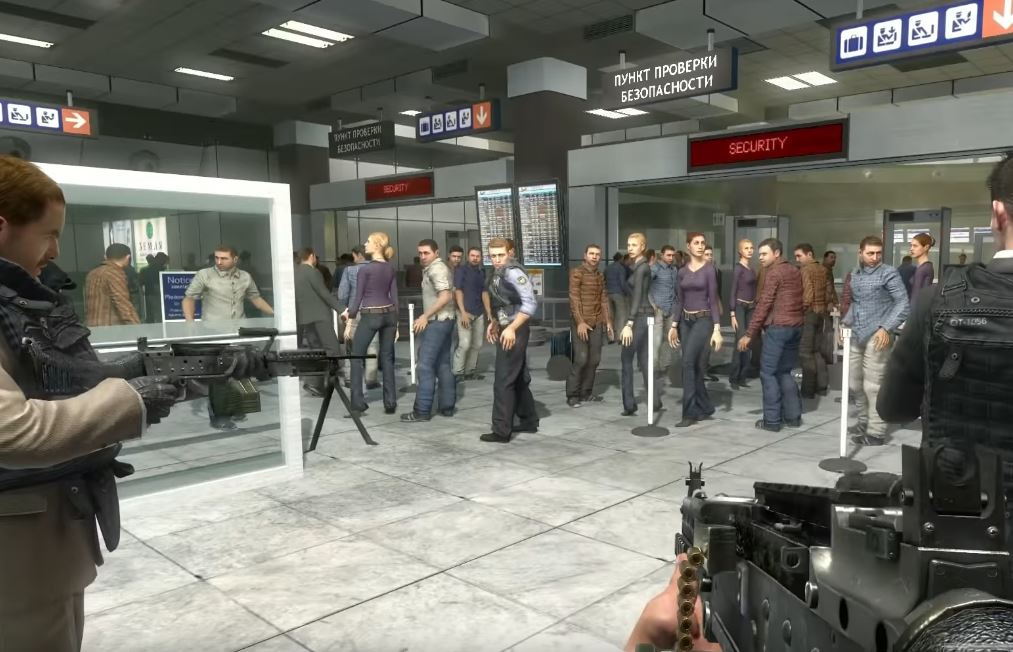
The points in the similar games
In all games, they show the consequences of the player’s actions by showing what happened to your wife after hearing what you did or happened to her. This is a common point: in all games, you are reliving a moment in a memory or place.
Adding it to my end product
To add the different points to make a game, it has to make sense in it. I’m changing my previous game idea in some ways to make it easier to put in the new points of research.
1. An immoral dilemma
An immoral dilemma to add to the game is to give the player the dilemma: Set your wife free or keep her. So or you will endlessly loop lonely or with her, but she will still suffer. Both choices feel like selfish crimes. If you free her, you suffer alone. If you keep her, she suffers because of you. To make this dilemma feel guilty, there has to be a connection with the wife.
2. Consequences of Player Actions
To show the consequences of the player’s actions, it can be done by making the Wife’s Presence more disturbing. You start in a normal house with a happy wife, but your wife becomes more and more uncanny and disturbing to show you what you have done to her. Or even showing your deceased wife after you killed her and her “Ghost” asking you why and crying.
3. Make the player feel in control
By never telling the Player What to Do I can make him feel like he has control over the game. That way, all his actions are his fault. Maybe with dialogue like “I could have walked away” or “I didn’t have to do it” to make the player thing: “Wait… I didn’t have to do it.”
End product
For my end product, I made a small demo game where you play as a man (The player) comes home to an empty house because his wife passed away. You can see him talk about it in the subtitles. But strange things start to happen in the house, and you realize that you are not alone when you see a monster standing in your bathroom. You think the monster is the reason your wife died. When you enter the back door, you come back through the front door. You’re stuck in a loop. Each loop, things change, and you reveal more of the story. When you have the chance to kill him, you have the choice to do so or not. If you do, the monster changes to reality, and you see that you were your wife all along. If you don’t do it, you can make the choice to release your wife from this loop or keep her with you forever.
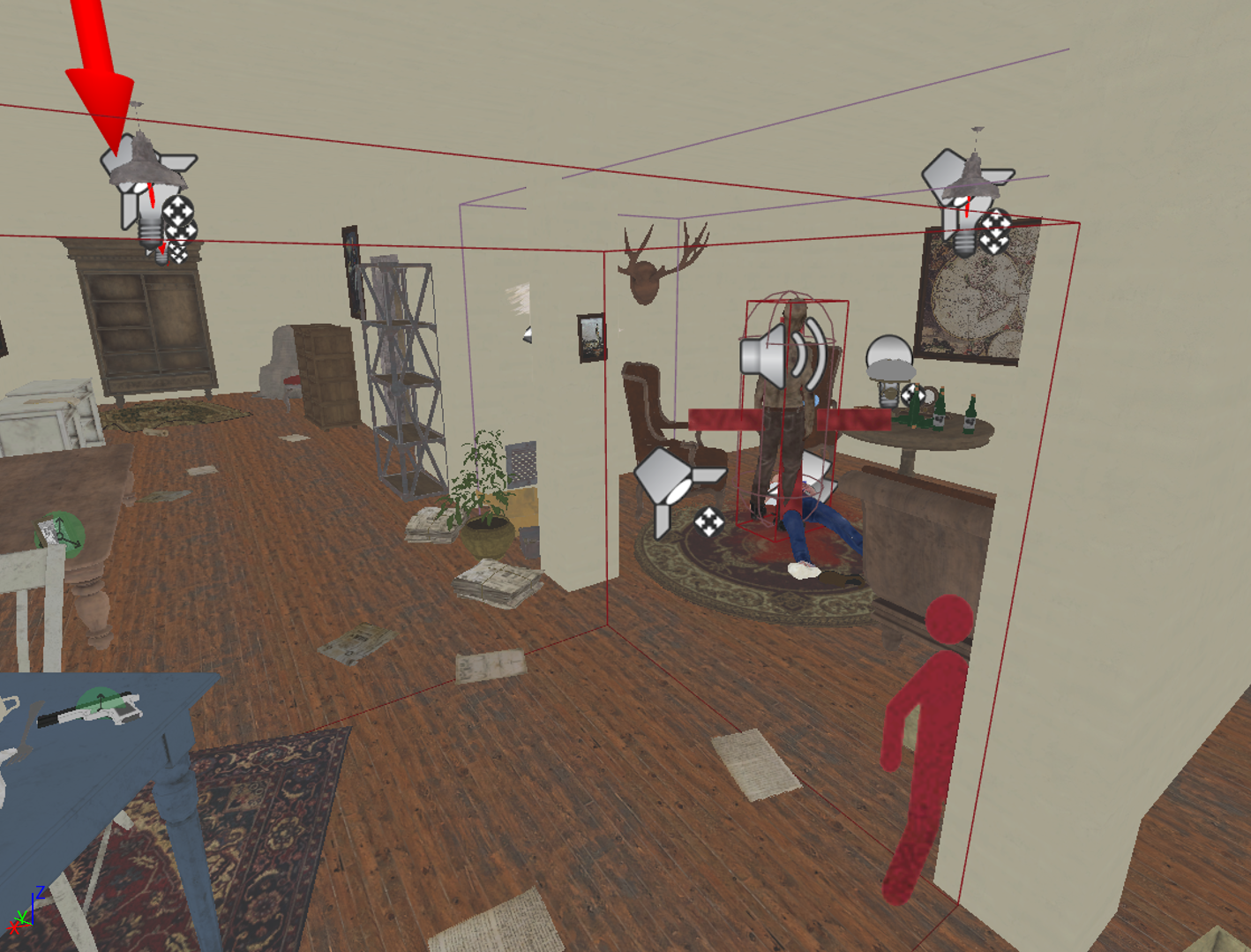
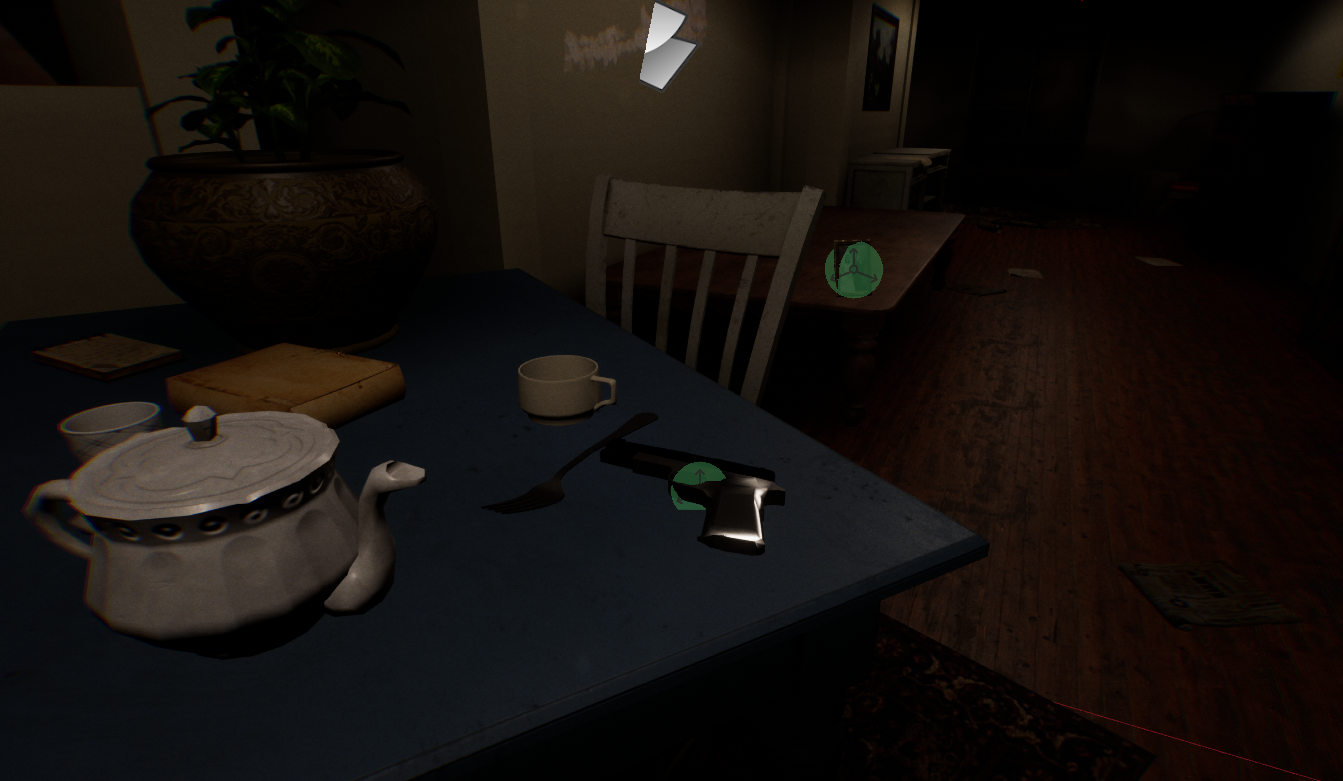
Demo gameplay
How did I use the techniques
- I give the player 2 dilemmas in the game; the first dilemma is whether you want to kill the monster or just leave. Most people want to kill it because that’s often the goal in the games. But when you kill it, you see that it is your own wife. That makes you feel guilty about your action. The second dilemma comes when you have chosen not to kill it. Because of this, you have changed the loop, and you now have the choice whether you want to keep your wife in the loop or let her go but stay alone forever in the loop without reminding her.
- To show the consequences for the player, if you choose to kill the monster, I have a problem. You see your wife lying on the ground in a pool of blood, because you killed her. Also, everything makes sense when you see your wife’s coffin in the room again that you have taken care of this.
- To make the player feel in control, there are no instructions for what to do. The player can choose what he does. With large promotions, you always have several choices. Such as whether to kill the monster.
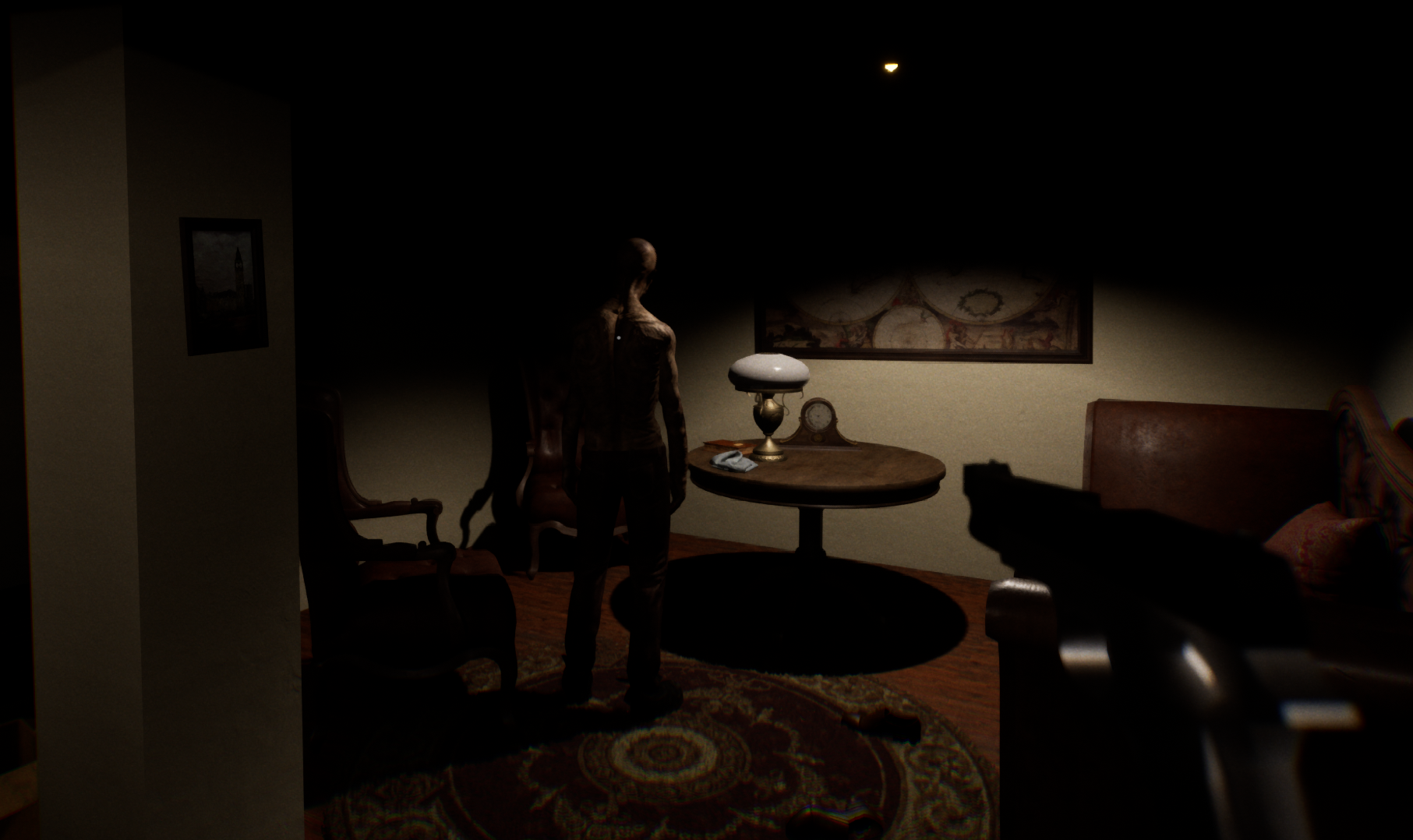
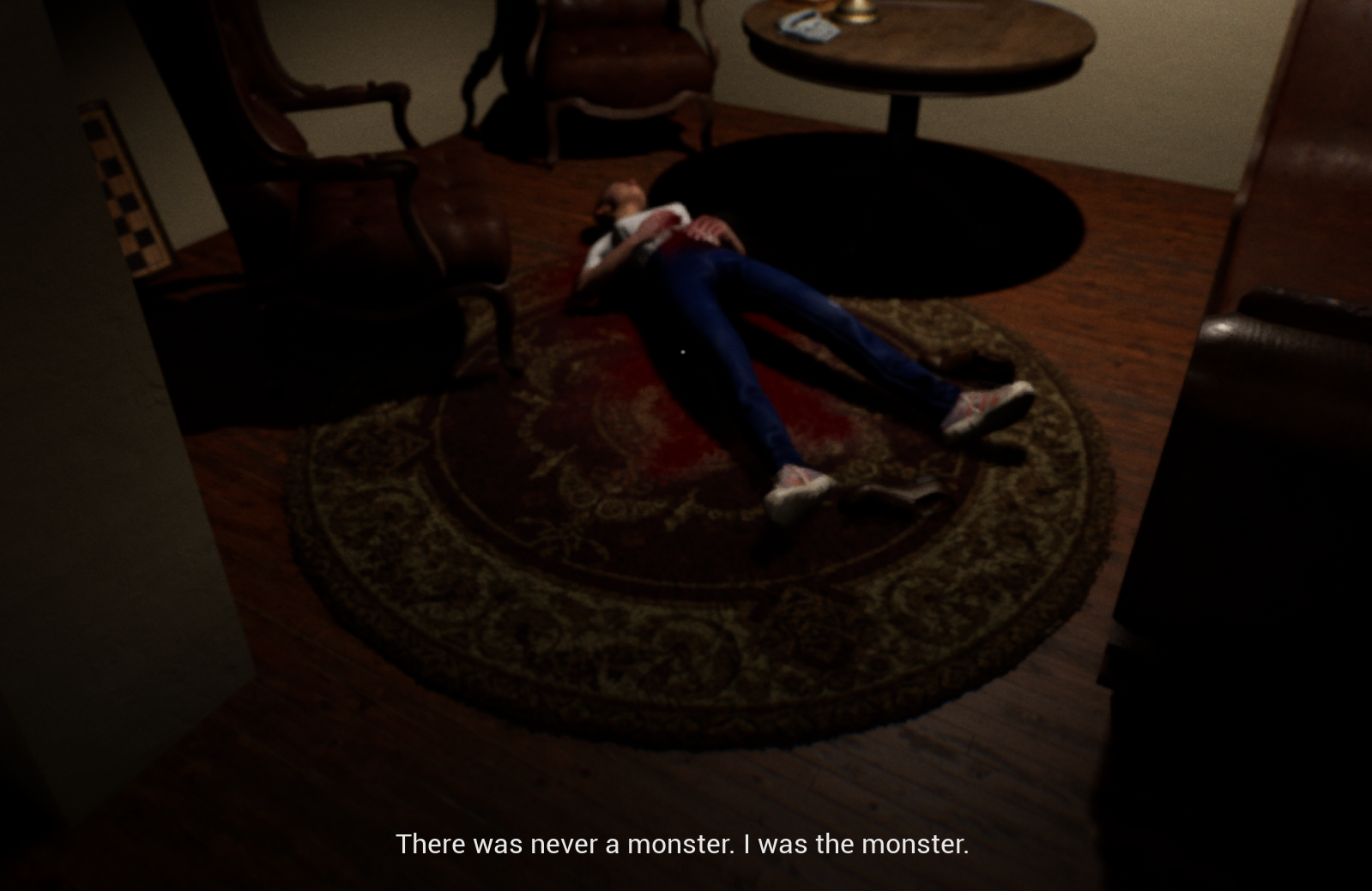
Playtest
To test whether players really feel guilt when playing, I asked 4 people to play my game and then answer a number of questions. I sat next to all these 4 people while playing but didn’t help them or reveal things.
The questions I asked were:
- What do you think the story was about?
- What made you feel most guilty?
- Did you feel like you could have made different choices?
Answers are not exactly copied, but slightly rewritten and translated.
Results playtest
On question 1, everyone answered fairly equally: “About a man who killed his wife because he thought she was a monster, zombie, demon”. Which is true, so that’s good. On question 2, they all said the moment they shot the monster / the man’s wife. This also shows that, in this case, 100% of the players have chosen to shoot instead of leaving. This may be because it wasn’t clear that there was another option or because the players just really wanted to shoot the monster. On question 3, there were some differences because 1 person said that she thought she couldn’t do anything else, especially about the moment you could shoot the monster. The other 3 thought it was an open game and said they didn’t have many things that felt forced. Someone also played again to get the other ending, and he said that it felt like you had the choices in your own hands, which fortunately is the intention.
Conclusion
The most important thing to make the player of the game feel guilt is to make him do immoral actions, something the player himself wouldn’t do in real life. There are several techniques to make the player take immoral actions. You can give them a dilemma where both choices are not good, but you have to choose. Like the choice of Until Dawn. This way you always give the player the idea he made the wrong decision, giving him a guilty feeling. Secondly, you can show the consequences of the player, like in Spec Ops: The Line. To show what the player has done. It creates a deeper guilt feeling to see the consequences of what you have done to someone or something, then just doing it and never looking back at it. And the third technique is to make the player feel in control. If the player can make the choice himself and makes the wrong one, it gives a greater feeling of guilt than if you had no other choice. These 3 techniques are the best way to make the player feel guilty in (horror) games.
Reflection
When I first started this R&D project, I wanted to do research on “what is the most effective horror enemy boss design that manipulates player emotions through story and environmental interactions?”. In the first guilt meeting, I heard that this scope was too big for the 4 weeks we had, and I needed to change it up. So I got the task to already make the demo, so I can show more clearly what I want as an end project. But with the demo I made, the main question wasn’t relevant anymore. So I still didn’t have a clear goal for what I wanted to research. The task I got for the next guilt meeting was that I have to do research on similar games. How they were made. What the plot of it is. What the game is about. And then think of what my game is really about. So I did that and found 3 similar games and wrote down the similar game elements, what the games are about, and then made a story for my own game about what it is about. After I showed what I researched, my goal was clear, and my main goal was to research how to bring guilt to the player of the game. Next, I had to do research on techniques that are used to bring guilt to players. I found 3 different ways to do this and showed examples of the games that use this and how it worked. In the last guilt meeting, we talked about how my current demo doesn’t have the ways to make the player feel guilty of things he did, and the main reason was that you just follow a story line and don’t make the decisions yourself. So I needed to make the demo better and put in the techniques I learned. The demo is not as long as I hoped, but that is mostly because I only had 4 days to make it, which is pretty short.
I learned a lot from this research, and mostly because my main question changed so much that I had to do a lot of different research on different topics. I now know how the similar games work and what techniques they use and what techniques there are to bring guilt to a player.
What would I do if I had more time?
If I had more time, I would make the demo longer to better show how much I learned from it. I wanted to make the story more detailed so that the player really feels everything that’s happening. I also wanted to give more depth about the player’s wife; this way the player builds a bond with her and the murder feels even more shocking.
Sources
[1] Shirrako. (2022, January 7). P.T. SILENT HILLS Gameplay Walkthrough FULL GAME (8K 60FPS) No commentary [Video]. YouTube. https://www.youtube.com/watch?v=YbaTFXlBllI
[2] Hollow. (2023, July 11). A new PT inspired psycological horror game.. [Video]. YouTube. https://www.youtube.com/watch?v=b_qv7ZA8s-I
[3] Adrionic. (2019, December 5). NEVER ENDING TERROR | Avarice (Indie Horror Game) [Video]. YouTube. https://www.youtube.com/watch?v=_GBW5ZVWsY4
[4] Game Maker’s Toolkit. (2024, February 1). Why Spec Ops: The Line Mattered [Video]. YouTube. https://www.youtube.com/watch?v=tYk0BS84ItY
[5] https://gamerant.com/best-horror-games-that-explore-guilt
[6] https://horrorchronicles.com/horror-games-and-immersive-storytelling/
[7] Ahn, C., Grizzard, M., & Lee, S. (2021). How Do Video Games Elicit Guilt in Players? Linking Character Morality to Guilt Through a Mediation Analysis. Frontiers in Psychology, 12. https://doi.org/10.3389/fpsyg.2021.666518
[8] Hartmann, T., Toz, E., & Brandon, M. (2010). Just a Game? Unjustified Virtual Violence Produces Guilt in Empathetic Players. Media Psychology, 13, 339–363. https://doi.org/10.1080/15213269.2010.524912
[9] Lin, S. (2011). Effect of opponent type on moral emotions and responses to video game play. Cyberpsychology Behavior and Social Networking, 14(11), 695–698. https://doi.org/10.1089/cyber.2010.0523
[10] LanguageTool. (n.d.). Login - LanguageTool. https://languagetool.org/editor/41702228