
Abstract
Implicitly guiding players is a great tool to not break immersion, but ensuring players implicitly understand how the game works can be a challenge. Nintendo are masters of this craft, and most games contain the same concepts which guide the player. In this research, explicit and implicit tutorials will be compared. Using this information, a game is created which uses the takeaways from the research to implicitly guide the player. Concepts like a danger free spawn area and cinematic shots of obstacles turned out to guide players through the intended route.
Introduction
In this Research and development project, I want to gain a better understanding of video game tutorials. Since this is a really broad subject, I will narrow down to platformer tutorials, like Super mario or Donkey kong. Most of these games contain explicit tutorials, which hold hands with the player and explain how to play the game. Implicit tutorials on the other hand, give the player little to no explanation, instead relying on the players ability to figure out what to do. [2]
using this information, we can research different examples and learn from them. Afterwards, I hope to use this information to create my own platformer game, using an implicit tutorial. I want to learn how to guide the player through a level without telling them what to do, and for them to learn how to play naturally.
Problem Statement
Explicit tutorials can feel jarring / tedious, but an implicit tutorial has the danger of not being clear enough. What ways have game companies come up with to solve this issue, and what can I learn from this when developing my own game?
Research question
What techniques do platformer games use to teach mechanics without explicit tutorials, and how can I implement and test these into a game of my own?
Research
What is the difference between implicit and explicit
In this research i’ll be using the words implicit and explicit a lot. These words are opposites and mean the following:
Implicit
- Implicit means something is suggested or understood without being directly stated. It relies on context, cues, or actions to convey meaning. For example, a frown can implicitly communicate that someone is upset without them saying it.
Explicit
- Explicit means something is stated clearly and directly, leaving no room for confusion or interpretation. It involves clear and straightforward communication. For example, saying, “I am upset” is an explicit way of expressing an emotion.
how does this apply to video game tutorials
So how do these terms apply to video game tutorials? Implicit and explicit refers to the way the game tells the player how to play. We can categorize most games into these two categories:
Explicit tutorials
- Explicit tutorials provide the player with a clear, usually forced guide to help them learn the game. This can include tutorial levels, UI text or images to explain mechanics et cetera.
Since platformer games require precise inputs to control your character, an explicit tutorial would be expected. This way, the developers can ensure the player plays the game like intended. To gain further knowledge about how these tutorials are made, lets look at some explicit tutorials in some very succesful platformer games.
Donkey kong country returns
Donkey kong country returns is a platformer game which sees Donkey Kong travelling through different levels and worlds to take back his stolen bananas. In this game, numerous obstacles and enemies try to prevent him from reaching the end of the level. To beat these challenges, Retro studios and Nintendo created a lot of mechanics for Donkey Kong to perform. These mechanics have to be communicated to the player in a way, since the button combinations aren’t usually added into other, similar platform games.
Firstly, let’s define the mechanics which allow the player to progress thorugh the level.
| mechanics | Button | How is it explained? |
|---|---|---|
| Moving around | Arrows on D-pad | No clear indication |
| Jumping | 2-button | No clear indication |
| Rolling | Shaking the remote + left/right on D-pad | No direct indication |
| Crouching | Down-arrow on D-pad | No direct indication |
| Blowing air | Down-arrow + shaking | explicit indication |
| Punching the ground | Shaking remote while standing still | explicit indication |
As stated above, some mechanics are explicitly explained, while most primary ones are left up to the player. Lets see how the explained mechanics are handled.
In the beginning of the game, a cutscene plays where donkey punches an intruder out of his hut. The player has to interact with this cutscene, by shaking the remote up and down. (fig.1)

Fig. 1
Although the player hasn’t had any control over donkey kong yet, the game implies shaking is important / useful. Since the area after this cutscene is completely free of enemies, this can make the player try shaking the remote, which teach them either the rolling or punching the ground mechanics.
Further along the first level, there are more explicit indications, a pig-character gives some information to the player. But, only for more advanced mechanics like blowing air and punching the ground. [3]
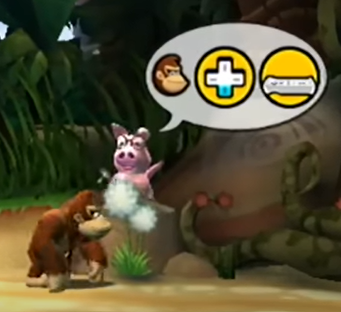
Fig. 2
In figure 2, you can see the explicit explanation for blowing at the dandelion. When the player performs this action, the dandelion will dissapear and the player will get a big coin.
This introduction doesn’t explain every mechanic present in the game, but since the first area is free of danger, the player can try out different actions before challenging it’s first obstacles. These first obstacles are part of an implicit tutorial, where a secondary mechanics is explained to the player. When a player hits multiple enemies in a row, it is rewarded big coins. This secondary mechanics is not explicitly showed or explained, but the level designers found a way. They placed three bird-enemies in a line, and by hitting the first one Donkey will bounce onto the second and third, giving him a big coin. This is a good example of an implicit tutorial. (see Fig. 3)
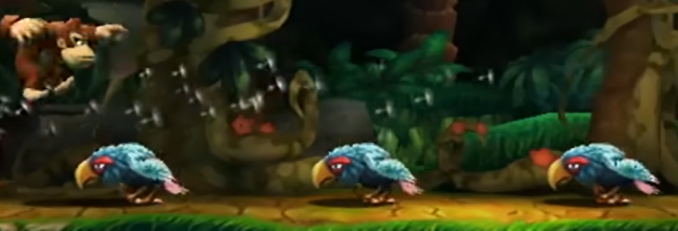 Fig. 3
Cuphead
Cuphead is a really succesful bossfight/platformer game with an extremely clear explicit tutorial. The game has multiple very important mechanics, and Studio MDHR made sure the player knows what to do. In the game, the character cup-head has to fight numerous creative bullet hell bosses. To do this they made a forced introduction, where most mechanics are explained thoroughly. [4]
Firstly, I’ll define the mechanics in the game again.
| mechanics | Button | How is it explained? |
|---|---|---|
| Moving around | Left/right arrow on D-pad | No clear indication |
| Jumping | A-button | Explicit indication |
| Dashing | Y-button | Explicit indication |
| Crouching | Down arrow on D-pad | Explicit indication |
| Dropping through platforms | Down-arrow + A | Explicit indication |
| Shooting | X-button | Explicit indication |
| Aim-Lock | RB-button | Explicit indication |
| Parry-slap | A while in air on parryable item | Explicit indication |
| EX-move | B-button | Explicit indication |
As seen above, to make sure the game is played as intended, all primary mechanics have been explicitly defined inside of the tutorial. Along with this indication, the player is forced to succesfully perform the action at least once, before being able to progress further along the introduction (See fig. 4)
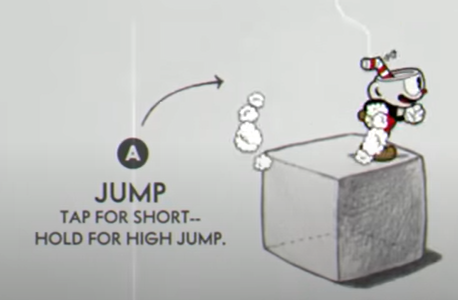
Fig. 4
Although a lot of very explicit tutorials could be experienced as jarring or tedious, the cuphead gets around this by making it into a fun little game. This game is a good example of a very explicit tutorial done right. Below are some more examples: (Figures 5 & 6)
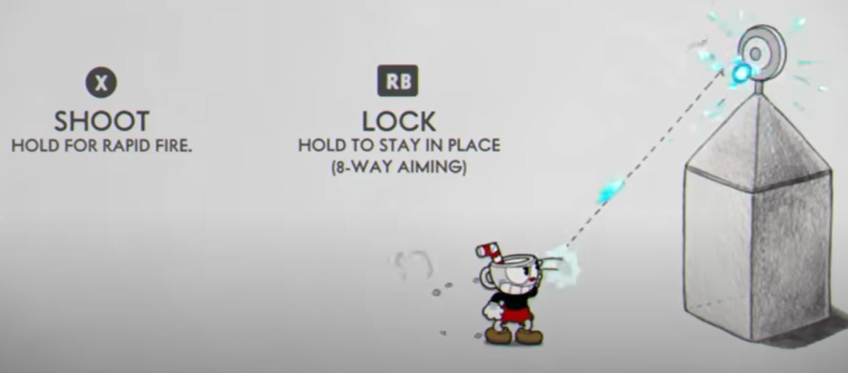
Fig. 5
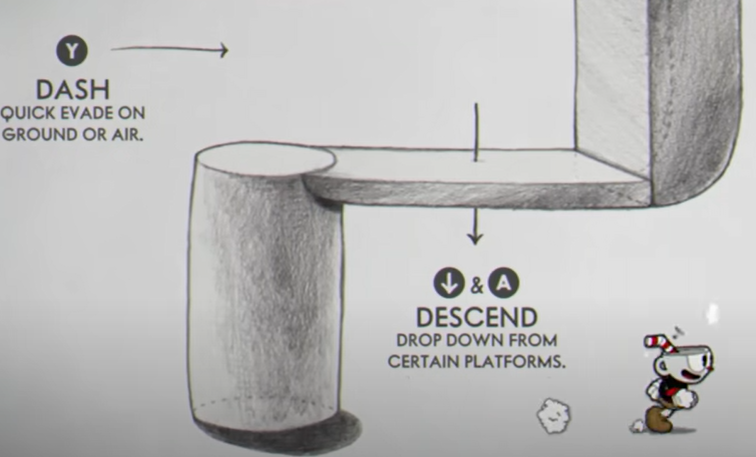
Fig. 6
There are numerous examples of platformer games which use an implicit tutorial. My hypothesis is that this way, it is very difficult to properly inform the player about mechanics or goals within the game. Below are some examples of implicit tutorials in platformer games.
Implicit tutorials
- Implicit tutorials give players little to no information on controls or how to play the game. The player has to naturally figure out the game mechanics, but the game will be made in a way that supports this natural development. [2]
Super mario bros
Super mario bros is one of the most succesful games in gaming history, but it does not contain an explicit tutorial. The game was made for all ages, so the developers had to make sure all players understood the goal and mechanics of the game. Firstly, I’ll cover the different mechanics present in the game:
| mechanics | Button | How is it explained? |
|---|---|---|
| Moving around | Left/right arrow on D-pad | No clear indication |
| Jump | A/B button | No clear indication |
| Running | Left/right arrow + Y button | No clear indication |
| Entering pipe | Down button on D-pad | No clear indication |
The mechanics read above are all NOT explained or introduced to the player in super marios bros in any way. I will discuss some expamples and define how Nintendo made sure the player understood what to do.
The first thing the player encounters is level 1-1, a world famous stage. Below is a screenshot of the first part of said stage. (Fig. 7)
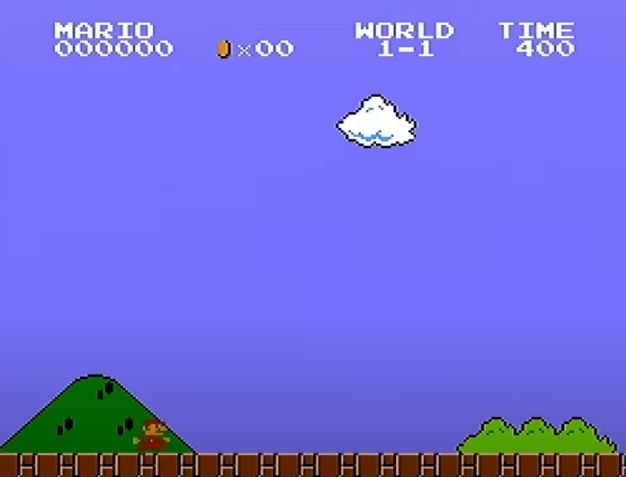
Fig. 7
As evident by the image, the first thing the player encounters is an empty world. This is done on purpose, so the player can try whatever they want to do. Since the operating system running the game, the NES, only had 5 possible inputs (A, B, X, Y and the D-pad) the player did not have too many options anyway. When the player has figured out how to move, the two options are to walk left or to walk right. When walking left, the player will bump into an invisible wall at the edge of their screen. This indicates that the player can only walk right, which is the next course of action.
when the player starts moving right, the stage will start scrolling with him. The first obstacles which will be encountered are shown below: (Fig. 8)
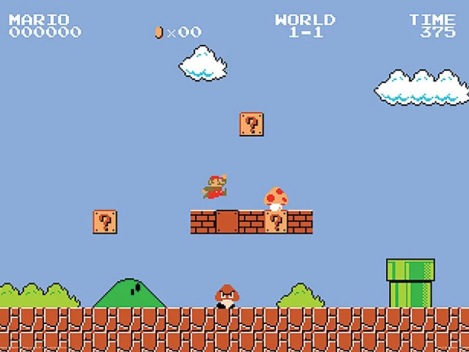
Fig. 8
Normally, Mario would be on the bottom left of the screen, with the mushroom still in the ‘?’ block. Mario has to jump and hit these blocks from the bottom to reveal the mushroom. To indicate this, Nintendo made the goomba-enemy to force a jump from the player. When jumping over this enemy, mario hits the block, revealing the mushroom. If the player doesn’t jump, he dies from touching the goomba. From this, the player learns a lot of important information. The way Nintendo relays information to the player is from the player trying stuff out, the player making mistakes and by using clever environmental design to provide information while the player is playing the game.
Mario 64 DS
Mario 64 on the Nintendo DS is one of my favorite platformer games ever made. To judge how the player is introduced to this fabulous game, I watched some 100% playthrough videos. Although Mario and Yoshi can perform a lot of mechanical tricks, the player is barely introduced to these options. Below are all mechanics listed as earlier. [5]
| mechanics | Button | How is it explained? |
|---|---|---|
| Walking | D-pad arrows | No direct indication |
| Jumping | B button | No direct indication |
| Double jump | Consecutive B presses while moving | No direct indication |
| Triple jump | Consecutive B presses while moving | No direct indication |
| Side Somersault | D-pad movement, direction change + B | No direct indication |
| Backwards somersault | R button + B button | No direct indication |
| Long jump | D-pad movement + R + B | No direct indication |
| Crouch | R button | No direct indication |
| Crawl | R button + D-pad | no direct indication |
| Ground pound | In the air + R button | No direct indication |
The movement mechanics in this game are all not explicitly indicated, and the player has the chance to discover them all by himself. This could however, create issues for players since they might not know what to do. Below are examples on how Nintendo made sure the player doesn’t get stuck.
Danger free intro
Mario 64 features an intro which doesn’t expose the player to any kind of danger or obstacles. You start as Yoshi, and you wake up in a park next to a big castle. You are informed about having to go into the castle, and that’s all. The player is free to do whatever they want, untill they decide to continue on with the story. In this sandbox style intro, the player can practice the movement mechanics: (fig. 9 )
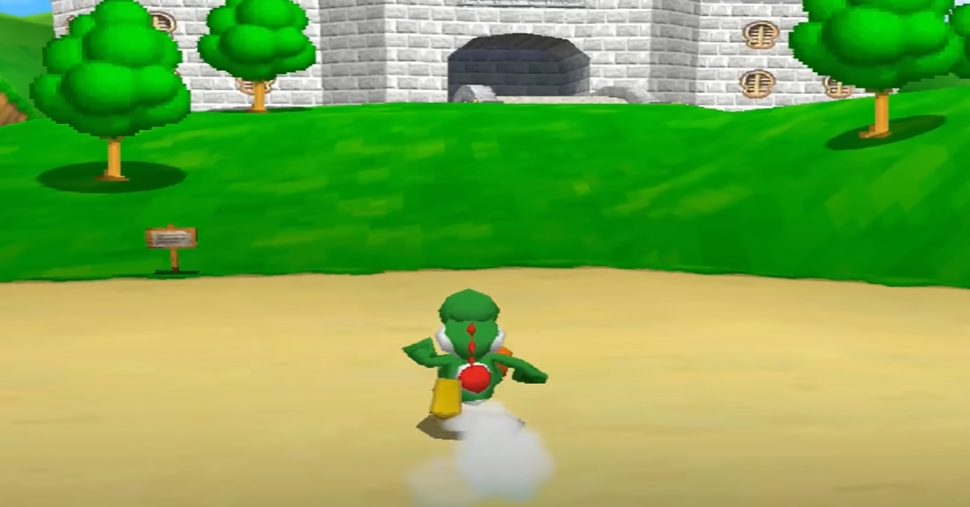
Fig. 9
In the examples shared above, the games share a common intro: the danger free sandbox style introduction. By allowing the player to freely roam and practice combos, immersion is not broken but encouraged plus the player can instantly ‘define’ their playstyle.
When I played mario 64 DS for the first time, I didn’t know half the combos I discovered when researching this subject. This shows that even without having every mechanic explained, players can still have fun and play the game like they want to.
But, like I discussed when looking at super mario bros, implicitly forcing players to input certain actions is necessary to teach players about possible inputs.
In the mario 64 introduction, when trying to enter the castle, the player learns a rabbit has stolen the key. After this, an NPC tells the player to catch the rabbit and progress. When playing as Yoshi, the player can stick his tongue out to capture enemies, and this is perfect for catching the rabbit. The creature is a bit faster than Yoshi, so catching him is pretty hard. When using the tongue however, its rather easy. This teaches the player about the possibility of the input, and uses a small minigame to not break immersion and keep the player engaged. (Fig. 10)
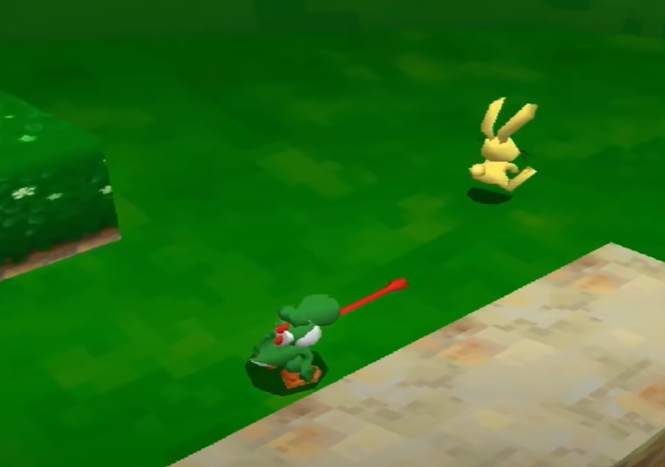
Fig. 10
Implicit learning from making mistakes
When trying to improve in almost any videogame, failure is a big part in the process. “Failure,” states Julie Muncy at Wired, “offers texture, complexity, and a chance for growth on the part of the player and character alike.” Games that beat / challenge you are worth playing.
Games which provide no challenge at all, are not worth playing. Image only having to walk a bit to win, the game says ‘you win’. A game like this is not challenging enough. On the other side, games which provide the player with impossible mechanics or over the top obstacles are too challenging and considered broken. [7]
Since failing is a big part in games, it can be used to implicitly guide players throug progression. Below is an example from Terraria. (I do not know whether this was intended, but I discovered this example myself)
Forcing the player underground
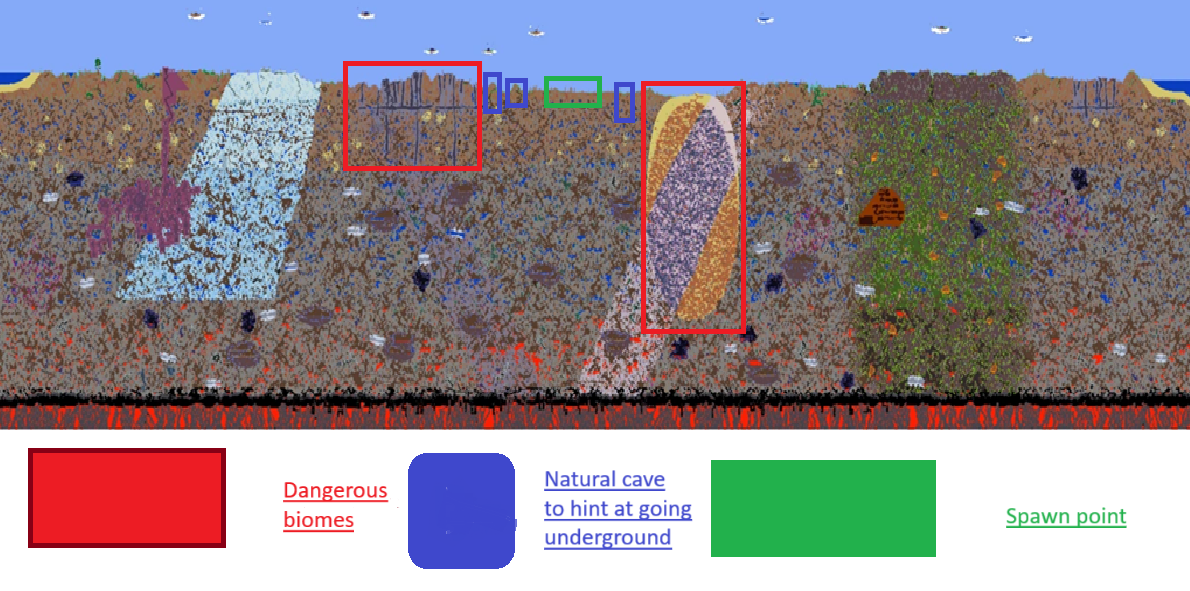
In Terraria, the player spawns in a world with nothing but some basic tools. He is then presented near unlimited options, such as chopping wood / jumping around etc. When the player chooses to explore the world, he can go left or right. On both sides of the map however, are biomes containing enemies which (to new players) are too strong to traverse. The game uses environmental design to guide the player to the only other option > going into caves. When we look at what items can be obtained in these caves, it makes sense to go down first. The loot inside is not very strong, but perfect for the very early game. (Fig. 11)
Guided completion
But, one of the dangers of trying to implicitly guide the player / trusting them to learn from failing is that they can get stuck. The player might encounter a roadblock and not be skilled enough to get past. To prevent this, devs have a lot of options. The one im most interested in is the way New Super mario bros WII handled the issue.
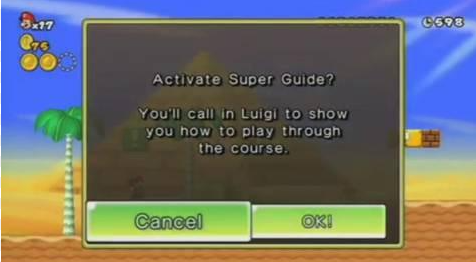
When the player dies a lot on a certain level (8 times to be exact) a green ‘!’ block appears at the start of said level (Fig. 12). When the player hits this block, Luigi the Super Guide will take over. This guide will clear the level using basic platform mechanics, and will not collect any star coins or reveal any secrets. The player can at any point press a button to retake control. This guide can help / show players how to get through difficult parts of a stage, but once the level is completed using super guide, it has to be replaced to collect all star coins.
Why is this so useful?
- This feature can help younger or less experienced players clear more difficult level. Since the game is made for all audiences, a feature like Super Guide prevents getting stuck or giving up.
- The character used during Super Guide is Luigi instead of Mario, this shows the player that this feature is to assist instead of taking over completely
- Super Guide can show the player new routes or new mechanics, which aren’t explained in the game due to the lack of an explicit tutorial.
- The feature is completely optional, but without it player who get stuck might never finish the whole game.
Take aways
Since the goal of this research is to create my own small platformer game with an implicit tutorial, I can use the information above to get started on my design. Below are the main takeaways from my research:
- To give the player a chance to practice the mechanics (and the game doesn’t feature an explicit tutorial), a danger free area at the start of the level is very useful.
- Small danger-free minigames at the start, like the rabbit chase in mario 64, can playfully teach the player new mechanics without putting them in danger.
- Environmental design is a clever tool to guide the player in the right direction. Using pathing or other visual indicators can implicitly guide players through levels.
Project
DARKBOUND Game Design Document (GGD)
1. Game Overview
Genre: 2D platformer
Development time: 2 weeks
Core concept: The player controls a shadow which has to stay in the darkness. Light damages this shadow, and he has to traverse obstacles made of light to get to the end of the level.
2. Game mechanics
Core mechanics:
W: Jump
A/D: Left / Right movement
Light and shadow mechanics:
When the player is inside of the shadows, he is safe and will regenerate hitpoints very fast. Outside of the shadows though, the player will perish very quickly.
The game takes place in a desert, with moving platforms allowing the player to dodge the scorching sun.
3. Implicit guiding / storytelling
To implicitly inform the player about the danger of standing inside of light for too long, I plan on creating a short cutscene when starting. This cutscene shows the entire level, so the player can quickly devise a plan for their first action.
Another plan I have to implicitly tell players what to do, is making a small sun-slit right after exiting the safe zone. This won’t kill the player, but the visual and audial elemens will tell the player the main mechanic of the game.
Kishotenketsu
A method I want to use in my game is a japanese one called: kishotenketsu. This method is used in some of the worlds most famous mario games, and describes a learning process with 4 steps:
Ki-sho-ten-ketsu
Ki stands for introduction. The player is introduced to a mechanic, in my case: damage from the sun.
Sho stands for developement. The player learns to hide under moving platforms and trees to dodge to burning sun.
Ten stands for twist, the story / game takes a twist or takes on a different playstyle. In my case, this translates to using the vertical platforms to get gems spread troughout the level.
Ketsu stands for conclusion, the end of the story. In the case of Darkbound this represents the finish flag.
first iteration
The first iteration of my project contains all mechanics described above. The game has a functioning game loop where the player can win and die. When in light the players burns, and when in shadows he regens.
The game contains multiple obstaclse, with horizontally moving platforms, buttons which move vertical platforms and gems which the player can collect. The game also contains a lot of features which should help implicitly guide the player throughh these obstacles. Below are some screenshots from my first iteration. (figs 13, 14, 15, 16)
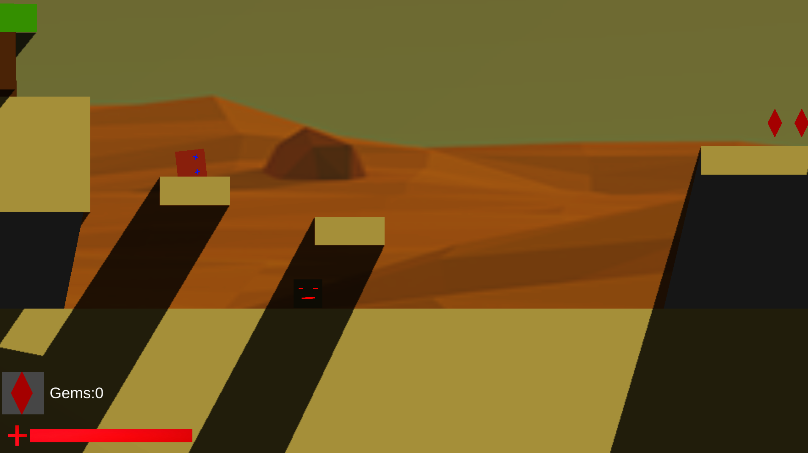 Fig. 13 Player in a safe shadow
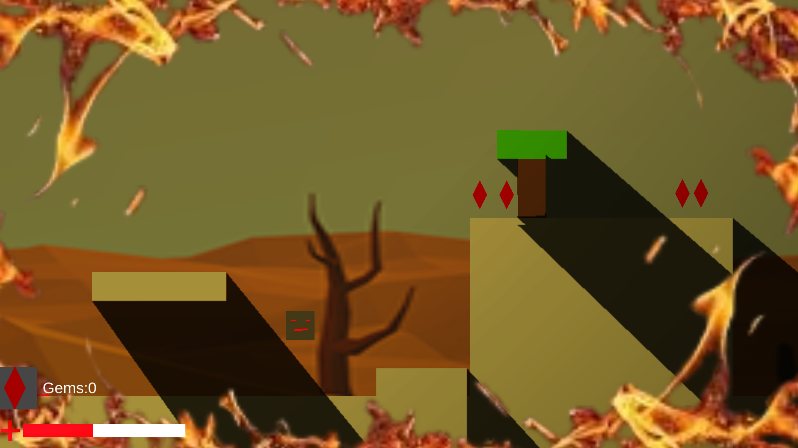 Fig.14 Player burns when exposed to light
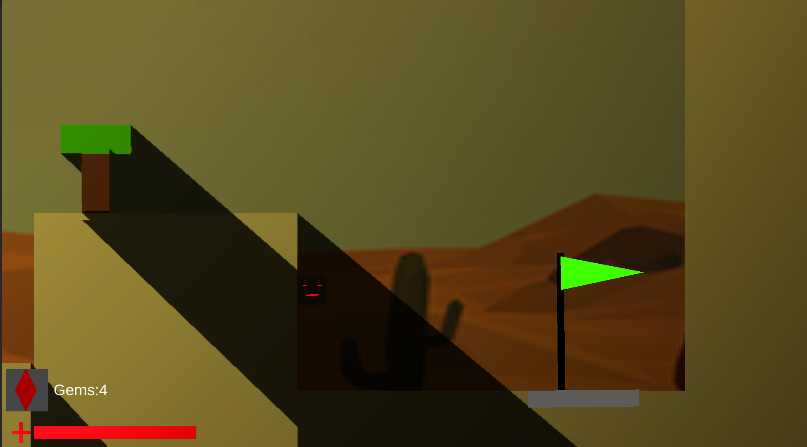 Fig. 15 Finish flag at the end of the level
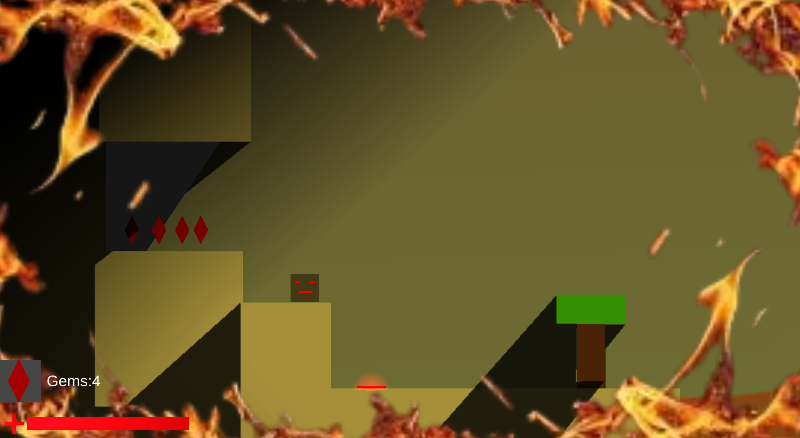 Fig. 16 Top left part containing a platform obstacle and hidden gems.
Testing categories
To test my research question, the game contains implicitly guiding features, which are mainly based on the previously discussed takeways:
At the start of the level, the player will be inside of a cave. This way, he can practice the controls of the game without being in danger from the sun.
When leaving the cave, there will be a small ‘slit’ where the player takes damage. After this slit, the player is safe again. The goal is for the player to run through, realize he takes damage from light, and then be safe again.
When Start is pressed, the camera will glide over the level before taking aim at the player. This way, the player can get a quick preview of the level. This can implicitly help the player, and when he dies, he can see where to go next try. There is also an area above the spawn which is badly visible. Using the preview the player knows to get coins there.
By introducing mechanics 1 by 1 using the kishotenketsu method, the player can first get used to the sun damage, then to moving platforms and only at the end combine these two mechanics with the vertical platforms.
Using very bright contrast between the shadows and the lit areas, the player will have a clear indication of what is safe and what isn’t. This makes an explanation unnecessary, keeping the games implicit design intact.
First playtest
To test whether players feel implicitly guided through the game as intented, I created a test plan which has the player experience my game without any further information. The plan falls under the post-session gameplay analysis category, and has me record the playing sessions of my test subject. Afterwards, their behaviour in the game can be analysed using the setup questions, and by asking the participants some questions their personal choices can be explained as well.
Questions asked
To answer whether my takeaways were logical and applied to my game, survey questions were setup for each one. Below are the questions per category (categories are shown above).
Did the player practice their movement options in the danger free spawn area?
The beginning of this research paper discussed multiple games which spawned the player in a danger free zone, where they were free to get used to the controls / mechanics. To see whether this assumption of safely spawning the player were realistic, the player spawns in a small cave at the start of my game. During the analysis of my test subjects’ behaviour, all of them were found jumping and moving around in this cave, to find out where the boundaries of the movement mechanics lie.
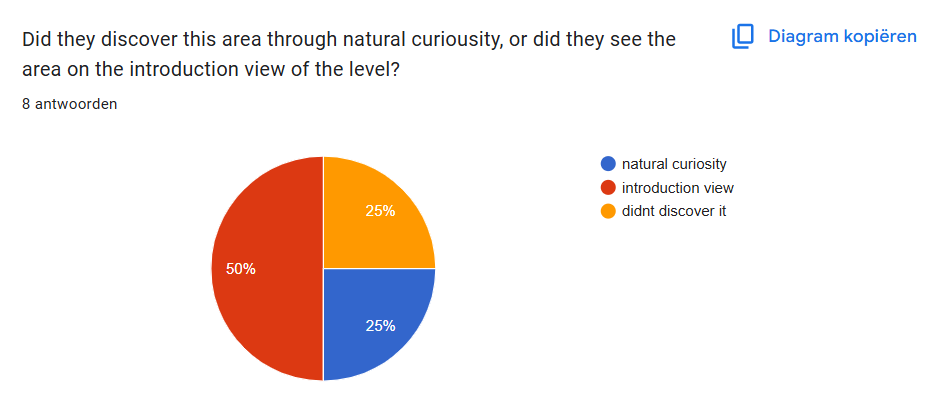 Fig 17.
As seen in figure 17, all participants were found using the safety of the cave to practice the present mechanics.
Realizing the sun damages you
When the player decides to leave the safety of their cave, they have to traverse a small ‘slit’ between a platform and said cave. While walking through this slit, the player takes damage, but because it is so small, they will hardly ever die. This is a pleasant way of introducing this negative feedback loop of taking damage, since the player realizes it immediatly, and can act accordingly. In figure 18 are results on questions about this slit, showing that all but one player stood still and tested the damage mechanic after the introduction. When designing the level, this behaviour was meant to be achieved, so these results solidify my research.
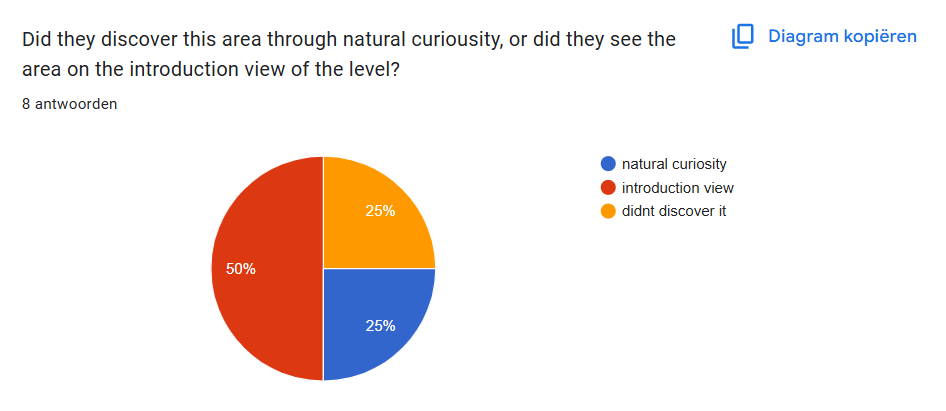 Fig 18.
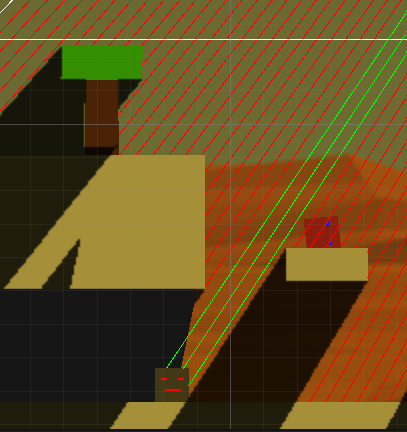
Fig 19, slit with raycast showing detection.
Cinemachine intro showing the whole level
To implicitly tell the player where to go and reveal some hidden gems, the game starts by slowly transistioning from one camera to the other. In this transistion, it moves over the whole level, showing obstacles and the way to the end. Because of this the player can’t get stuck, since the way to the end is shown. The player also has access to a secluded area on the top left of the level. This camera transition is designed to show this area, but without it the player has to find it by exploring. In figures 20-21 results on this question are shown.
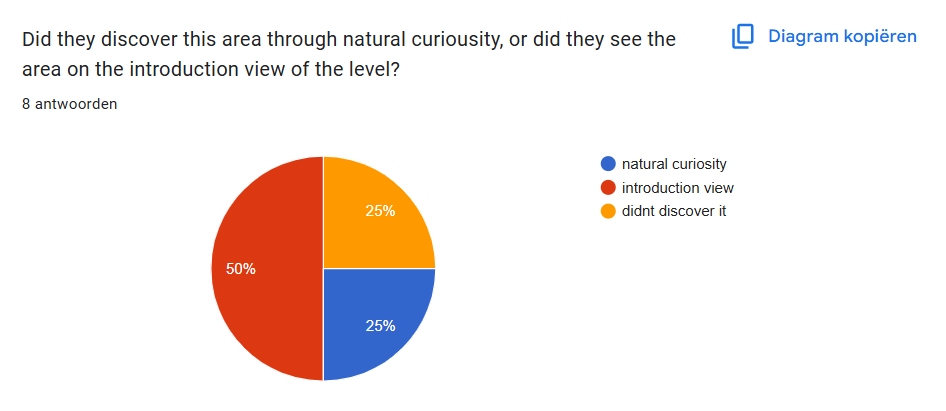 Fig 20. 50% of players confirmed the introduction helped them
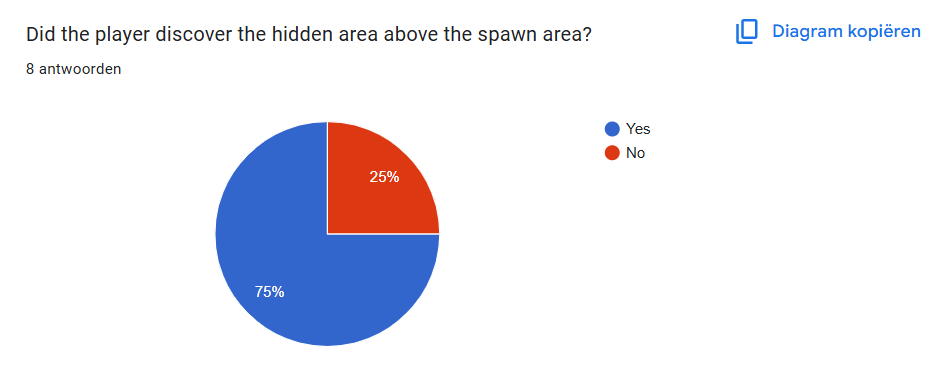 Fig 21. 25% of players did not find the secluded area
Buttons / Lava?
The other challenging mechanic within Darkbound is a platform which the player has to raise by standing still on a button. These buttons are exposed to light, so when the player does this he will rapidly take damage. The game does not feature any explanation around this mechanics, but the buttons do emit a red glow which changes to green when touched. Although most players used this mechanic to their advantage, the buttons were not clear to everyone. (Figure 22)
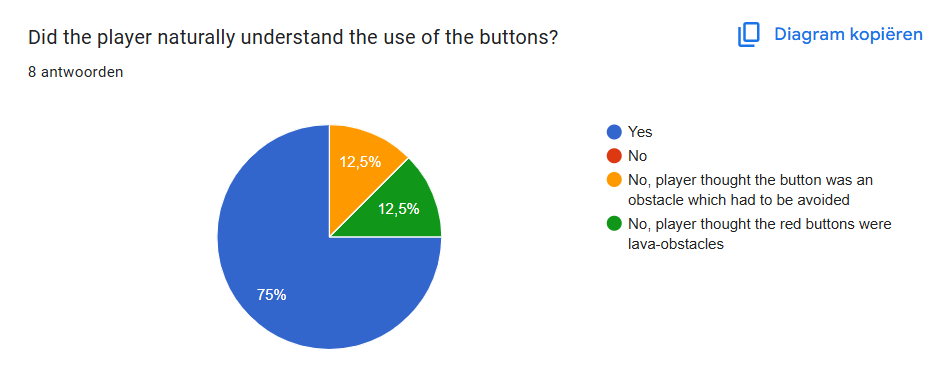 Fig 22.
As seen in the pie chart above, 25% of players thought the red buttons were some kind of obstacle, opting to avoid them and thus not be able to complete the challenge.
Results
The conducted playtest confirmed a lot of the takeaways which were set up, but some of them were proven to not be explained clear enough. Players handled the danger free area and slit the intended way, but the buttons were vague to some testers.
Since the buttons did not have any indication on their use, an implicit guide should help players, like the slit helps understand the sun-damage mechanic.
The playtest was definitely a success, proving that the main mechanic of my game can be introduced in an implicit way, using examples from my research. The playtesters enjoyed playing the game, and the mechanic, although not something new, was fun to mess around with.
Conclusion
Implicit platformers use a lot of different techniques to introduce the player to new mechanics, without using handheld explicit details. The player learns by playing the game and does what the developers intend without knowing so. Danger free spawn areas and super guides make sure the player does not get stuck, and allows for them to learn the mechanics of the game. Although the implementations and examples are almost infinite, these takeways are very useful when trying to create an implicit game:
- To give the player a chance to practice the mechanics (and the game doesn’t feature an explicit tutorial), a danger free area at the start of the level is very useful.
- Small danger-free minigames at the start, like the rabbit chase in mario 64, can playfully teach the player new mechanics without putting them in danger.
- Environmental design is a clever tool to guide the player in the right direction. Using pathing or other visual indicators can implicitly guide players through levels.
Reflection
At the start of this research, the goal was to learn more about ways to introduce players in an implicit way. By researching different examples and using this knowledge to create my own implicit tutorial, my knowledge on how I can guide players to do what I want without telling them has grown. Studying the masters of the art, Nintendo, has shown me what I like most about game development: the design part.
Future work
Although this research paper covers a few ways to implicitly guide player, the list of possibilities is endless. Almost every game ever made has an implicit element, but a lot of them have overlap as well. By focusing on this overlap and writing down what these games share that makes them work, clear guidelines for implicit games can be set up.
In future development projects, I can now say I understand the 2 different tutorial types, and am confident that this research has taught me a lot of valuable information on creating tutorials in general.
Reference list (IEEE)
[1]“Creating a Video Game Tutorial Samu Lehtineva OPINNÄYTETYÖ Kesäkuu 2024 Tietojenkäsittelyn tutkinto-ohjelma Game production.” Available: https://www.theseus.fi/bitstream/handle/10024/865287/Lehtineva_Samu.pdf?sequence=4
[2]NoMo Studio, “IMPLICIT vs EXPLICIT STATEMENT | Logical Reasoning,” YouTube, Nov. 28, 2022. https://www.youtube.com/watch?v=nqqQCYrrxmw (accessed Aug. 07, 2024).
[3]YTSunny, “Donkey Kong Country Returns - Full Game 100% Walkthrough (Worlds 1 to 9),” YouTube, May 26, 2018. https://www.youtube.com/watch?v=fvPEP0hzUso (accessed Mar. 09, 2025).
[4]“Cuphead - Full Game Walkthrough,” www.youtube.com. https://www.youtube.com/watch?v=QF9tzn7UUIo
[5]“(4:56.878) Super Mario Bros. any% speedrun Former World Record,” www.youtube.com. https://www.youtube.com/watch?v=j8CHsUFsi1A (accessed Mar. 18, 2022).
[6]Typhlosion4President, “Super Mario 64 DS - Complete Walkthrough,” YouTube, Jan. 30, 2021. https://www.youtube.com/watch?v=SLz9dJzqscg (accessed Mar. 17, 2025)
[7]“Video games and the paradox of failure,” Big Think. https://bigthink.com/neuropsych/play-video-games-to-fail/